New Outdoor Lighting LED Fixtures on Display at the 2012 Colorado Fall Home Show

There is still one day remaining to attend the 2012 Colorado Fall Home Show – and to see all of the new LED lighting products in the Outdoor Lighting Perspectives exhibit.

To take a tour of our exhibit and learn more about our company’s products and services, please take a minute to watch the video below:


See the Latest Landscape, Architectural and Holiday Lighting at the 2012 Colorado Fall Home Show

The 2012 Colorado Fall Home Show is less than 3 weeks away – so plan on visiting Outdoor Lighting Perspectives (OLP) of Colorado (Booth #514) at the Colorado Convention Center in downtown Denver. 


Show Dates and Hours

  • Friday, Sept. 7           10 a.m.  –  8 p.m.
  • Saturday, Sept. 8      10 a.m.  –  8 p.m.
  • Sunday, Sept. 9         10 a.m.  –  5 p.m.

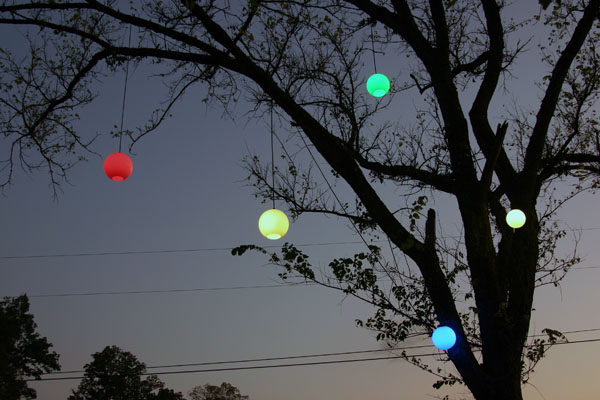
Multi-Color Glowing Christmas Orbs

At the show, OLP of Colorado will be exhibiting its latest energy-efficient products for architectural, landscape, and holiday lighting including new LED landscape lighting fixtures and LED retrofits, internet-based Lighting Control Automation™, LED retrofits for architectural lighting, and the latest LED holiday lighting products such as the glowing orbs shown at left, as well as wreaths and lighted sculptures.

Discounted tickets are available at King Soopers, at the ticket counter at the convention center by donating canned food, or by clicking on and printing the discount coupon below:

2012 CO FAll $2.00 off Online Coupon

Stay tuned to our blog to see a listing of our show specials. We hope to see you at the show!

LED Makeover – the Outdoor Lighting Perspectives Way

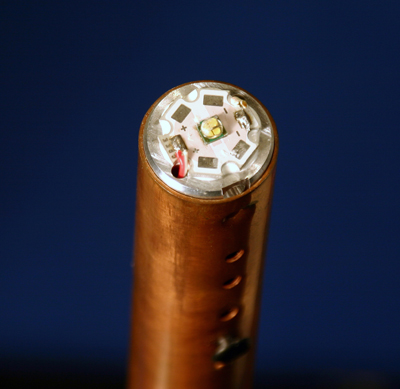
LED Replacement for Path Lights

In a recent blog posting, I mentioned that we were retrofitting one of our customer’s low voltage quartz halogen landscape lighting systems to LED. We originally installed the system in June 2001. Our Outdoor Lighting Perspectives’ (OLP) copper BB-07 path lights manufactured by our factory (B&B Manufacturing in Nashville) had used the 20W quartz halogen G6 bi pin bulbs with corresponding sockets. The retrofit is as simple as sliding out the old socket and wiring harness and replacing it with the new LED (4W Cree), electronics, driver, and wiring harness assembly.  

With the introduction of OLP/B&B’s PAR36 LED (6W Cree) bulb retrofit earlier this year, our company can now offer customers a truly sustainable way to upgrade to this new, energy-saving technology – without having to discard the old quartz halogen fixtures. The customer’s system that we recently converted to LED was initially installed in 2001. That system included a total of 17 fixtures – eleven 35W quartz halogen well lights and six 20W quartz halogen path lights, for a total power usage of 505W. For the new installation/retrofit, we added 11 new LED fixtures to the 17 existing fixtures that we retroffited, for a total power usage of 176W. Interestingly, we increased the size of the system (total number of lights) by 65-percent while at the same time we reduced the energy usage by 65-percent.
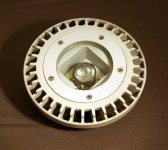
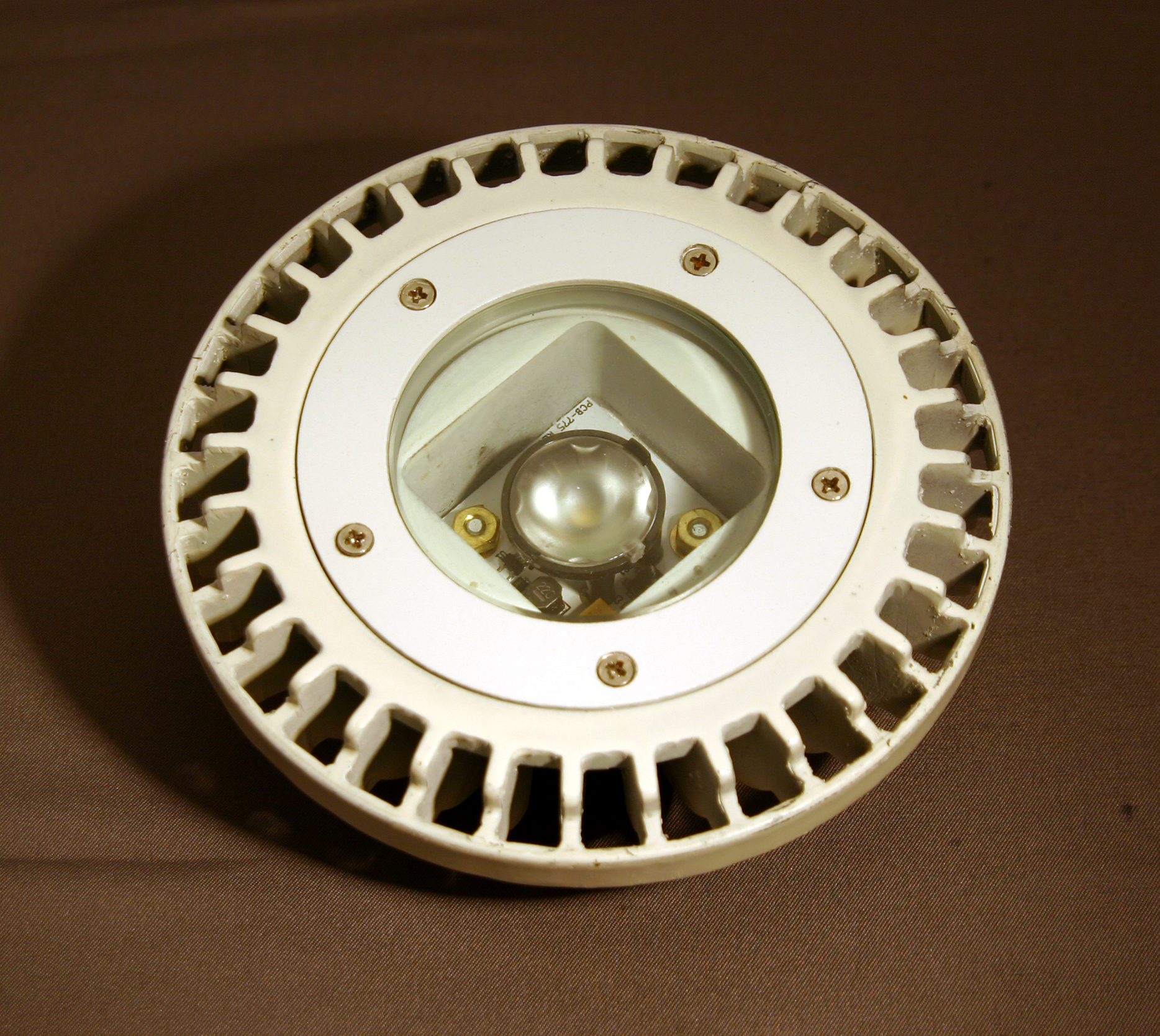
PAR36 LED Bulb

Heat is the number one factor that can adversely affect the life of an LED. As you can see in the design for the PAR36 LED bulb as well as the path light LED replacement, the thermal heat sinks are a prominent part of the final manufactured product. As a former aerospace engineer who performed thermal analyses of jet and rocket engine, high-energy laser, and orbital spacecraft, I wholeheartedly give these products a two-thumbs up sign of approval.

The other important thing about these LED retrofits is that our customers are in no way sacrificing the actual lighting effect. In fact, our factory (B&B) conducted an experiment by taking nighttime photos of the same house. On one evening, the lighting fixtures had quartz halogen bulbs installed and on another evening, the fixtures had been retrofitted to LED. Interestingly, most people viewing the sets of photos side by side guessed wrong. The LEDs actually looked better.


Saving Energy Increasingly Becoming More Important for U.S. Families

In a recently published study by The Associated Press-NORC Center for Public Affairs Research entitled ENERGY EFFICIENCY AND INDEPENDENCE: HOW THE PUBLIC UNDERSTANDS, LEARNS AND ACTS, has indicated that American families rank energy issues very highly after the economy, education, and health care.

As reported by Dina Cappiello of The Associated Press, she writes that

as summer beckons, it seems Americans are thinking more about the stifling cost of energy than about making tracks to the beach.

In the bar graph above, you can see that saving money on energy costs is the second-highest ranked priority by the respondents to this survey. At Outdoor Lighting Perspectives (OLP) of Colorado, we have seen a very strong demand by both new and existing customers for the latest LED lighting fixtures. In almost every case, the homeowners expressed a strong desire to decrease their energy usage.

In the U.S., previous studies have determined that residential lighting accounts for as much as 15-percent of a household’s total energy budget. Until recently, almost half of this energy usage dedicated to lighting had been wasted due to the use of inefficient bulbs (incandescent), the use of higher wattage bulbs than needed for effective illumination, and the fact that lighting systems were not automatically controlled.

The low voltage LED lighting systems (new and retrofit) that OLP of Colorado has been installing will provide a homeowner an energy savings of as much as 82-percent over the previous quartz halogen system. Later this week our crews will be retrofitting an existing customer’s lighting system to LED, and I will report our progress in a future blog post.

To Zone, Or Not to Zone… Important Landscape Lighting Design Question

Preliminary Landscape-Outdoor Lighting Design with Zones

One of the first questions a landscape lighting designer or contractor must ask a client is how they intend to use their outdoor space – and what the primary motivation is for them to be adding this new lighting. One of the mistakes that inexperienced lighting designers make is to assume how the client will be using their outdoor living space and lighting. After all, the client is the one who lives there 365 days per year and not the designer.

Landscape and outdoor lighting provides aesthetics, safety, security, and usability for a homeowner’s property. Oftentimes, homeowners will want the lighting for all four of the above categories or as few as one; e.g., security. If security lighting is the primary purpose, then chances are the homeowner will want to have the lights operate from dusk to dawn – and from a control standpoint you would only have to have one zone.

 If the primary purpose of the lighting is for aesthetics only and the homeowners go to bed around 11:00 PM every night, then there’s no point in increasing their electricity bill to operate the lights until 3:00 AM if they are not awake to enjoy them. The same thing can be said for usability of the outdoor living space. If the pond has been drained for the winter and there are three-foot deep snow drifts on the back patio, most homeowners will not be outside barbecuing in the dead of winter – and probably will not be using their lights quite as much. As far as safety, most homeowners do typically like to leave a few of their lights on all night long whether they be carriage lights by their front door or a few landscape lights to light the way along the sidewalk. 


All of the zones have been programmed to turn on and off automatically, but the homeowner can turn off any of these zones manually using this 8-button switch. So even after the installation of the low-wattage LEDs, no energy will be wasted at this homeowner’s house.

 Most homeowners typically want to control their back yard lights separately from the lights in the front yard – and they typically have their front yard lights operate for a few hours longer. We have also installed quite a few systems where the homeowners operate the path lighting all night long but have the uplighting for the house and trees turn off at midnight or earlier. We once did a landscape lighting installation for a former Denver Bronco offensive lineman. We had lit up his kids’  jungle gym but he wanted to be able to turn those lights off when he had get-togethers at his house with his team mates. He didn’t want anything to get broken – neither the play equipment or his fellow team mates. For smaller properties that require fewer landscape lighting fixtures, there is typically not much of a need for separate lighting and control zones – and separate zones can unnecessarily drive up the installation cost for a small system. For larger systems, however, separate control zones can help a homeowner save money on their monthly electric bill while also helping the environment. 

See the New Landscape Lighting LEDs at the 2012 Colorado Garden & Home Show

There are three days remaining to see the 2012 Colorado Garden & Home Show, and hopefully you’ll be able to stop by the Outdoor Lighting Perspectives exhibit (#1442) to see the latest landscape lighting products. In the meantime, please enjoy the short video tour below where we highlight our latest LED products:


New PAR36 LED Bulb Launched by Denver Office of Outdoor Lighting Perspectives

PAR36 LED Bulb

At 10:00 AM at the opening of the 2012 Colorado Garden & Home Show on Saturday, February 11th, the Denver office of Outdoor Lighting Perspectives launched this revolutionary new landscape lighting bulb to the Colorado market. More than two years in development and testing, OLP’s new PAR36 LED bulb (6W) will truly transform the landscape lighting business as we know it. The bulb can be used for new installations or to retrofit existing landscape lighting well light fixtures having the standard PAR36 bulb dimensions.

 
Based on the Cree (made in the USA) LED, the OLP PAR36 LED bulb has the best light output, color rendition, and color stability of any other product on the market today. On display in the OLP Booth (#1442) are comparison photos of the same house – one illuminated by the new LEDs and the other illuminated by quartz halogen. Most people cannot see any difference in the two photos, but they will see a huge difference in energy usage – as much as 83-percent.
 
This bulb is so good that OLP is also offering a Lifetime Maintenance Warranty Program for these new PAR LED installations or retrofits. In addition, B&B Manufacturing in Nashville (OLP’s official supplier) is also offering $5.00 per bulb rebate now through April 30, 2012. OLP staff will be on hand for all nine days of the show, so stop by our exhibit and do the comparison test for yourself.
 

Say Goodbye to 2011… – and Energy-Inefficient Incandescent Bulbs

Incandescent Light Bulbs Are Being Phased Out

Happy New Year from Outdoor Lighting Perspectives of Colorado! As we bid the year 2011 goodbye, we can also do the same for the energy-inefficient incandescent light bulbs.

 
The Energy Independence and Security Act of 2007 goes into effect on January 1, 2012, and the stated purpose of the act is “to move the United States toward greater energy independence and security, to increase the production of clean renewable fuels, to protect consumers, to increase the efficiency of products, buildings, and vehicles, to promote research on and deploy greenhouse gas capture and storage options, and to improve the energy performance of the Federal Government, and for other purposes.”
 
A popular misconception is that all incandescent light bulbs will be banned. The act will be phased in beginning in 2012 through 2014, and it will require a 25-percent increase in light bulb efficiency. In addition, various specialty bulbs such as appliance bulbs, colored lights, plant lights, and 3-way bulbs are exempt from these requirements. So too are incandescent bulbs currently less than 40 watts or more than 150 watts. Many manufacturers and stores still have 100W bulbs in stock – so it may take quite a while before these bulbs are no longer available.
 
The good news is that there are many new energy-efficient bulbs available including the “high-efficiency” incandescent bulbs (also called energy-efficient halogen bulbs), the compact fluorescent bulbs (CFLs), and of course the Light-Emitting Diodes (LEDs). LEDs are definitely the future in lighting, and their price is gradually decreasing as their quality continues to improve as well. 
 
During the next month we plan to launch a second company that will meet the “eco” needs of homeowners and small business owners alike – including the demand for green products in the home and the workplace. So stay tuned and until then – Happy New Year!
 

Cody the Airedale Says That It’s Starting to Look a Lot Like Christmas

Cody – Santa Claus

With two snow storms during the last week, Cody the Airedale, Outdoor Lighting Perspectives’ (OLP) Director of Security and Fun, says that it’s starting to look a lot like Christmas. In fact, OLP and many other Colorado contractors have already started to install Christmas lights for homes, businesses and communities – in preparation for the lights to be turned on during the Thanksgiving holiday.

 
Is your home going to be ready for the holidays? OLP’s holiday lighting service includes the design, installation, take down and storage of dazzling holiday displays. In other words, your holiday lighting will magically appear year after year without you having to climb ladders ever again.
 
Along with a digital photo of your house, we can use our holiday lighting software to show you how your house will look after dark with the design in place.
 
OLP has the latest in LED technology including snowfall lights, LightLinks, wreaths and garland, mini-lights, C7s and C9s, and amazing 3D sculptures of all sizes. If you prefer the look of the traditional incandescent lighting, we can provide that as well.
 
If you are a do-it-yourselfer, we can also sell any of these products on a retail basis – and many of these products can be seen at our main office. A very important thing to assess at this time is whether your home or business has available and easily accessible outlets that have remaining capacity to handle the additional load of the holiday lighting.
 
If we can help you with any of your holiday lighting needs, please give us a call or send us an email.
 

How Do You Maintain a Solar Photovoltaic LED Lighting Installation?

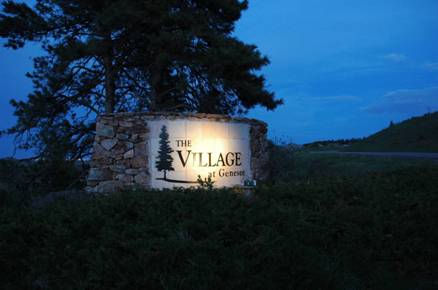
Genesee Entrance Monument – Solar PV LED

Outdoor Lighting Perspective’s solar photovoltaic (PV) LED lighting system has been operational at the Village of Genesee’s entrance monument for two years now. A few weeks ago we completed the Year Two annual maintenance for the system – and it continues to illuminate the monument nightly with the free energy captured by the sun.

 
The solar PV LED system consists of the following: a 3.7W LED lighting fixture supported by a strut to provide downlighting (Genesee is dark-sky compliant); a solar mast that supports the 16- by 20-inch solar PV panel and equipment bay; the equipment bay contains the solar gel battery and system controller. Every solar PV LED lighting system should be checked and maintained on an annual basis, and this is especially true for a mountain installation where the site can experience very high wind loads.
 
To see some of the issues we faced at this year’s maintenance visit, please watch the video below:
 
 
As you could see in this video, we did have to replace the LED fixture on this visit because the electronics had become corroded due to moisture entering the fixture. We suspect that a seal had failed perhaps due to the buffeting by the high winds. The on-site checklist that we follow for this type of maintenance is shown below:
  • Confirm that the current levels of the solar array and load do not exceed the controller ratings.
  • Tighten all terminal connections. Inspect for loose, broken or burnt wire connections. Be certain that no loose strands of wire are touching other terminals.
  • Test that the LED fixture is working.
  • Inspect the equipment bay for signs of dirt, insects, moisture, and/or corrosion.
  • Ensure that the air flow around the controller is not blocked.
  • Check that the controller functions and LED indicators are correct for the system conditions at that time.
  • Clean the PV array and reconfirm that the array is oriented correctly.
  • Re-confirm that the correct battery type is indicated.
  • Check and re-tighten as needed the ground wires by the fixture as well as by the PV array.
  • Inspect and re-tighten as needed the mounting system for the fixture.
  • Re-touch paint as needed on the solar mast and equipment bay.

As with any type of lighting system, annual and preventive maintenance will ensure that the lights will be on when you need them.