Park Lighting Project Completed for Piney Creek

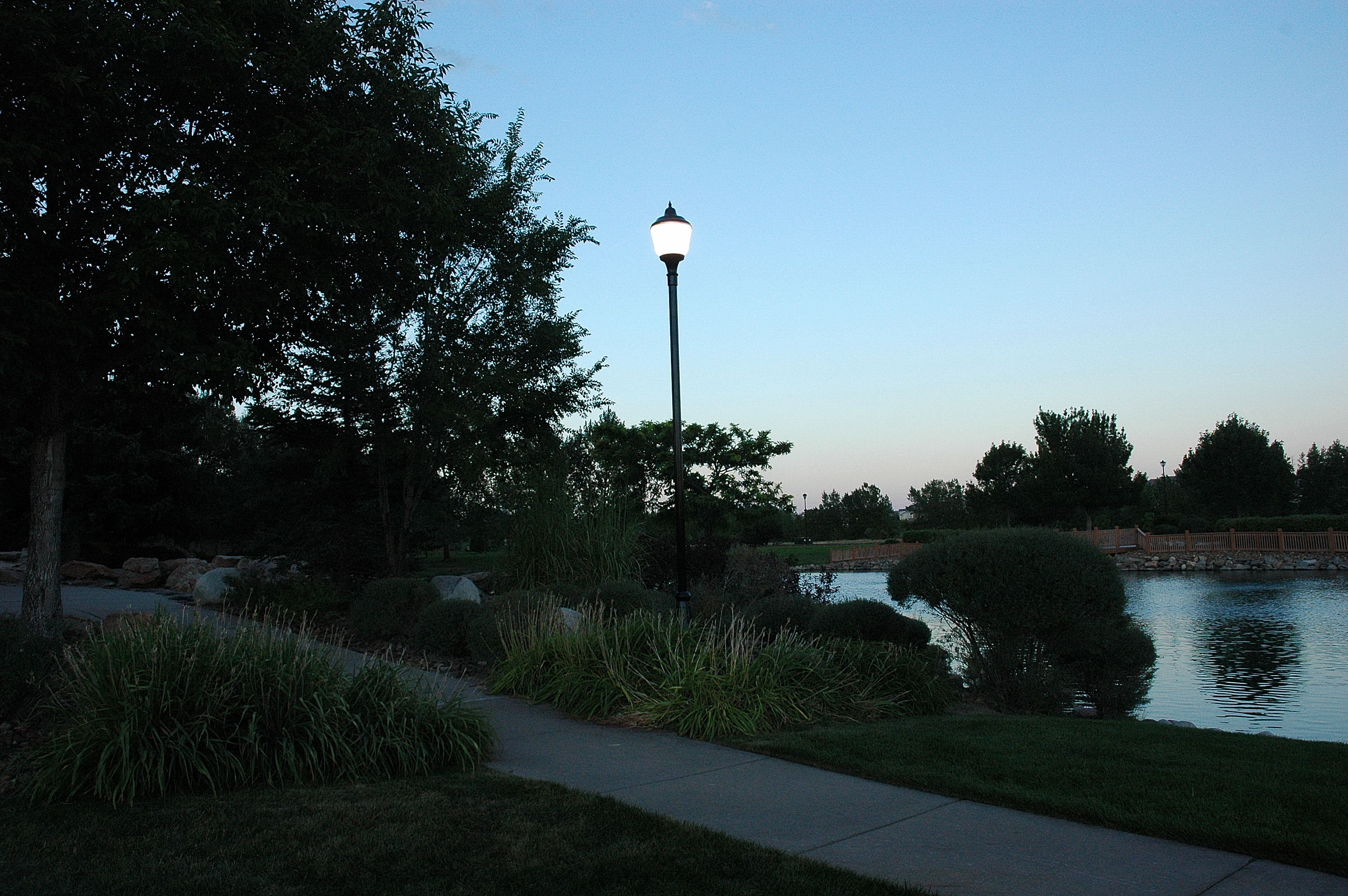
LC40 Lamp Post at Entrance to Piney Creek Picnic Area

Our company, Outdoor Lighting Perspectives of Colorado, just completed its latest lighting project at a community park – the Piney Creek Park near the intersection of East Orchard Road and South Joplin Way in the City of Centennial.

The picnic area next to the beautiful lake and water feature in the Piney Creek Park had been without functioning lighting for several years. The six four-foot tall bollard lighting fixtures  that had been installed there previously were vandalized and damaged beyond repair. The home owners’ association (HOA) realized that they needed a different lighting solution that would not only deter vandalism but also enchance the beauty and usability of the park throughout the year.

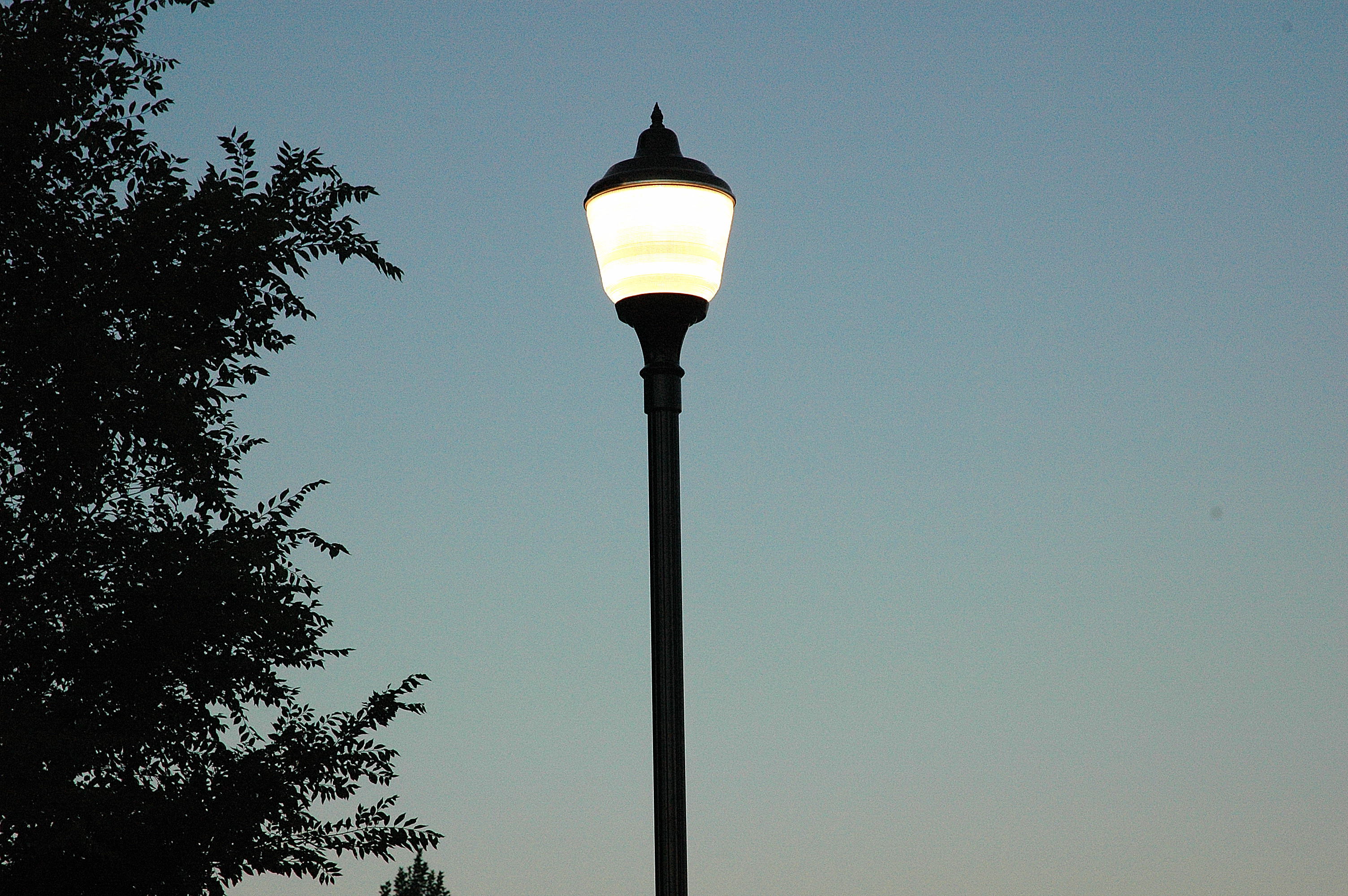
What we specified and installed are the 14-foot tall, LC-40 pole lamp posts (150W Ceramic Metal Halide (CMH)) manufactured by our national company in Nashville, Tennessee. The lamp posts are made of cast and extruded aluminum – and for this installation they were powder-coated black for an elegant and traditional look.

What really sets these lamp posts apart from any other installation you’ll see in Colorado today is the use of the Ceramic Metal Halide (CMH) bulb technology. These CMH bulbs with a life of 18,000 hours generate 12,000 lumens while producing a Color Rendering Index (CRI) ABOVE 90! What that means is that the flowers, trees, and rocks, etc. look the same way illuminated at night as they would appear during the daytime. What a concept! And unlike regular metal halide bulbs, CMH bulbs never experience any sort of color shift; i.e., the CMH bulb will always provide a pure white light from the first day it is turned on until the day it burns out.

As a comparison, the current LED technology can generate at best only 50 lumens per watt while the current CMH technology can generate 80 lumens per watt. LED technology is rapidly improving but it still has a way to go to compete with CMH technology where you need to have a lot of light (lumens) at the ground level.

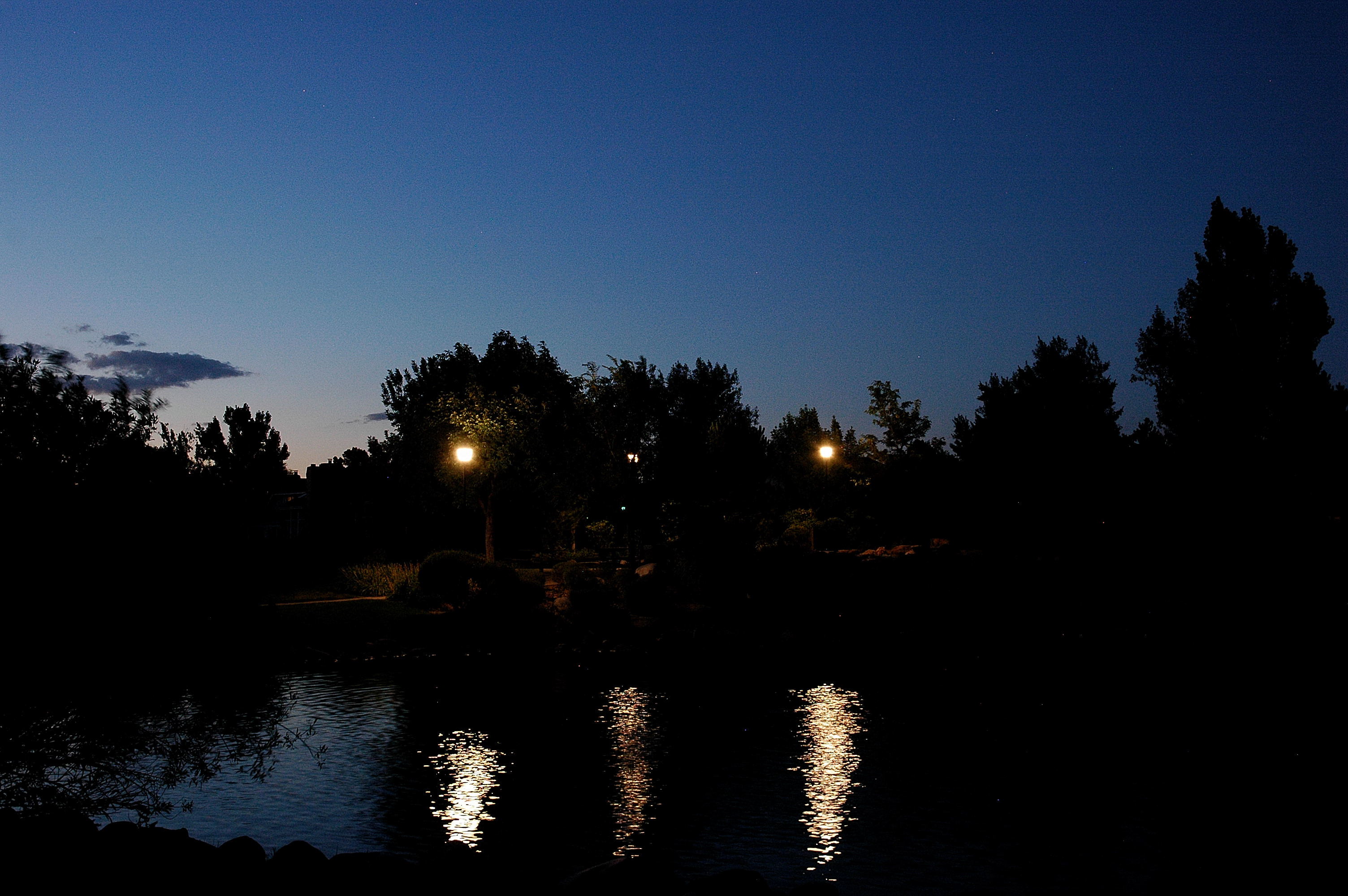
All of the lamp posts were mounted on four-foot deep, two-foot diameter concrete caissons with engineered rebar cages to withstand the higher wind loads that we encounter along the Colorado front range. I’ve attached some additional photos of the construction phase as well as some additional nighttime photos taken after the installation.

LC-40 Lamp Post Closeup at Piney Creek Park


Raising the First of Three Lamp Posts in Piney Creek Park

Piney Creek Park Lighting

Outdoor Lighting Perspectives LC40 Lamp Post - Piney Creek Park at Sunset

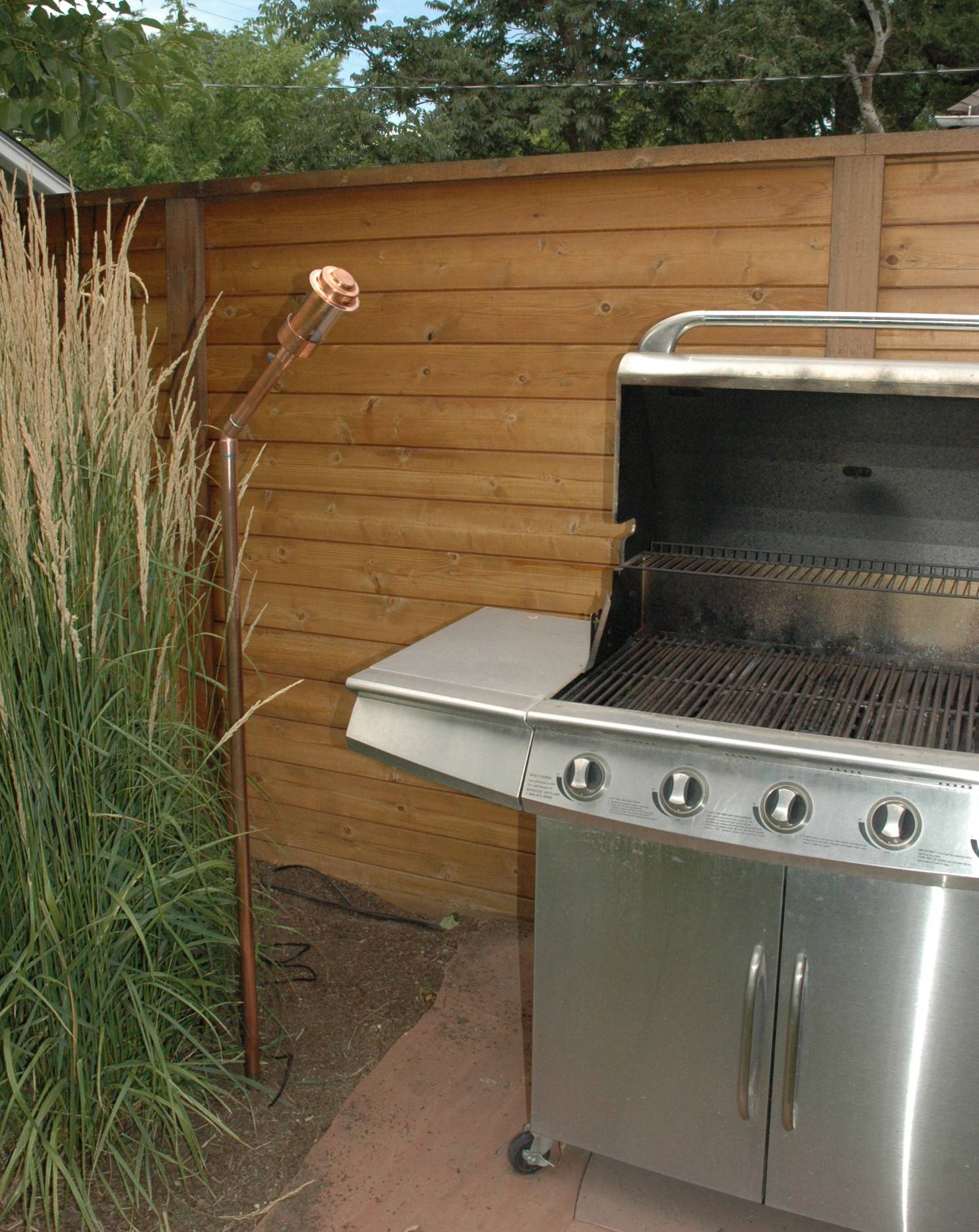
Custom Low Voltage BBQ Light

Custom BBQ Light

One of the advantages of being part of a large national/international lighting company is our ability to craft and install custom low voltage landscape/architectural lighting fixtures for our clients when the need arises. Last week we did a project for a customer who asked during the installation if there was a way to illuminate his barbecue grill. The customer wanted the ability to turn the BBQ light on and off separately from the rest of the landscape lighting system. The other requirement was that the customer did not want the lighting fixture attached in any way to the fence.

Our factory manufactures the copper BBQ lighting fixture assemblies with the black rubber all-weather switch and bulb socket assemblies. Our crew modified the assembly by installing a slightly larger copper flood head and mounting it at a 45-degree angle. By using an additional length of copper as well as one of our company’s heavy-duty underground PVC anchoring stakes, we were able to install the entire assembly behind some ornamental grasses.

The copper once it develops a patina will blend in nicely with the surrounding vegetation and fencing. The design and installation of this BBQ lighting fixture pretty much summarizes the goal of Outdoor Lighting Perspectives – and that is to emphasize the overall lighting effect with functional, unobtrusive, and durable lighting fixtures.

Custom Lighting Fixture Next to BBQ

Innovative Lighting for Backyard Sport/Game Courts

Sport-Game Court Illuminated with Low Voltage Lighting

People who live in Colorado are very active and many families throughout Colorado have installed sport-game courts in their back yards for family fun. Many communities, however, have very stringent regulations as to the placement and usage of these courts. Additionally, many communities do not allow the courts to be illuminated in the evening with line voltage (120V) lights (typically 150W metal halide).

Several years ago a homeowner approached us in this predicament and we performed an evening lighting demonstration with our low voltage quartz halogen fixtures.

Close Up of Low Voltage PAR36 Lighting Fixture

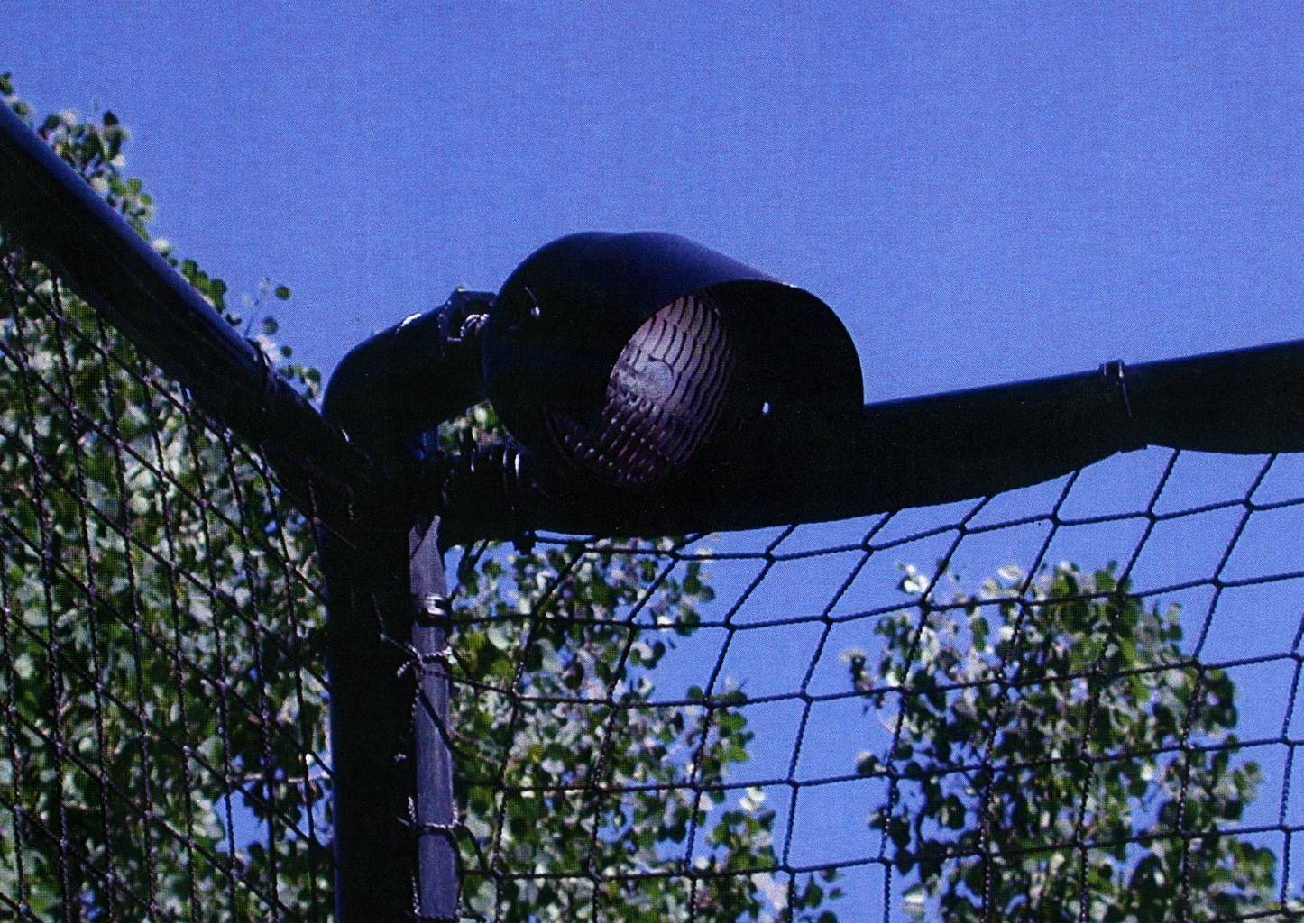
Our copper BB-01 copper flood lights with glare shields were painted black to blend in with the court’s fencing and netting – and the lights were conveniently controlled by the use of an all-weather switch next to the court. In previous years we have also illuminated a back yard ice rink in the mountains by mounting these same fixtures in trees and other strategic locations for very-spirited hockey games.

Our most recent installation was illuminating the sport court (with the Colorado Avalanche logo) shown at the beginning of the blog. Interestingly, the previous homeowner who had this court installed was one of the best goalies in NHL history – and he will forever be known in these parts as Saint Patrick!

The current homeowners use the court extensively and now they can actually see the volleyball net as well as the basketball nets at each end of the court! The low voltage lights and the anti-glare shields direct the light only where it’s needed – totally eliminating glare or light pollution into neighboring properties. As always with lighting, less is usually best in there’s absolutely no reason to light up a back yard court to the same lumen level as Invesco Field at Mile High. With this low voltage lighting system, the people using the court can see just fine thank you – without blinding their neighbors next door!

Low Voltage Fixture at Sunset

Important Questions to Ask Before Hiring a Landscape Lighting Contractor

As with any home improvement project, homeowners need to peform their due diligence on prospective contractors (including landscape lighting) before any project is begun. Many homeowners ask why they should work with us and our response is typically “maybe you shouldn’t.” That response can be a bit disconcerting to most homeowners but almost immediately they understand the point we’re trying to make. And that point is that until you ask the right questions and receive the answers you’re comfortable with and do the background checks on a particular company or companies, you really should not be proceeding with any project until that due diligence is completed.

The following are some questions we’ve been asked over the years – and others that homeowners should be including as well:

BUSINESS LICENSING/REGISTRATION/INSURANCE?  Is the business registered and in good standing with the Colorado Secretary of State’s office? Does the company have the appropriate state and municipal operational and tax licensing? Does the company carry the appropriate property and liability insurance?

BBB RATING?  Is the company listed as an Accredited Business by the Better Business Bureau and what is its rating? For example, Outdoor Lighting Perspectives of Colorado is listed as an Accredited Business by the Denver-Boulder Better Business Bureau and currently holds an A+ rating.

HOW MUCH LIGHTING EXPERIENCE DOES THE COMPANY HAVE?  Outdoor Lighting Perspectives (OLP) of Colorado has been operating since 1999 – and our national company has been operating throughout the country since the late 1980s and early 1990s. Lighting is the only thing we do day in and day out – so we have to be really focussed and good at what we do. As part of a large national/international company with over 60 offices, we receive frequent and on-going training with respect to the latest lighting products and technology, design and installation techniques, and customer service. Interestingly, about 85% of the lighting companies operating in the Denver-Boulder area in 2001 are no longer in business.

HOW MANY LIGHTING INSTALLATIONS HAVE YOU DONE? The old saying is that anyone can sell you lights, but not everyone can provide you with an effective and high quality lighting installation. The number of installations a company has done is directly related to their level of expertise and professionalism in being able to handle any type of project. OLP of Colorado has close to 1,500 installations under its belt – from the plains of Fort Morgan to a two-mile high mountain-top and all along the front range of Colorado. Companies who only do lighting as a sideline business typically never get close to us with the breadth and complexity of the jobs we tackle.

CAN THE COMPANY PROVIDE REFERENCES? Good and reputable companies should never be reluctant to provide reference sites to prospective clients. However, from a lighting design standpoint every homeowner has different tastes and even different budget ranges in mind. That’s one of the reasons that we provide the free evening lighting design demonstration so that every design is customized for each homeowner.

WILL THE COMPANY PROVIDE A PREVIEW? As a follow on to the previous topic, any good lighting contractor should be able to provide you with an evening design demonstration so that you can see what the system will look like prior to the installation.

WHAT WARRANTIES COME WITH THE SYSTEM? Obviously, warranties are only as good as the company that backs it up. We once had a prospect (now a customer) who had asked one of our competitors “whose lifetime?” when he spotted their “lifetime warranty” banner hanging somewhat precariously in their exhibit. As I mentioned above, most of the lighting companies in business locally in 2001 are no longer around.

ASK ABOUT THE COMPANY’S SERVICE/MAINTENANCE PLANS Do they provide service after the sale? More often then not a lot of homeowners find out too late that the company that installed their lights provide no help after the installation.

FIND OUT WHO DOES THE ACTUAL INSTALLATIONS Does the contractor have their own factory trained employees or do they pick up day-hires with limited on-site training? Do they provide workmans comp, etc. Do they only hire and employ workers who are in the U.S. legally.

WILL MY LANDSCAPING AND SPRINKLER SYSTEM BE DAMAGED? Reputable and experienced lighting contractors should leave your property as good or better than it looked before the lighting installation was started. One of the best compliments our crews receive at the end of the day from a homeowner is that it looks like they had a lot more work to do since they didn’t notice any disruption to the landscaping. And that’s the entire point – the homeowner should not see anything different about the landscaping except for the fixtures as well as the beautiful illumination in the evening.

All of our trenching is done by hand with thin slices in lawn areas. After the wire is buried, the sod folds back over and most homeowners cannot tell where the wiring had been run. With regard to sprinkler systems, occasionally one of our crews does cut a line but it is our responsibility to fix it. If the sprinkler system is more complex than what we’re experienced with, we can call in one of several irrigation companies to complete the repairs.

Of course there are many more questions that homeowners can and should ask with respect to contractors in general and lighting contractors in particular, but hopefully I’ve addressed the primary questions today in this short blog.

Veterans Memorial Lighting Project Completed in Time for Memorial Day

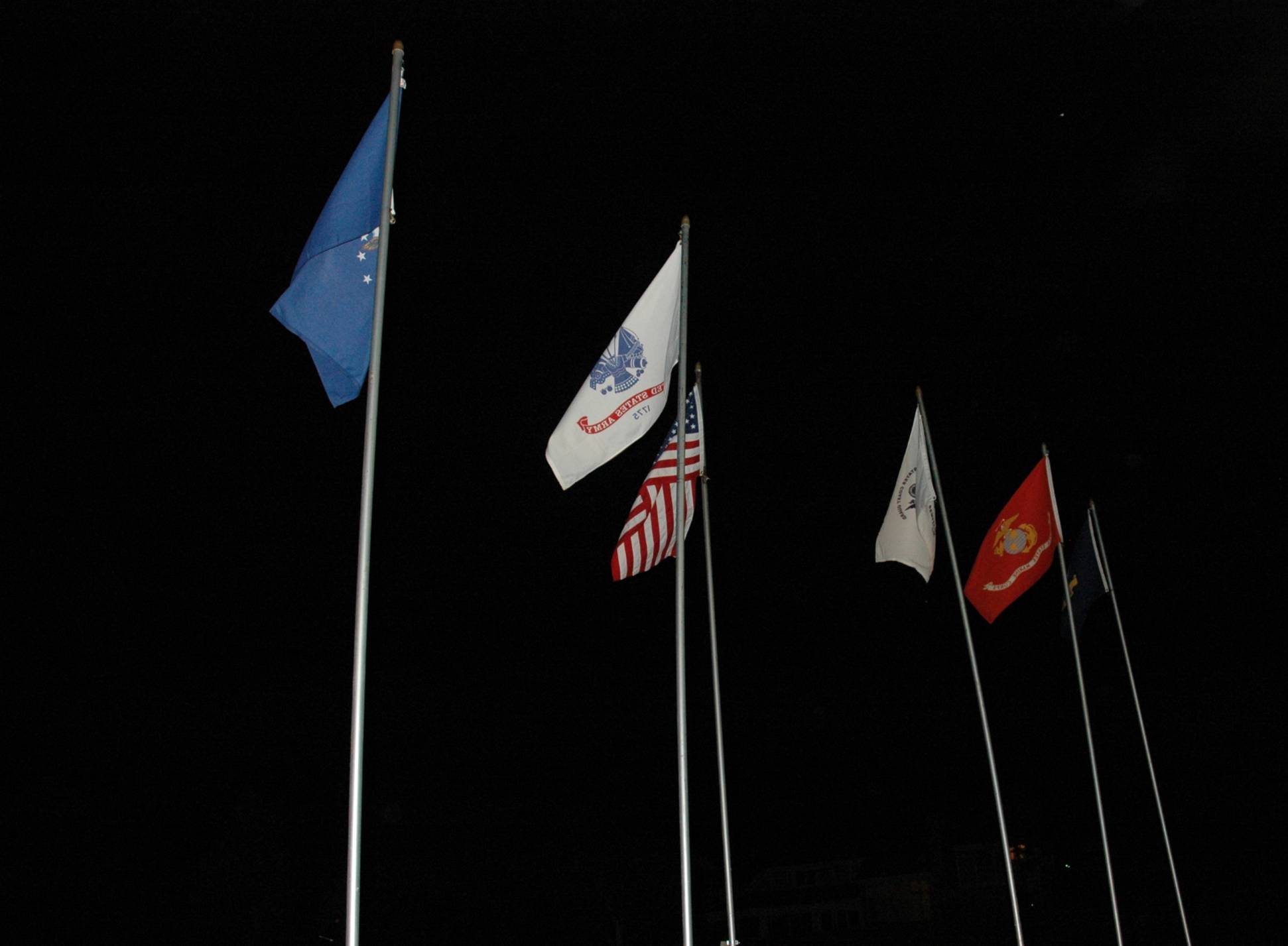
Lighting for Veterans Memorial – Piney Creek Park

One of our most rewarding lighting projects was completed this week as we installed a new low voltage lighting system to illuminate a veterans memorial at Piney Creek Park located in Centennial, Colorado. The memorial consists of six flags – the U.S. flag as well as a flag for each of the 5 branches of the military – Army, Navy, Marines, Air Force, and the Coast Guard. The flush mounted well lights with 35W quartz halogen bulbs were installed with tempered glass lens covers.

Since a grass lawn surrounded all of the flag poles, the lighting fixtures were additionally protected by poured concrete caissons to protect them from lawn mowing damage, etc.

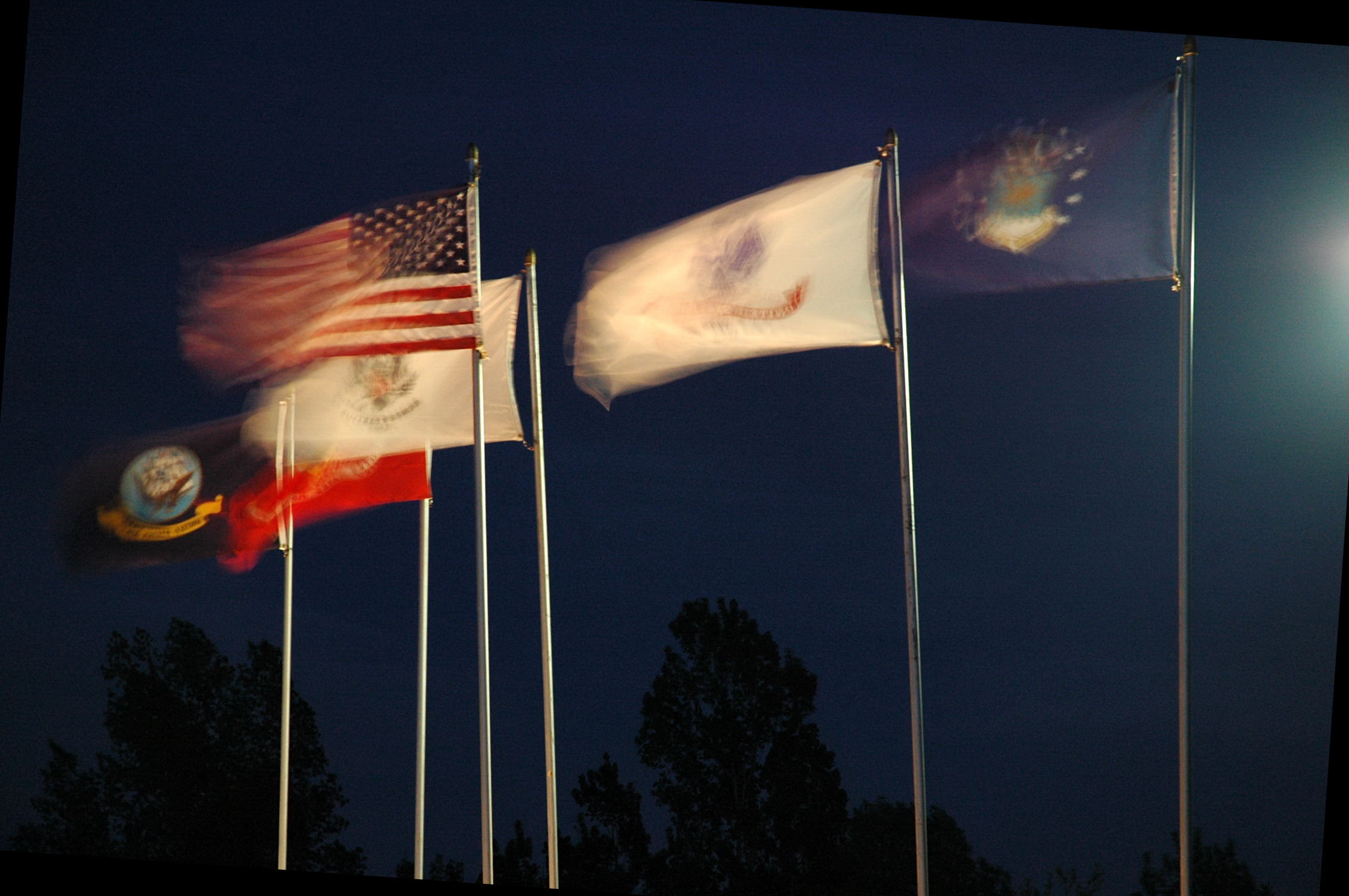
Veterans Memorial Lighting - Flags in Motion

Another photo to the right shows the flags in motion due to a brisk wind last evening. In fact when our crew was on site earlier this week installing the lighting, they experienced wind gusts approaching 70 miles per hour. In fact, the flag contractor was there at the same time to replace two of the flags which required that the flag poles be lowered to a horizontal position. Because of the wind, it took the flag contractor along with some of our crew to help raise the flag/flag pole back to a vertical position.

With Memorial Day a few days away and with the recently completed HBO series The Pacific that was produced by Tom Hanks, the flag raising evoked images of the raising of the U.S. flag on Iwo Jima during World War II. The ultimate sacrifices that our young men and women have made in the service to our country for over the last two centuries cannot be overestimated.
 
As we enjoy time off from work with our friends and family this Memorial Day weekend, please reserve some time to remember the millions of Americans who served our country both in war-time and peace-time, who were severely injured and/or are still suffering debilitating injuries, and those who paid the ultimate price of giving their lives. And if you encounter a vet during your daily activities, please extend the courtesy of thanking them for their service.  Or better yet, attend a Memorial Day Parade where some of the few surviving World War II veterans may be marching. I recently heard that 1,000 WWII vets are dying daily.
 

Force of Mother Nature and Outdoor Lighting

Back Yard Fire Caused by Overhead Power Line Being Snapped by Falling Tree

We design and install our landscape and architectural lighting systems to withstand almost everything mother nature can throw at them – from six foot deep snow drifts in the winter time, driving rain in the spring and summer time, and to salty environments in the coastal locations. But sometimes Mother Nature  lets you know that she’s really a force to be reckoned with.

On Monday of this week, the Denver metro area endured sustained winds of 45 mph with gusts to 70 mph- a few mph under hurricane force winds. I had been out in this wind with one of my crews and several times we almost got swept off our feet. Sure enough the phone rang several times the next day with calls from customers saying that some of their fixtures had been damaged by wind-blown debris.

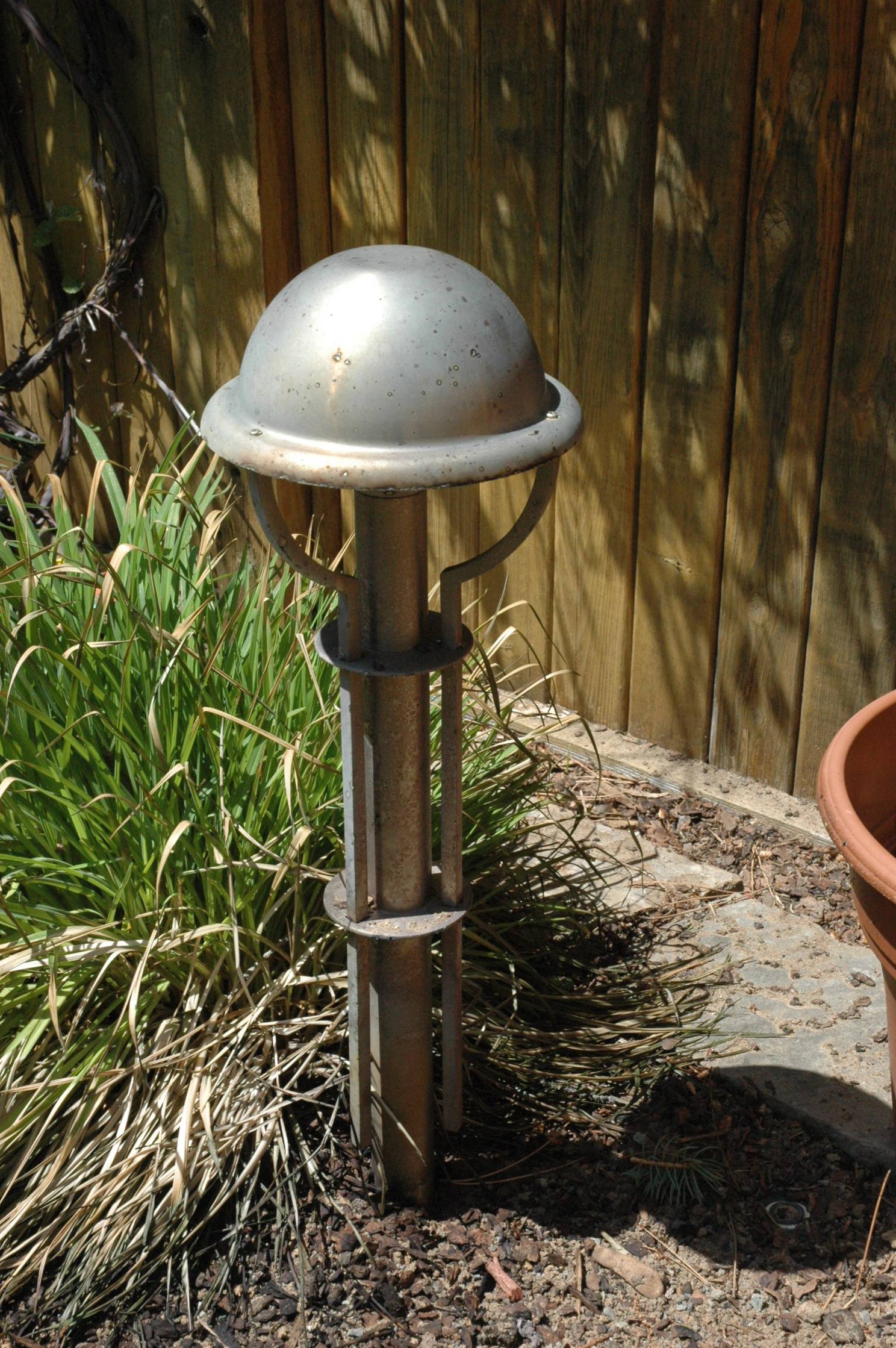
The most major damage, however, was reported by one of our customers in the Hilltop neighborhood. One of his neighbor’s trees was blown over by the wind and severed the overhead XCEL power line causing the 80-foot tree to instantly become a fireball. One of the Kichler modernistic brushed nickel path lights can be seen in the photo below after the fire.

Thankfully, neither the homeowner’s family nor any of his neighbors were injured by the falling tree that was on fire or by the high voltage line that had just been severed. In fact, if you ever see a cut loose overhead wire on the ground or dangling from the air – NEVER, EVER approach it. Call 911 immediately so that the utilties can be called to cut the power as soon as possible. It may literally mean the difference between life and death to another unsuspecting passerby.

The other thing that happened was that the high voltage overhead power line sent a surge through the low voltage lighting system that in turn blew out the low voltage transformer and the GFI wall outlet. The good news is that our stainless steel transformers are designed and manufactured to code to be able to contain a catastrophic event such as this one. And the GFI outlet tripped and then failed preventing the outside surge from entering the rest of the house’s wiring system.

We just started our 12th year of installing lighting systems in Colorado, and this is the first time that we ever had an overhead line voltage power line get severed and then cause all of this other damage. After checking with our factory in Nashville, the folks there who have been doing this for over 20 years have never experienced a scenario such as this one. They have experienced damage to lighting systems due to lightning strikes but not from overhead power lines being severed.

Our Nashville office is currently dealing with the aftermath of the major flooding with respect to the repair and re-installation of entire lighting systems. And of course our New Orleans office is still dealing with the devastating effects from Hurricane Katrina. All we can do is to make our lighting systems as foolproof and as safe as possible, but sometimes Mother Nature reminds us who is really the boss.

Sleeves Make Landscape Lighting a Lot Easier

Examples of 1.5-, 2.0-, 4-inch diameter sleeves

Many homeowners this time of year are contemplating or even starting home improvement and landscaping projects, including new walkways, patios or driveways. With any type of hardscaping project, please make sure that sleeves are installed beneath any new concrete or brick pavers so that irrigation pipes/control wiring, lighting wiring, and speaker/sound system wiring can be installed at any time after the new hardscaping surfaces have been completed. Above you can see examples of the typical sleeve diameters used for most residential installations.

So what are sleeves exactly? They are heavy-duty polyvinyl chloride (PVC) conduits through which sprinkler irrigation and other wiring can be easily run whenever that phase of the project is ready to begin. Typically, hardscaping contractors will indicate the positioning of the sleeve(s) by a “vee”-shaped notch in the edge of a sidewalk or driveway for example. This saves a lot of work searching for sleeves as well as a lot of unnecessary disruption to the surrounding landscaping.

Since sleeves are relatively inexpensive compared to the increased time and labor cost of boring under a wide driveway, for example, my recommendation is to always install more sleeves than you think you’ll ever need. The other rule of thumb is not to use the same sleeve for both electrical wiring and irrigation pipes, for obvious reasons.

In fact today our crew was doing a lighting installation at a community entrance where the sleeve under the street has become a major headache. The original landscaper installed only one 4-inch diameter sleeve under the street – and then proceeded to run both the 2.5-inch irrigation pipe and all of the irrigation control wires through that same sleeve. Of course, the water and the electrical wiring should have been in separate sleeves. If that had been the case, our low voltage wiring could have easily been pulled through the wiring sleeve. As it is now, we’ll have to investigate other options including directional boring at $18 to $20/foot.

Community developers should also plan on providing line voltage power either behind entrance monuments or nearby to facilitate the installation of irrigation controllers, outdoor landscape lighting systems, and holiday lighting.

So the next time you’re planning an outdoor project, please do not forget the sleeves!

My Landscaper Did the Wiring

Twice during the last week I heard the five most dreaded words that a lighting contractor can hear from a homeowner – my landscaper did the wiring. They invariably follow that statement by saying that he did a really great job with the landscaping, but that he apparently wasn’t an electrician.

At one homeowner’s house, the electrician tapped into an existing circuit inside the house to power two 1120W low voltage transformers on a 15-amp breaker. Not only was the 120V circuit overloaded, but the landscaper had overloaded each of the transformers as well. The homeowner mentioned that when the lights came on at night, the interior switches and outlets inside the house would become very hot to the touch. That’s certainly not what you want to hear.

At another customer’s house where we’re about to install a new lighting system in the back yard, we have yet another landscaper electrical issue to resolve before the new lighting system gets installed. In this instance, the landscaper tied into an interior circuit to add an exterior outlet (to power some existing landscape lights), as well as to power two massive pumps for the water feature. This is also a no-no with the National Electrical Code.

Over the years, we’ve also seen serious mistakes by landscapers on the low voltage side. Loose connections result can result in higher amperage loads that can cause arcing and fires. And, we’ve often seen the charred remains of wiring where instead of cutting the wiring to the proper length, the landscapers will just coil it up in the ground or in the mulch. That of course results in ever increasing amp loads in the coil causing a meltdown.

The basis of every good low voltage lighting system first relies on the quality design and installation of the line voltage circuit that powers it. That is why we always rely on the expertise and experience of qualifed master electricians to ensure that any line voltage work is done to code – for not only the safety of our customers and their homes but for the reliability of our lighting systems as well.