To Zone, Or Not to Zone… Important Landscape Lighting Design Question

Preliminary Landscape-Outdoor Lighting Design with Zones

One of the first questions a landscape lighting designer or contractor must ask a client is how they intend to use their outdoor space – and what the primary motivation is for them to be adding this new lighting. One of the mistakes that inexperienced lighting designers make is to assume how the client will be using their outdoor living space and lighting. After all, the client is the one who lives there 365 days per year and not the designer.

Landscape and outdoor lighting provides aesthetics, safety, security, and usability for a homeowner’s property. Oftentimes, homeowners will want the lighting for all four of the above categories or as few as one; e.g., security. If security lighting is the primary purpose, then chances are the homeowner will want to have the lights operate from dusk to dawn – and from a control standpoint you would only have to have one zone.

 If the primary purpose of the lighting is for aesthetics only and the homeowners go to bed around 11:00 PM every night, then there’s no point in increasing their electricity bill to operate the lights until 3:00 AM if they are not awake to enjoy them. The same thing can be said for usability of the outdoor living space. If the pond has been drained for the winter and there are three-foot deep snow drifts on the back patio, most homeowners will not be outside barbecuing in the dead of winter – and probably will not be using their lights quite as much. As far as safety, most homeowners do typically like to leave a few of their lights on all night long whether they be carriage lights by their front door or a few landscape lights to light the way along the sidewalk. 


All of the zones have been programmed to turn on and off automatically, but the homeowner can turn off any of these zones manually using this 8-button switch. So even after the installation of the low-wattage LEDs, no energy will be wasted at this homeowner’s house.

 Most homeowners typically want to control their back yard lights separately from the lights in the front yard – and they typically have their front yard lights operate for a few hours longer. We have also installed quite a few systems where the homeowners operate the path lighting all night long but have the uplighting for the house and trees turn off at midnight or earlier. We once did a landscape lighting installation for a former Denver Bronco offensive lineman. We had lit up his kids’  jungle gym but he wanted to be able to turn those lights off when he had get-togethers at his house with his team mates. He didn’t want anything to get broken – neither the play equipment or his fellow team mates. For smaller properties that require fewer landscape lighting fixtures, there is typically not much of a need for separate lighting and control zones – and separate zones can unnecessarily drive up the installation cost for a small system. For larger systems, however, separate control zones can help a homeowner save money on their monthly electric bill while also helping the environment. 

See the New Landscape Lighting LEDs at the 2012 Colorado Garden & Home Show

There are three days remaining to see the 2012 Colorado Garden & Home Show, and hopefully you’ll be able to stop by the Outdoor Lighting Perspectives exhibit (#1442) to see the latest landscape lighting products. In the meantime, please enjoy the short video tour below where we highlight our latest LED products:


New PAR36 LED Bulb Launched by Denver Office of Outdoor Lighting Perspectives

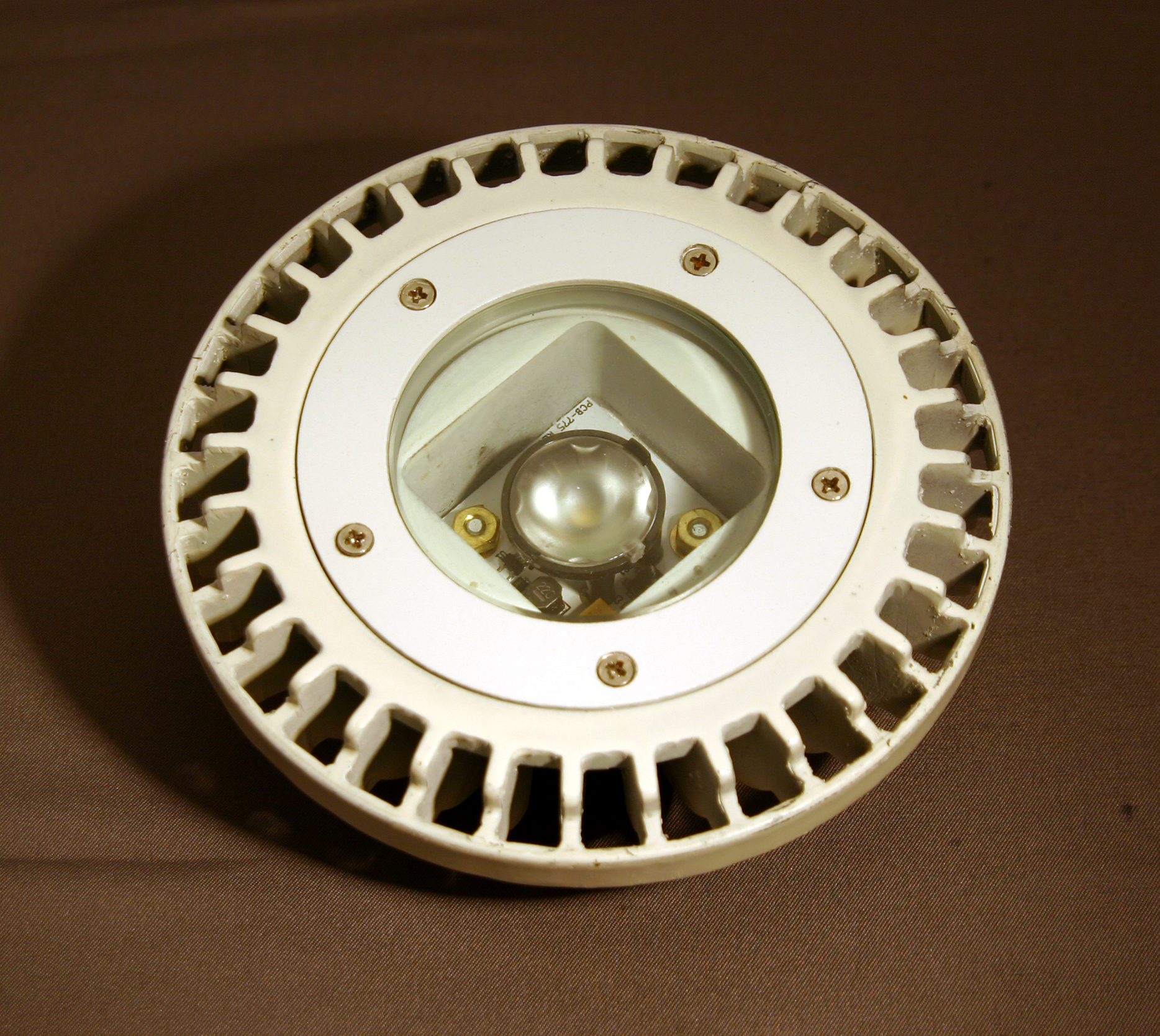
PAR36 LED Bulb

At 10:00 AM at the opening of the 2012 Colorado Garden & Home Show on Saturday, February 11th, the Denver office of Outdoor Lighting Perspectives launched this revolutionary new landscape lighting bulb to the Colorado market. More than two years in development and testing, OLP’s new PAR36 LED bulb (6W) will truly transform the landscape lighting business as we know it. The bulb can be used for new installations or to retrofit existing landscape lighting well light fixtures having the standard PAR36 bulb dimensions.

 
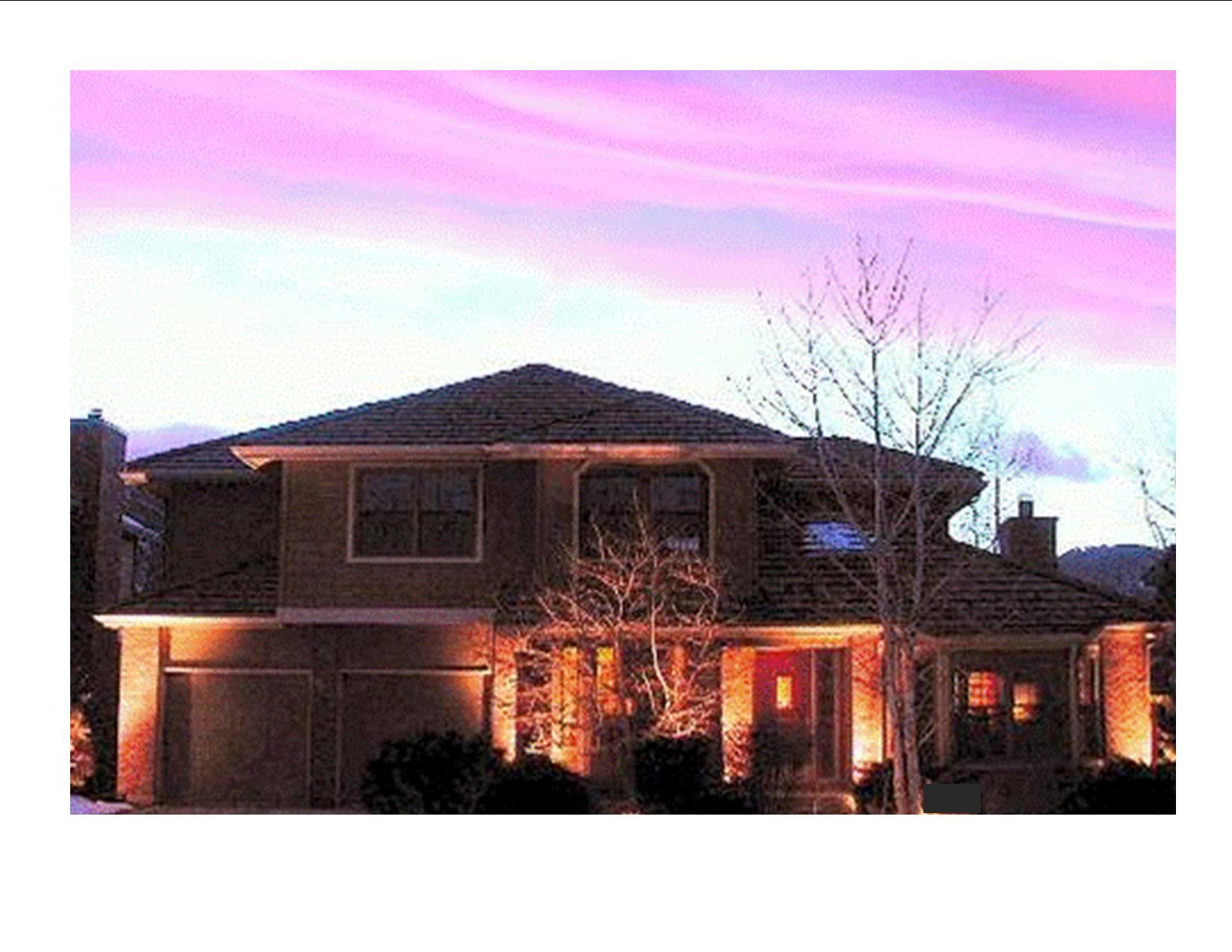
Based on the Cree (made in the USA) LED, the OLP PAR36 LED bulb has the best light output, color rendition, and color stability of any other product on the market today. On display in the OLP Booth (#1442) are comparison photos of the same house – one illuminated by the new LEDs and the other illuminated by quartz halogen. Most people cannot see any difference in the two photos, but they will see a huge difference in energy usage – as much as 83-percent.
 
This bulb is so good that OLP is also offering a Lifetime Maintenance Warranty Program for these new PAR LED installations or retrofits. In addition, B&B Manufacturing in Nashville (OLP’s official supplier) is also offering $5.00 per bulb rebate now through April 30, 2012. OLP staff will be on hand for all nine days of the show, so stop by our exhibit and do the comparison test for yourself.
 

Landscape Lighting Specials at the 2012 Colorado Garden & Home Show

7-Light Special

Outdoor Lighting Perspectives (Booth #1442) will be offering two extremely attractive landscape lighting specials at the Colorado Garden and Home Show that starts Saturday, February 11th.

 
We will be offering a 7- light show special (7 halogen well lights, transformer, and complete installation) as well as a 10-light show special (7 well lights, 3 copper path lights, 600W transformer, and complete installation) – at prices not seen since 1999.
 
To learn more details and to take advantage of these special offers, please plan to visit us at the show. And, if you would like to discuss a specific lighting project for your home or garden, stop by with a photo and we would be glad to discuss it in more detail with you.
 
See you at the show,


$2 Off Admission at the 2012 Colorado Garden & Home Show

Courtesy of Outdoor Lighting Perspectives, click on the following coupon, print it out, and take it to the ticket window at the 2012 Colorado Garden and Home Show. With this coupon, you will save $2 per ticket (two tickets maximum) on admission to the show. We’re located in Booth #1442, so stop by and say hello.

Outdoor Lighting Product Highlights – 2011 Colorado Fall Home Show

OLP of Colorado Exhibit

Just in case you missed the 2011 Colorado Fall Home Show, not to worry – I have included the highlights and a short video tour of Outdoor Lighting Perspectives of Colorado’s exhibit including all of our new product introductions.
 
As an attention-getter, the new LED Snowfall lights were unequalled and they drew young and old alike.
 

LED Retrofit for Gas Lantern

The Solas Ray LED retrofit kit for gas and electric lanterns also drew a lot of interest as did the new Lighting Control Automation(TM) upgrade for internet-based lighting control with a SmartPhone or tablet.

 
For more information, please watch the short video tour below:


I hope that you enjoy the tour – and please contact us if you have any questions about these new products.
 

Come See Us at the 2011 Colorado Fall Home Show

The 2011 Colorado Fall Home Show is the only home show that is being held through the end of this year – so please come on down and visit the Outdoor Lighting Perspectives of Colorado exhibit (#514) at the Colorado Convention Center in downtown Denver. Discounted coupons for attending the show are available by clicking here.

SHOW DATES AND HOURS

    • Friday, September 9          (10:00 am to 8:00 pm)
    • Saturday, September 10  (10:00 am to 8:00 pm)
    • Sunday, September 11      (10:00 am to 5:00 pm)

LED Snowfall Lights

    Our exhibit will be showcasing the latest in holiday and Christmas lighting products (LEDs, snowfall lighting, kinetic laser, garland, etc.); smart  phone and internet-based Lighting Control Automation(TM); and the latest in LED and halogen landscape/architectural lighting. In addition, we will also have an LED fixture on display that simulates the look of a gas carriage lighting fixture.
    We hope to see you at the show – please stop by and say hello.

How Does Ambient Lighting Affect the Design of Landscape and Architectural Lighting?

According to Webster’s, the definition of ambient is surrounding; on all sides. For a landscape lighting or architectural lighting designer, ambient lighting typically represents the baseline amount of illumination on a particular property or structure in question – for which the designer may or may not have any control. We’ll talk more about this later in this post. The most important point is that it would be just as irresponsible for a lighting designer to design an outdoor lighting system for a home or business without first knowing the level of existent ambient lighting – as it would be for an architect to design a custom home or commercial building without first having a contour and site plan.

3.7W LED Illuminating Entrance Monument

For example, in the mountains of Colorado where the only ambient lighting originates from the moon or perhaps the Milky Way, a low voltage quartz halogen (20W) or LED (3.7W) lighting fixture would be more than sufficient to illuminate a community entrance monument.

Glare from HPS Street Light

Conversely, trying to illuminate a commercial building or community entrance with low voltage lighting that faces a row of 250W high pressure sodium street lights, just would not be very effective. In this situation, a higher wattage ceramic metal halide or metal halide fixture must be used so that the building or monument is illuminated to at least the level of the ambient lighting, in order to effectively highlight them.

The best rule of thumb for any good energy efficient and aesthetic lighting design is to use only the amount of lighting needed – nothing less and nothing more. Lighting designers and lighting contractors love to sell lights, but the operative phrase should be Less Is More.

When you are designing a lighting system in the city, ambient lighting may originate from a streetlight across the street or from the overall sky glow that envelopes the entire region. There is nothing that a lighting designer can do about that, except for possibly encouraging the city to adopt more energy efficient and sky-friendly street lighting, etc. However, some glare-producing and inefficient lighting may be self inflicted by the property owners themselves – and lighting designers can certainly make recommendations to improve the overall effect of this lighting so that the new lighting design will not be ruined by the glare-producing ambient lighting.

For homeowners, the glare from offending light sources such as carriage lights can be mitigated by replacing the fixtures’ clear glass panels with frosted glass panels, by decreasing the wattage of the bulbs, and/or by dimming the bulbs. The same thing can be done with offending soffit lights by using lower wattage bulbs and/or by dimming them.

For commercial building owners, the overall lighting effect can be enhanced by ensuring that all lighting is directed only toward its intended focal plane; e.g., area lighting with full-cutoff (parking lot lighting and walkway lighting) directed downward only (no spillage horizontally); architectural lighting that is directed only toward the building with no glare produced in any other viewing plane.

The National Energy Education Development (NEED) project has determined that the percentage of energy consumption in the U.S. dedicated to lighting is roughly 11-percent for homes and 38-percent for schools and businesses. That’s a significant percentage, so by reducing unnecessary glare that contributes to unaesthetic ambient lighting – we can begin to make our nighttime environment more attractive as well as save energy.

Celebrate National Night Out in Colorado

Celebrate the 28th Annual National Night Out in Colorado and throughout the country on Tuesday evening, August 2. National Night Out has been billed as America’s Night Out Against Crime. The NNO 2011 Campaign involves citizens, law enforcement agencies, civic groups, and business and neighborhood organizations from over 15,000 communities in all 50 states, U.S. territories, Canadian cities and U.S. military bases worldwide.

The goals of the National Night Out are to:

  • heighten crime- and drug-prevention awareness
  • generate support for local anticrime programs
  • strengthen neighborhood spirit and police communication partnerships

Solidarity and support of NNO is commonly shown by the traditional display of outdoor lighting including front porch lights, landscape/architectural lighting and through the participation in front porch vigils and neighborhood get-togethers.

Landscape Lighting Makes This Home Safer and More Secure

As the owner of a lighting company, I’ve been trained and well-versed in the art of illumination to remove “dark and scary” spaces around the perimeter of a home and property. Local law enforcement repeatedly advises homeowners that lighting is a key component of crime prevention. The City of Golden’s Police Department states that:

it is a recognized fact that good lighting is a deterrant to crime. It not only makes the area safer for the homeowner, but also forces the intruder to work in an area where he may be exposed and reported to the police.

To participate in one of this year’s NNO 2011 events, please check one of the links below:

COUNTIES:     Arapahoe, Boulder, Broomfield, Denver, Douglas, El PasoJefferson, Larimer

CITIES/TOWNS:  Aurora, Colorado Springs, Denver, Golden, Lakewood, Littleton, Lone Tree, Longmont, Parker, Sheridan, Westminster

Thanks in advance for your participation and for helping to make our communities safer.

Why Did My Landscape Lighting System Stop Working?

During the past week, Colorado has been subjected to a daily occurrence of severe thunderstorm activity with heavy rains and extensive lightning. It is not at all unusual for us to start receiving calls from customers asking why their landscape lighting systems have stopped working.

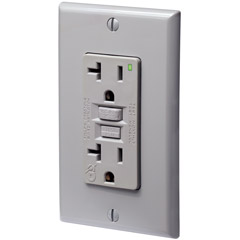
GFCI Outlet

If all of the landscape lights in a system stop working, typically there is a problem with the power to the low voltage lighting transformer. And 90-percent of the time the loss of power is due to a tripped Ground Fault Circuit Interrupter or GFCI. In some circles, some electricians and homeowners will also refer to these outlets as just a GFI. During stormy weather with heavy moisture and power surges created by lightning strikes/outages – GFCIs can sometimes trip due to their sensitivity.

That sensitivity of GFCIs is actually a good thing because it protects people from possible electrocution. When a hand tool or appliance is in use, the GFCI monitors the amount of current flowing from the hot to the neutral. If there is any imbalance in the current (as little as 4 or 5 milliamps), the GFCI can trip in as quickly as one-thirtieth of a second. If a person is standing outside on the ground and using an electric circular saw while it is raining, the saw is wet and a path is created from the hot wire through that person to the ground. If all of the current is diverted through the person, that could be fatal. That is why the National Electrical Code (NEC) requires the installation of GFCI outlets in new construction for electrical circuits in bathrooms, laundry rooms, kitchens, garages and on home exteriors. Older homes may only have one or two GFCI outlets (typically in bathrooms) to protect the circuits in the garage, kitchen and exterior.

So if your lights are not working, first check the outlet where your low voltage lighting transformer is plugged in. Plug in a radio or small appliance to see if you have power there. If there is no power, find and try to reset the GFCI. If the outlet where the transformer is plugged in does not have the GFCI test and reset buttons, you will need to find it. Remember that the actual GFCI for the circuit could be located in the garage, bathroom, laundry room, or on another outlet on the exterior of the house.

Once you have located the GFCI, push the reset button – and recheck the outlet by the transformer to ensure that the power has been restored. If there is still no power, you will have to keep looking for the GFCI that controls the circuit for the lighting. In newer houses, some garages may have as many as four or five separate GFCIs to accommodate power tools and central vacuum systems.

If you have reset the GFCI and the power has been restored, your lighting system is good to go. However, if your lighting system is controlled by a mechanical timer, you will have to reset the current time on the timer to ensure proper operation. If your system is controlled by a digital timer with battery backup or with Outdoor Lighting Perspectives’ (OLP) Lighting Control Automation™, just restoring power to the transformer is all you will need to do.

In the event that you tried to reset the GFCI and it would not physically reset, you should check your electrical panel to see if a breaker tripped for that circuit. If a breaker has tripped, reset it and then try again to reset the GFCI outlet. During this process if you have any problems resetting either the breaker or the GFCI, it would be a good idea to call in an electrician. Electrical breakers and GFCIs can break down and malfunction over time. In fact, the more times that breakers and GFCIs trip, the more susceptible they are to tripping the next time.

In the beginning of this article, I mentioned that 90-percent of the time that landscape lighting systems stopoped working due to GFCI outlets tripping. The other 10-percent of the time can be attributed to the fact that someone unplugged the low voltage transformer and neglected to plug it back in or to a problem connected to the control system.

Control system problems occur frequently with the older technology – mechanical timers, photocells, and X10. Those control system issues have been solved with Lighting Control Automation – but you still have to ensure that the automatic/manual controller inside your house has power 24/7 for the system to operate properly.

So the next time you have an issue with your landscape lighting system, try these steps first before scheduling a service call. However, please feel free to call our office at any time if we can be of further assistance.

← Back

Thank you for your response. ✨