GE Lighting Revolution Tour Is Coming to Denver

The GE Lighting Revolution Tour  is coming to Denver (Auraria Campus) on Wednesday, July 6th, 2011. As part of a 45-city tour throughout the U.S. and Canada, GE is showcasing the latest in lighting technology including LED, Ceramic Metal Halide, linear fluorescent, and compact fluorescent bulbs.

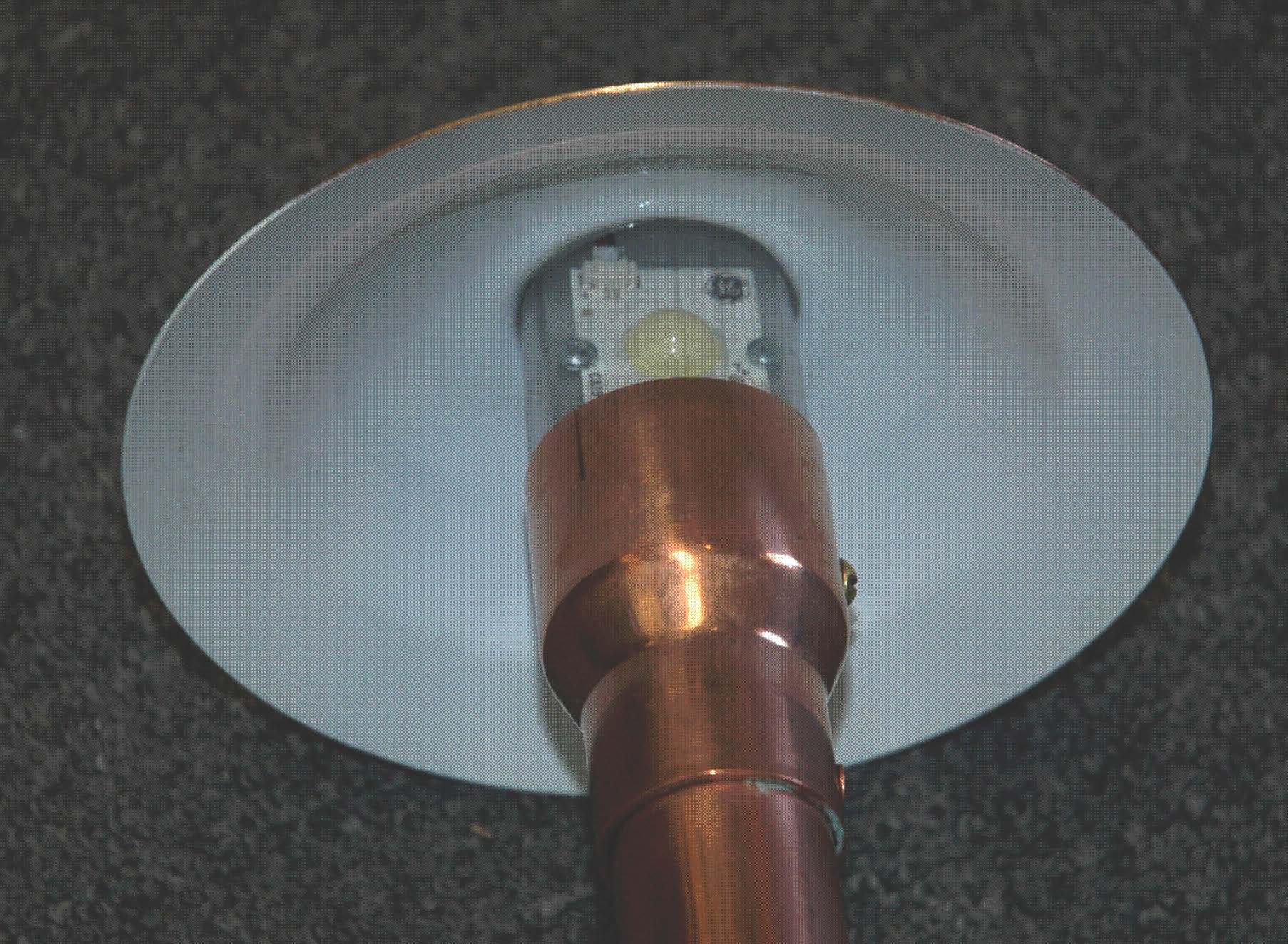
BB07 Path Light Powered by GE Vio LEDs

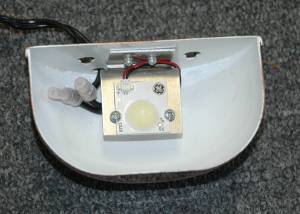
On display in the GE exhibit is their Vio LED technology that powers Outdoor Lighting Perspectives’ (OLP) copper path lights (BB07s and BB07.5s) as well as the BB04 flood lights and BB08 deck lights. OLP’s BB07 path light uses two of the Vio 3.6W LEDs – and by far it is the brightest and truest color path light available today. In fact, GE had some of these OLP fixtures on display at their exhibit at last May’s Light Fair in Philadelphia.

 
BB08 Deck Light Powered by GE Vio LED

The Vio LEDs are available with a (Color Rendering Index) CRI of 70 or 85 and at three different color temperatures (3000K, 3500K, and 4100K). The LEDs are rated to have a 70% lumen depreciation after 50,000 hours of operation – and are totally mercury free.

 
To see the truly amazing lighting effect with this new LED technology, plan to visit the GE exhibit when it comes to Denver or contact Outdoor Lighting Perspectives of Colorado for a complimentary evening lighting demonstration.
 

Can Landscape Lights and Mulch Coexist?


Mulch Covering Well LIght Causes Acrylic Lens Cover to Melt

During the spring months in Colorado, most homeowners start turning their attention to their outdoor living spaces, gardens, and lawns. A big part of this effort includes cleaning up any remaining leaves and other wind-blown debris from the property, and freshening up  the planting beds by re-mulching.


For those homeowners who also have landscape lighting systems installed on their property, it is critically important that none of the landscape fixtures become carelessly covered up by mulch during this process. If an outside landscaping contractor or handyman has been hired to do the re-mulching, it is encumbent on the homeowner to alert them to the location of each and every fixture – and instruct them not to cover up the fixtures. Many years ago one of our customers was out of town, and on a Friday afternoon, their landscaper carelessly dumped a 6-foot tall pile of mulch on one of the well lights. The landscapers didn’t plan to go back to the house until Monday to distribute the mulch – and early on that Saturday evening a girl riding her bicycle saw the resulting mulch fire. Fortunately, she summoned her father who was then able to douse the fire with a garden hose.

Our national company initially installed well lights without lens covers – and then quickly transitioned to the acrylic lens covers. For about the last four years, we’ve been using tempered glass lens covers on every well light that we install. The glass is thick enough that it prevents the outside of the lens from becoming as hot as the previous acrylic ones, and it keeps flammable materials from contacting the bulb directly. Surprisingly, most of the other major landscape lighting manufacturers are still not using lens covers of ANY kind. It’s not been uncommon when our crews are servicing non-OLP systems to find other manufacturer’s well lights that are totally covered by mulch. In some instances, we have found situations where a mulch fire had started previously.

OLP Well Light with Tempered Glass Lens Cover

As with everything else around the home, it does not take a lot of time to do some preventive maintenance to ensure that the lights are not being covered up by mulch, tumbleweeds, or leaves. Another rule of thumb is not to purchase the least expensive mulch (usually the lightest) that tends to blow away during the first good wind storm. In the early 2000’s, the National Electrical Code also addressed this issue by requiring that low voltage transformers have secondary circuit protection (the wiring that goes to the fixtures in the landscaping).

 
As lighting systems transition from quartz halogen to LED, mulch-related heat buildup problems and issues will decrease. However, in addition to safety, another main reason to ensure that your lighting fixtures are not covered up by mulch or dirt is because the light will be blocked – but you will still be paying the electric company for it anyway!
 

Can Line Voltage Lamp Posts be Converted to Low Voltage?

Retrofit Low Voltage Quartz Halogen Column Lights

In many of the older neighborhoods in Denver and along the front range, line voltage column lights or lamp posts had been used to illuminate the entrance walkway or driveway to a home. Over many years of time, this underground wiring has become corroded, frayed and/or cut – rendering the lighting fixtures inoperable.

One solution of course would be to trace and identify the defective wiring and either fix it or replace it completely. However, trenching and burying new line voltage wiring (18-inches deep in conduit or 24-inches deep for direct burial) can be very costly, not to mention the disruption and damage to the mature landscaping.

Fortunately, there is a much more cost effective solution for restoring power to these line voltage lamp posts and column lights – and that is by installing a low voltage transformer by the house – and running new low voltage wiring (6-inches deep) to the fixtures. The above photo shows an Outdoor Lighting Perspectives (OLP) installation along the 6th Avenue Parkway in Denver. In addition to not having any power to the columns, the existing fixtures were beyond repair as well. OLP installed two of its copper/brass BB-14 lanterns with 35W quartz halogen bulbs to replace the old fixtures. Not only did the homeowners save money by not having to replace the line voltage wiring, they will also be saving money over time by using more energy efficient bulbs.

LED vs. Incandescent Post Light Comparison

By using GE Vio LED technology, OLP can now provide a 50,000 hour lighting retrofit solution for new or existing lamp posts or column lights. In the photo, the fixture powered by GE Vio LED 7.2W total (left) is shown next to a regular 40W incandescent bulb. Fixtures having a frosted lens or globe work best as it allows for a better diffusion of the light.

 
So if you currently have any lamp posts or column lights that are having power issues, you may want to consider the less expensive option of retrofitting them to low voltage LED or quartz halogen – and saving additional money on your monthly electric bill.


Outdoor Lighting Perspectives of Colorado Is A Certified ReDirect Guide Green Business

Outdoor Lighting Perspectives of Colorado has been certified by and included in the online and print versions of the ReDirect Guide – the Denver/Boulder/Fort Collins regional guide to green businesses, resources, information and discounts. Each company selected for the Guide is personally screened by a ReDirect Guide staff person to ensure that its products and company practices are truly green. We’re certainly proud to offer our customers the latest in energy savings lighting (LED, induction fluorescent) as well as lighting energy audits.

You can pick up a print copy (on recycled paper) at these Colorado front range locations. The Guide contains a wealth of information on green products and services for your home and business, as well as upcoming environmentally conscious community events. In addition, the directory also contains a section of educational articles – and OLP of Colorado was proud to have sponsored the article on LED Outdoor Lighting that can be found on page 85.

OLP of Colorado is listed under two categories in the GuideEnergy Audits on page 168 and Landscape Contractors on page 203. We’re truly proud to be a part of this Colorado green directory – the longest running certified sustainable business network in Colorado.

Is It Too Late to Add Deck Lighting to an Already-Built Deck?

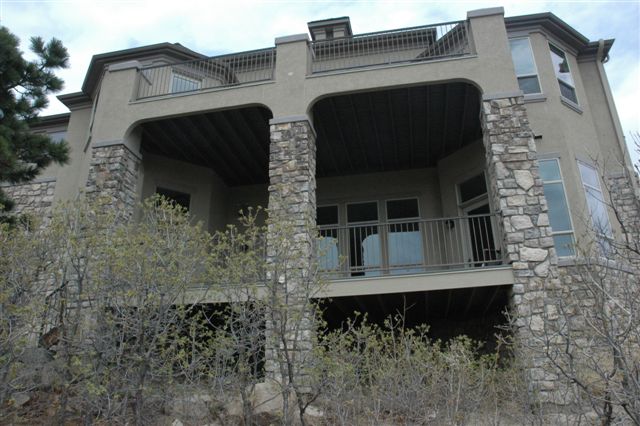
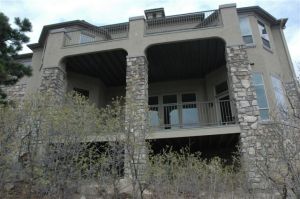
Multi-Story Deck on Hillside in Douglas County, Colorado

That is a question that we at Outdoor Lighting Perspectives (OLP) of Colorado are frequently asked this time of year as homeowners look forward to using and enjoying their outdoor spaces.

Our response is that it is never too late to add deck lighting. At a project that we completed this week, the homeowner wanted to have deck lighting installed in the back yard in addition to landscape and architectural lighting for the front yard.

The only existing lighting on the upper deck consisted of two unshielded line voltage carriage lights. When these lights were turned on, the glare ruined the entire ambience of the evening as well as the view of Castle Rock beyond. The homeowners requested the following:

  • They wanted three deck lights installed on each of the stucco columns on the upper deck.
  • They wanted to be able to control the deck lights manually via a switch inside the house – next to the door leading out to the upper deck.
  • They did not want to see any exposed wiring.
  • They wanted to have both automatic and manual control options for the landscape lighting in the front yard.

Our installation crew was able to open a small access hole at the bottom of the center column and at the top – and to successfully pull the low voltage wiring home run to the upper deck. From there, the connections to the other two deck lights could be made and wiring pulled to each of the deck light locations. In a few spots, the wiring was hidden at the base of the columns with moulding strips painted to match the stucco.

Deck Light Installed on Stucco Column

The final result looks like the lighting was installed at the same time as the deck – no visible wiring and no visible conduits. The deck lights were also painted to match the stucco after this photo was taken so that they would blend in to and become part of the column itself.
 

New Switch for Deck Lighting Is a Snap with LCA

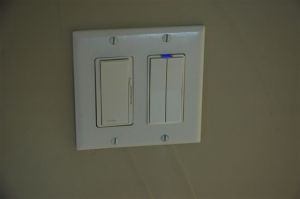
Lastly, the manual control of the newly installed deck lights was easily accomplished through the use of OLP’s Lighting Control Automation™ (LCA). The low voltage transformer powering the deck lights was mounted under the lower deck – and on a different electrical circuit than the switches shown in the photo. The switch on the left side controls the carriage lights on the deck – and the switch on the right controls the lights in the dinette. The switch on the right side originally looked exactly the same as the one on the left.

In the photo, the switch on the right was replaced with one of our LCA intelligent switches (note the LED at top), and instead of a solid Decora switch plate – it is now split in half vertically. The left side now controls the dinette lights as before and the right side now controls the new deck lights. Through the use of LCA technology, the deck lighting switch sends a signal from this totally unrelated electrical circuit over to the circuit powering the transformer. It was as simple as that – no new extensive hard-wiring nor interior drywall/painting repairs were required to accomplish this.

 
So it’s never too late to add to add deck lighting to your outdoor spaces – and summer is right around the corner!
 

Celebrate Earth Day Tomorrow – and Every Day!

Earth Day 2011Celebrate the 41st anniversary of Earth Day tomorrow – April 22. Because Earth Day this year falls on a holiday weekend, some communities have decided to celebrate it on previous weekends or schedule events throughout the months of April and May. Most communities are holding recycling events or environmental clean up events to prevent hazardous materials and valuable reusable materials from unnecesarily taking up valuable space in our landfills.

Last week I attended a training class (more later) at our company headquarters in Richmond, Virginia. While there we learned how we can help reduce energy usage for commercial lighting (parking garages, parking lots, building lighting) by 50 percent with new technology. Homeowners are doing their part by replacing inefficient incandescent bulbs with energy-saving LEDs and compact fluorescent (CFL bulbs).

Here are some of the Earth Day events along the Colorado front range.

Denver Earth Day Eventwww.denvergov.org/EarthDay; Friday April 22; 10 am – 2 pm; Greek Theater at Civic Center Park

Colorado Springs Earth Day – Free Rides – Friday April 22. Free rides on Mountain Metro, FrontRange Express; and Ute Pass Express.

Earth Day Fort Collinswww.sustainablelivingassociation.org/earth-day-2011 ; Civic Center Park; Saturday April 23, 11 am – 5 pm.

From day to night – lighting done right

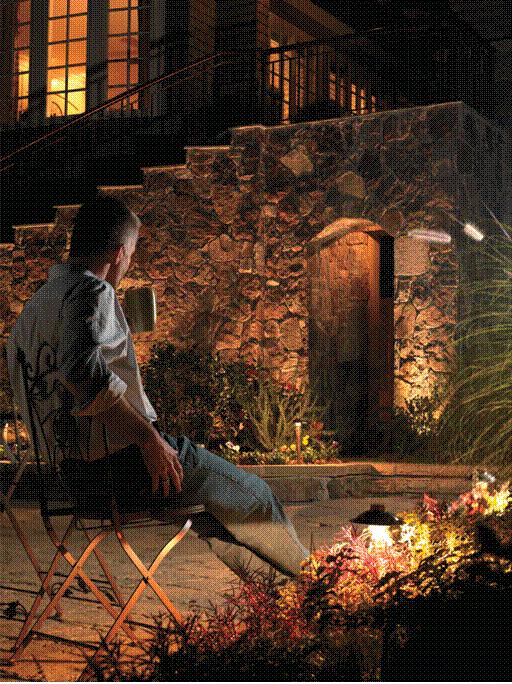
One of the things we offer is a free nighttime demonstration so that you actually get to see what a particular lighting design will look like for your home and property – prior to an installation.  That eliminates all of the guesswork and surprises – and you will know exactly how much you will have to invest to achieve that desired lighting effect.

Most of our typical lighting installations in Colorado range in price between $3,500 and $6,500. Not surprisingly, most homeowners have no idea how many lights they may need or want – or what their investment range might be until we do the evening lighting demonstration.  And that’s perfectly OK because we do not want you to purchase a lighting system sight unseen.

Additionally, we do our nighttime demonstration for these other reasons:

  • It is your house, not our’s – and you know best how you would like to have your house and property illuminated in the evening.
  • Exact placement of the fixtures can be determined in order to safely light steps and other hazards, and to effectively light architectural features.
  • We can show you several different lighting options that you may not have considered previously.
  • The evening lighting demonstration is an event that your entire family can participate in and provide input to the lighting design.

Here is what you will see.


Outdoor lighting Colorado before and after

My Landscaper Did My Landscape Lighting But It’s Never Worked Right

Inferior Quality Low Voltage Bulb

I certainly do not want to pick on landscapers, but one of the most frequently heard comments at the recent Colorado Garden and Home Show was – my landscaper did my lighting but it’s never worked right.

During the last two weeks, I evaluated two lighting systems that coincidentally had exactly the same fixtures.  The low voltage path lights were manufactured by a well-known national lighting manufacturer that had rolled out a lower-priced line of fixtures for landscapers to use. The path lights use the incandescent T5 wedge-base bulbs that have an average life of only 500 to 1,000 hours. In addition, the manufacturer states that these fixtures are rated for damp locations (somewhat sheltered from the weather) instead of wet locations (snow, rain, sleet, etc.). The fixtures have no lenses to protect either the bulb or the socket from moisture, moths, and spider webs – and that degrades the bulb life even further.

Making the situation in both installations even worse is the fact that the installers used the daisy chain method of installation – that’s when numerous fixtures are connected in series one after the other on the same circuit. Invariably with that wiring technique, the installer typically sets the voltage higher than it should be to ensure that the light at the very end of the circuit receives enough voltage to light up. What that also means is that the first light in the series is receiving 14, 15, or 18 volts – and since the bulbs are only rated at 12V – the first bulb starts burning out very quickly causing a domino effect down the line.

In one of the locations, the landscaper installed over a dozen step lights in poured concrete steps and patios – and it appears that no sleeves had been installed so that the system could be rewired if necessary. More problematic is the fact that as the concrete continues to cure over time, it will react with and break down the protective insulation and eventually corrode the wiring.

Outdoor lighting systems can last a lifetime if high quality products are used and professionally installed – and it’s very disconcerting to see a beautifully landscaped yard with an inferior lighting system. Sometimes we can come up with a cost-effective solution for the homeowner to remedy the lighting system – but sometimes we almost have to start from the beginning.

Landscape Architects Select Lighting as Top Outdoor Living Feature for 2011

Landscape Lighting Makes Outdoor Living Spaces Warm and Inviting

A recently published survey conducted by the American Society of Landscape Architects asked residential landscape architecture professionals to rank the relative popularity of a wide variety of design features to be included in outdoor living spaces in 2011.  Lighting was selected by 96.2% of the landscape architects, making it the most popular feature to be included in upcoming outdoor living projects. Ranked below lighting were fire pits/fireplaces, seating/dining areas, barbecue grills, and installed seating. Based on our experience, we know that most homeowners also need landscape lighting after dark to safely reach their outdoor firepits and seating areas, and to have adequate  lighting for both barbecuing and dining outdoors.

Landscape lighting not only makes your outdoor setting warm and inviting but it also allows you to enjoy your outdoor oasis from day into evening.

See Our Lights at the Colorado Garden and Home Show

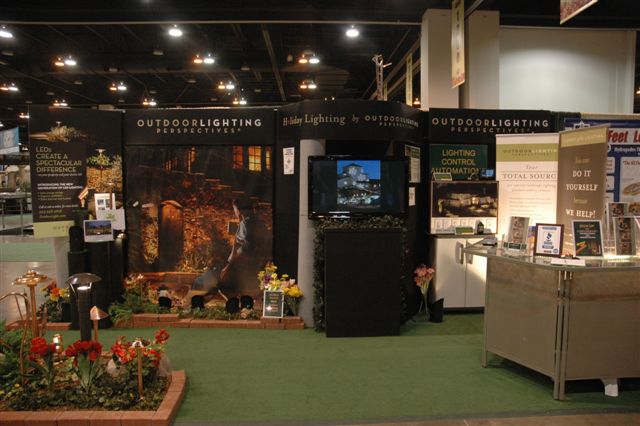
OLP’s Exhibit Showcasing the Latest in LEDs

The 52nd Annual Colorado Garden and Home Show started yesterday, and Outdoor Lighting Perspectives is proud to be making its 12th appearance in this important show.  Our exhibit is centrally located in the Colorado Convention Center Exhibit Hall in booth # 1442.

Outdoor Lighting Perspectives Showcases the Latest in Internet-Based Lighting Control Automation(TM)

Several new products and services are being launched at this show including new internet-based Lighting Control Automation™, new LED products and LED retrofits, Do-It-Yourself Kits, and Lighting Energy Audits/Retrofits for both the residential and commercial markets. We can show you how to have beautiful outdoor and indoor lighting, while decreasing your carbon footprint and your monthly electric bills.

Residential and Commercial Lighting Products on Display at the Colorado Garden and Home Show

The show continues for eight more days – through Sunday, February 20th. With the 60-degree weather expected to last through much of this week, now is the time to start planning your outdoor projects for the upcoming year. So enjoy the show and we look forward to seeing you at the Outdoor Lighting Perspectives exhibit.