Garden Lighting Looks Great 365 Days a Year

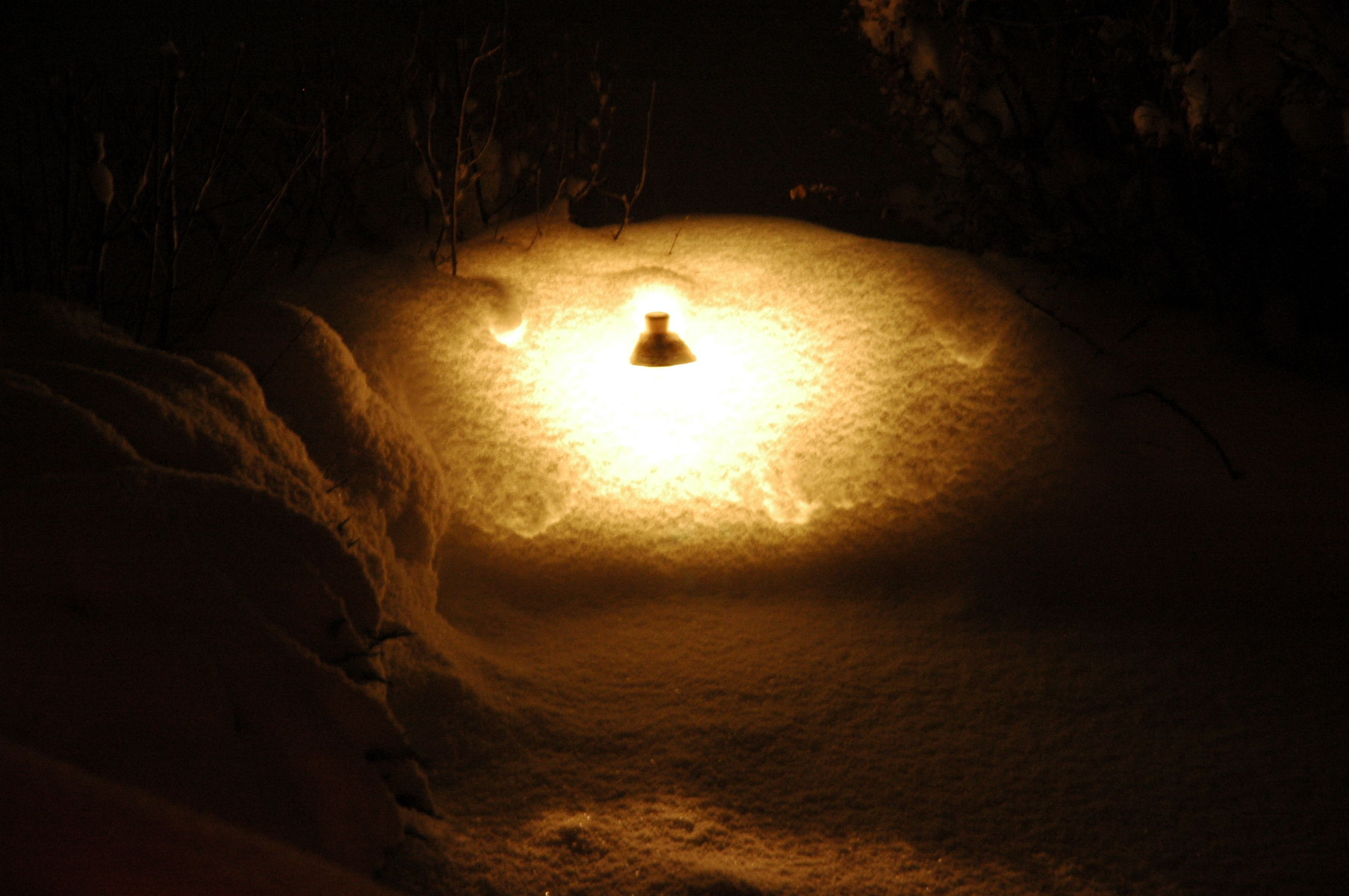
Garden path light with melting snow

With only 56 days until the first day of spring, I thought that it was worth mentioning that garden lighting looks great regardless of the season of the year. Most homeowners are afraid that garden lighting will make their yards look ugly during the non-growing seasons – but nothing can be further from the truth. Having grown up in Pennsylvania, I always loved seeing the deciduous trees and shrubs in winter because of the ever-changing beauty of both the branch structures and bark textures. The interplay of light and shadows that can be created by garden lighting is truly magnificent after a new snowfall, in the spring with flowering trees and shrubs, in the summer with trees and shrubs under full-leaf , and of course in the fall with multi-color leaves. Once the landscaping and the lighting have been installed, mother nature provides the ever-changing and exciting palette of colors and hues for a homeowner’s enjoyment.

Colorado Outdoor Lighting Path Light

Path Light after a Snow Storm

Garden lighting can be used to illuminate a pathway to reach a gazebo, a fire pit, or patio – or be used to illuminate a prized flower bed with colorful annual and/or perennial flowers. Sometimes a focal point of garden lighting will be a water feature, koi pond, or a piece of sculpture. And in Colorado, garden lighting helps to provide safety and security after dark for both young children and pets especially with the prevalence of coyotes, mountain lions, and bears.

Path Light – Summertime

With any good lighting design, the important thing is to not flood the area with light but to carefully highlight only the parts of the garden that are interesting aesthetically or are needed for safety – pathways, steps, etc. The lighting designer is basically an artist who is “painting” with light – and he or she with the homeowner’s input can choose to include anything on the blank lighting “canvas” in order to complete a compelling masterpiece that will be enjoyed for many years to come.

Colorado Outdoor Path Lighting
Garden lighting for gazebo, rock wall and trees.

In Colorado, homeowners love their rocks – character moss rocks, rock walls, massive red rock outcroppings, and huge granite boulders in the mountains. Hey – they don’t call this the Rocky Mountains for no good reason! Outdoor Lighting Perspectives (OLP) of Colorado has illuminated rocks and boulders of all sizes – and it helps to add three-dimensionality and interest to any garden lighting design.

Colorado Garden and Home Show Is Less Than a Month Away

The 52nd annual Colorado Garden and Home Show is less than a month away. So plan on visiting with Outdoor Lighting Perspectives of Colorado to see the latest in outdoor landscape/architectural lighting, lighting control automation for energy savings and convenience, garden lighting, LED lighting fixtures, and do-it-yourself high-quality, customized lighting packages for the hands-on homeowner.

Our Updated Home and Garden Show Exhibit

February 12 – 20, 2011

Colorado Convention Center, Denver, CO
Booth #1442

The Colorado Garden and Home Show with over 400,000 square feet of exhibit space, 45,000 square feet of gardens, over 600 exhibitors from 25 states and Canada, and 60,000 attendees during the nine-day show is the largest home and garden show between the Mississippi River and the west coast.

Stay tuned for more information about the show and our exhibit and products.  We hope to see you there!

What Is the Best Lighting Design for Outdoor Steps?

     The answer to that and just about any other lighting design question is that it just depends. While that answer may not be satisfying to most homeowners, it’s the best answer that we can provide until we’ve fully evaluated the site and have fully understood how the homeowner intends to use the space after dark.

Typical Recessed Step Light

     Most homeowners immediately think that the commonly used step lights shown at left are the easiest and best way to illuminate the stairs leading to their deck or raised patio. With any good lighting design, however, the final design should be based on the bulb itself and resulting lighting effect. In other words, the fixture selection and type should actually come last in the design process.
     These lighting fixtures are relatively easy to install on a wood or Trex deck – either during or after construction. However, if the lights need to be installed in poured concrete steps, then a lot of pre-planning needs to be done before the new steps go in.
     During the last twelve years we have been in business, Outdoor Lighting Perspectives of Colorado has only installed a handful of recessed step lights. The primary reason for that is because there is a much better way to proper illuminate the steps for after-dark safety – and that design effect is commonly called downlighting or sconce lighting.

Entrance to Property Requiring Proper Lighting for Steps

     We recently completed a lighting installation at a home built in the 1920s near the Governors Mansion in Denver. The property is accessed from the public sidewalk through a large wrought iron gate. To reach the upper terrace and front entrance to the home, you can access the steps immediately to the left or right side of the gate. With an existing and historical home with stone and concrete work quickly approaching one-hundred years old, the last thing you would want to even consider would be recessed step lighting. The good news is that installing these  copper BB08 sconce lights is much easier and they provide much better lighting as well. A close up of the completed installation is shown below.

Close Up of Completed Sconce Light Installation

     That being said, there have been a few occasions where recessed step lighting was our only option for providing any lighting to steps. In those situations, the steps from side to side were over ten feet wide, with no handrails or any other possible location to mount any sconce lights. In that situation, we made sure that we installed at least three step lights on each riser so that the steps could be safely illuminated. 

     The last photo shows the lighting effect of these copper BB08 sconce lights (made in the USA at our factory in Nashville) on a deck with many steps among the pines.

Deck Lighting and Step Lighting Among the Pines

Not All “Green” Bulbs Are Dimmable

This past week we had a customer call to say that he had a problem with his control system. Apparently he has replaced his soffit light bulbs at his front entrance several times during the past month, and the bulbs keep burning out within a few days. His soffit lights are controlled by one of our automated LCA switches, and they turn on every evening at sunset at a power setting of 65-percent.

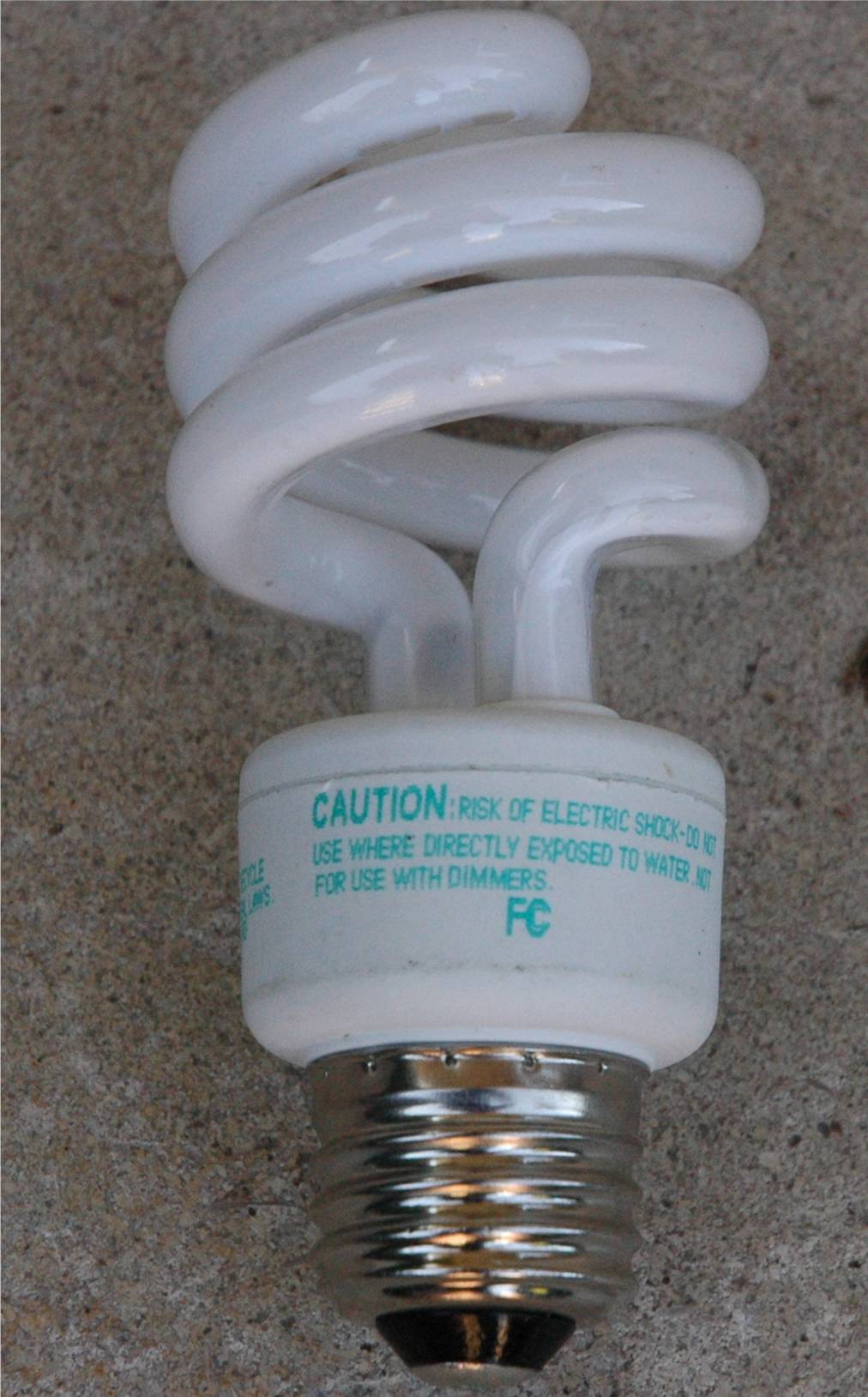
I had suspected that the customer had been using non-dimmable bulbs, and upon meeting up with our crew and removing the bulbs – our suspicions were confirmed. The bulb shown above is a standardly-used compact fluorescent (CFL) bulb (and available at all of the box stores), but clearly marked at its base are the words – … not for use with dimmers.
Before arriving at the site, I had purchased two replacement dimmable R30 flood bulbs that are dimmable – see photo below.
This 65-watt equivalent bulb uses only 15W of electricity, and when dimmed to the 65-percent power level it will be using less than 10W of power.
Ordinary incandescent bulbs are to be phased out in the U.S. by 2014 by an energy conservation act passed by Congress in 2007. In fact, the last GE factory making ordinary incandescent bulbs in the U.S. (Winchester, VA) closed last month.
As the incandescent bulbs continue to be phased out over the next several years, CFL’s will temporarily become their leading replacement, followed by halogen bulbs and finally LEDs. As everyone knows, LED’s are our long-term lighting future and that technology continues to become more efficient and less expensive as time goes on.
So in the short term, you’re doing a great thing by ridding your house and business of incandescent bulbs. Just remember though that you need to use dimmable CFL and LED bulbs in any circuit controlled by a dimmer.

Custom Low Voltage BBQ Light

Custom BBQ Light

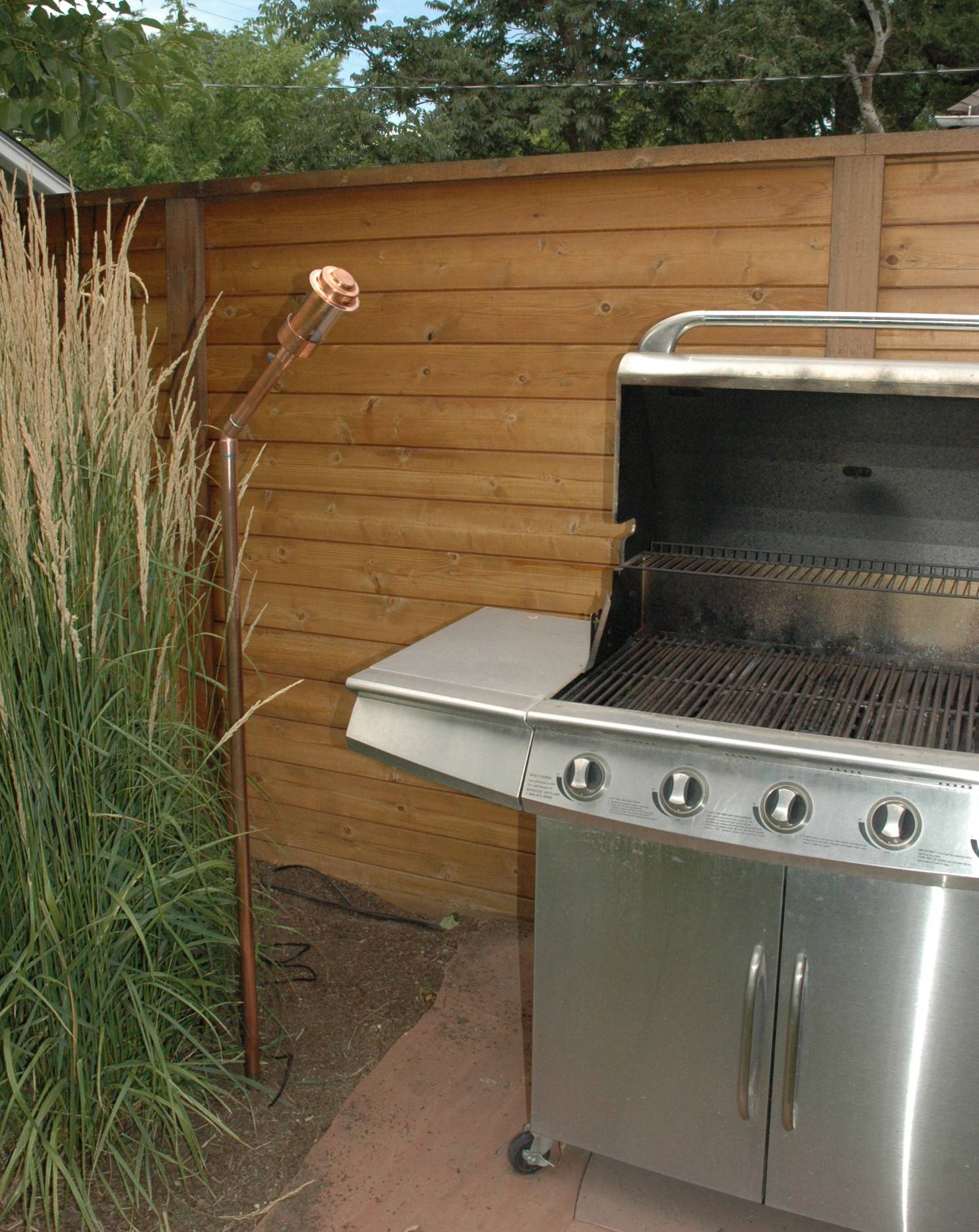
One of the advantages of being part of a large national/international lighting company is our ability to craft and install custom low voltage landscape/architectural lighting fixtures for our clients when the need arises. Last week we did a project for a customer who asked during the installation if there was a way to illuminate his barbecue grill. The customer wanted the ability to turn the BBQ light on and off separately from the rest of the landscape lighting system. The other requirement was that the customer did not want the lighting fixture attached in any way to the fence.

Our factory manufactures the copper BBQ lighting fixture assemblies with the black rubber all-weather switch and bulb socket assemblies. Our crew modified the assembly by installing a slightly larger copper flood head and mounting it at a 45-degree angle. By using an additional length of copper as well as one of our company’s heavy-duty underground PVC anchoring stakes, we were able to install the entire assembly behind some ornamental grasses.

The copper once it develops a patina will blend in nicely with the surrounding vegetation and fencing. The design and installation of this BBQ lighting fixture pretty much summarizes the goal of Outdoor Lighting Perspectives – and that is to emphasize the overall lighting effect with functional, unobtrusive, and durable lighting fixtures.

Custom Lighting Fixture Next to BBQ

Innovative Lighting for Backyard Sport/Game Courts

Sport-Game Court Illuminated with Low Voltage Lighting

People who live in Colorado are very active and many families throughout Colorado have installed sport-game courts in their back yards for family fun. Many communities, however, have very stringent regulations as to the placement and usage of these courts. Additionally, many communities do not allow the courts to be illuminated in the evening with line voltage (120V) lights (typically 150W metal halide).

Several years ago a homeowner approached us in this predicament and we performed an evening lighting demonstration with our low voltage quartz halogen fixtures.

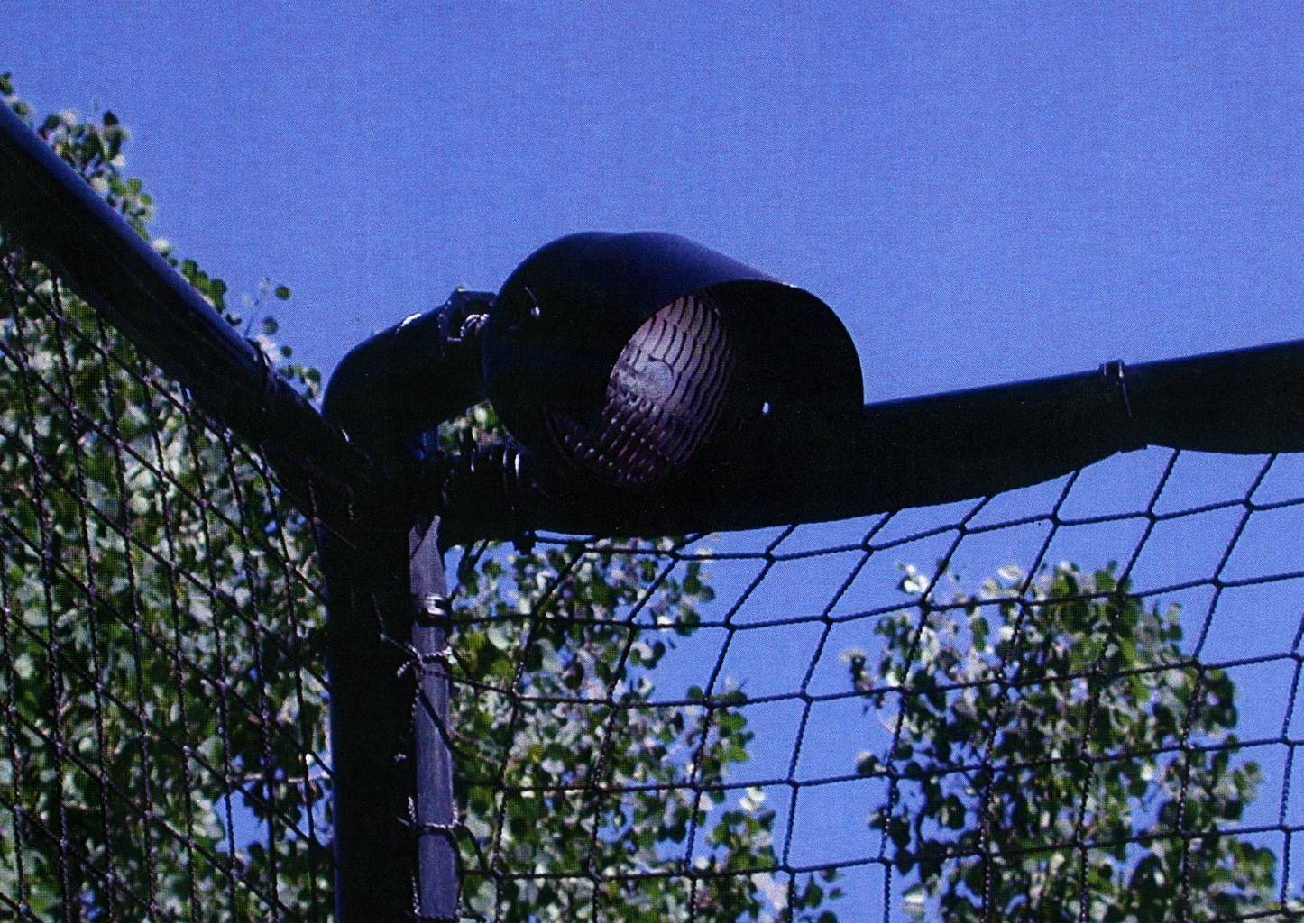
Close Up of Low Voltage PAR36 Lighting Fixture

Our copper BB-01 copper flood lights with glare shields were painted black to blend in with the court’s fencing and netting – and the lights were conveniently controlled by the use of an all-weather switch next to the court. In previous years we have also illuminated a back yard ice rink in the mountains by mounting these same fixtures in trees and other strategic locations for very-spirited hockey games.

Our most recent installation was illuminating the sport court (with the Colorado Avalanche logo) shown at the beginning of the blog. Interestingly, the previous homeowner who had this court installed was one of the best goalies in NHL history – and he will forever be known in these parts as Saint Patrick!

The current homeowners use the court extensively and now they can actually see the volleyball net as well as the basketball nets at each end of the court! The low voltage lights and the anti-glare shields direct the light only where it’s needed – totally eliminating glare or light pollution into neighboring properties. As always with lighting, less is usually best in there’s absolutely no reason to light up a back yard court to the same lumen level as Invesco Field at Mile High. With this low voltage lighting system, the people using the court can see just fine thank you – without blinding their neighbors next door!

Low Voltage Fixture at Sunset

Important Questions to Ask Before Hiring a Landscape Lighting Contractor

As with any home improvement project, homeowners need to peform their due diligence on prospective contractors (including landscape lighting) before any project is begun. Many homeowners ask why they should work with us and our response is typically “maybe you shouldn’t.” That response can be a bit disconcerting to most homeowners but almost immediately they understand the point we’re trying to make. And that point is that until you ask the right questions and receive the answers you’re comfortable with and do the background checks on a particular company or companies, you really should not be proceeding with any project until that due diligence is completed.

The following are some questions we’ve been asked over the years – and others that homeowners should be including as well:

BUSINESS LICENSING/REGISTRATION/INSURANCE?  Is the business registered and in good standing with the Colorado Secretary of State’s office? Does the company have the appropriate state and municipal operational and tax licensing? Does the company carry the appropriate property and liability insurance?

BBB RATING?  Is the company listed as an Accredited Business by the Better Business Bureau and what is its rating? For example, Outdoor Lighting Perspectives of Colorado is listed as an Accredited Business by the Denver-Boulder Better Business Bureau and currently holds an A+ rating.

HOW MUCH LIGHTING EXPERIENCE DOES THE COMPANY HAVE?  Outdoor Lighting Perspectives (OLP) of Colorado has been operating since 1999 – and our national company has been operating throughout the country since the late 1980s and early 1990s. Lighting is the only thing we do day in and day out – so we have to be really focussed and good at what we do. As part of a large national/international company with over 60 offices, we receive frequent and on-going training with respect to the latest lighting products and technology, design and installation techniques, and customer service. Interestingly, about 85% of the lighting companies operating in the Denver-Boulder area in 2001 are no longer in business.

HOW MANY LIGHTING INSTALLATIONS HAVE YOU DONE? The old saying is that anyone can sell you lights, but not everyone can provide you with an effective and high quality lighting installation. The number of installations a company has done is directly related to their level of expertise and professionalism in being able to handle any type of project. OLP of Colorado has close to 1,500 installations under its belt – from the plains of Fort Morgan to a two-mile high mountain-top and all along the front range of Colorado. Companies who only do lighting as a sideline business typically never get close to us with the breadth and complexity of the jobs we tackle.

CAN THE COMPANY PROVIDE REFERENCES? Good and reputable companies should never be reluctant to provide reference sites to prospective clients. However, from a lighting design standpoint every homeowner has different tastes and even different budget ranges in mind. That’s one of the reasons that we provide the free evening lighting design demonstration so that every design is customized for each homeowner.

WILL THE COMPANY PROVIDE A PREVIEW? As a follow on to the previous topic, any good lighting contractor should be able to provide you with an evening design demonstration so that you can see what the system will look like prior to the installation.

WHAT WARRANTIES COME WITH THE SYSTEM? Obviously, warranties are only as good as the company that backs it up. We once had a prospect (now a customer) who had asked one of our competitors “whose lifetime?” when he spotted their “lifetime warranty” banner hanging somewhat precariously in their exhibit. As I mentioned above, most of the lighting companies in business locally in 2001 are no longer around.

ASK ABOUT THE COMPANY’S SERVICE/MAINTENANCE PLANS Do they provide service after the sale? More often then not a lot of homeowners find out too late that the company that installed their lights provide no help after the installation.

FIND OUT WHO DOES THE ACTUAL INSTALLATIONS Does the contractor have their own factory trained employees or do they pick up day-hires with limited on-site training? Do they provide workmans comp, etc. Do they only hire and employ workers who are in the U.S. legally.

WILL MY LANDSCAPING AND SPRINKLER SYSTEM BE DAMAGED? Reputable and experienced lighting contractors should leave your property as good or better than it looked before the lighting installation was started. One of the best compliments our crews receive at the end of the day from a homeowner is that it looks like they had a lot more work to do since they didn’t notice any disruption to the landscaping. And that’s the entire point – the homeowner should not see anything different about the landscaping except for the fixtures as well as the beautiful illumination in the evening.

All of our trenching is done by hand with thin slices in lawn areas. After the wire is buried, the sod folds back over and most homeowners cannot tell where the wiring had been run. With regard to sprinkler systems, occasionally one of our crews does cut a line but it is our responsibility to fix it. If the sprinkler system is more complex than what we’re experienced with, we can call in one of several irrigation companies to complete the repairs.

Of course there are many more questions that homeowners can and should ask with respect to contractors in general and lighting contractors in particular, but hopefully I’ve addressed the primary questions today in this short blog.
Force of Mother Nature and Outdoor Lighting

Back Yard Fire Caused by Overhead Power Line Being Snapped by Falling Tree

We design and install our landscape and architectural lighting systems to withstand almost everything mother nature can throw at them – from six foot deep snow drifts in the winter time, driving rain in the spring and summer time, and to salty environments in the coastal locations. But sometimes Mother Nature  lets you know that she’s really a force to be reckoned with.

On Monday of this week, the Denver metro area endured sustained winds of 45 mph with gusts to 70 mph- a few mph under hurricane force winds. I had been out in this wind with one of my crews and several times we almost got swept off our feet. Sure enough the phone rang several times the next day with calls from customers saying that some of their fixtures had been damaged by wind-blown debris.

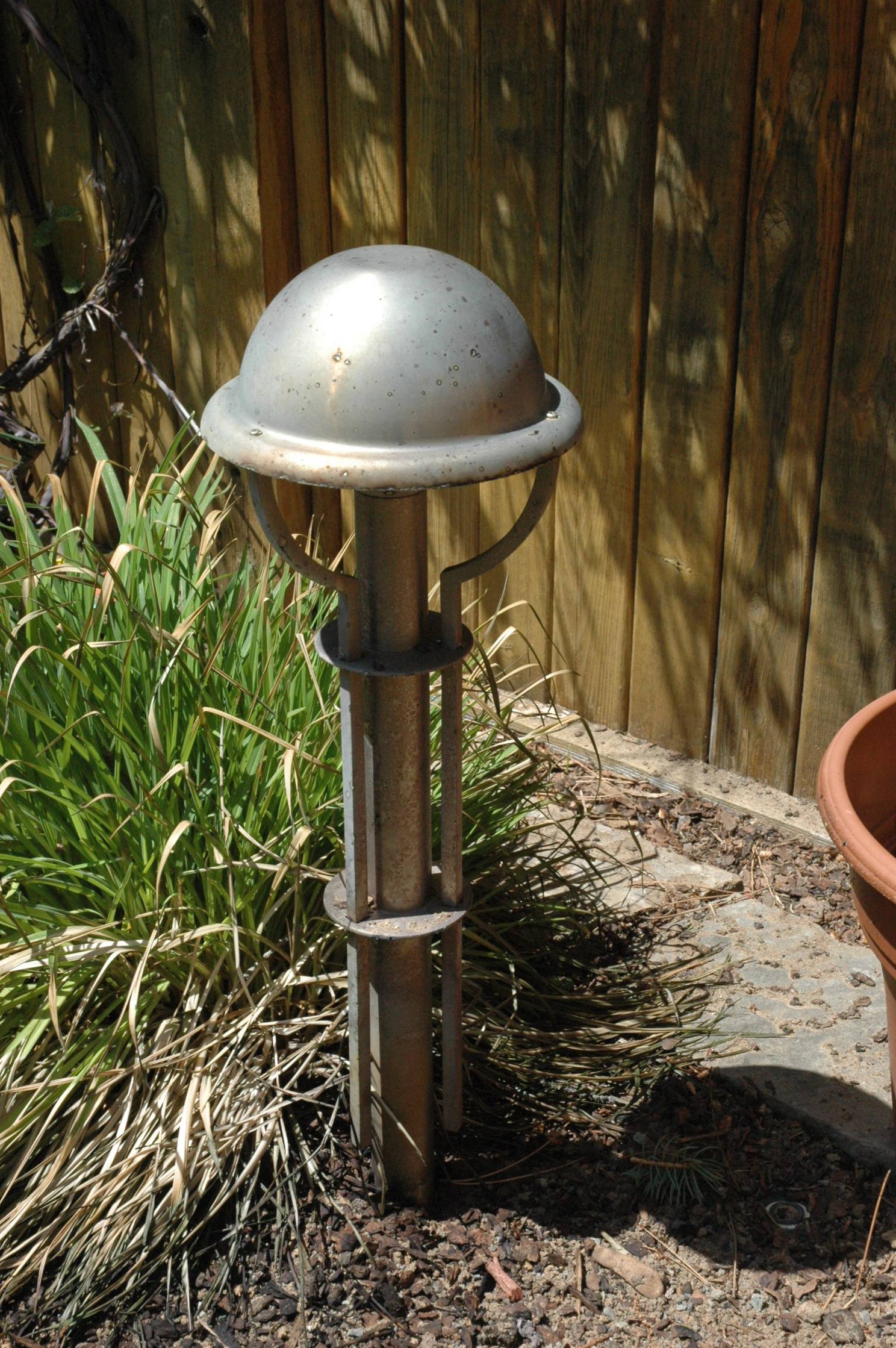
The most major damage, however, was reported by one of our customers in the Hilltop neighborhood. One of his neighbor’s trees was blown over by the wind and severed the overhead XCEL power line causing the 80-foot tree to instantly become a fireball. One of the Kichler modernistic brushed nickel path lights can be seen in the photo below after the fire.

Thankfully, neither the homeowner’s family nor any of his neighbors were injured by the falling tree that was on fire or by the high voltage line that had just been severed. In fact, if you ever see a cut loose overhead wire on the ground or dangling from the air – NEVER, EVER approach it. Call 911 immediately so that the utilties can be called to cut the power as soon as possible. It may literally mean the difference between life and death to another unsuspecting passerby.

The other thing that happened was that the high voltage overhead power line sent a surge through the low voltage lighting system that in turn blew out the low voltage transformer and the GFI wall outlet. The good news is that our stainless steel transformers are designed and manufactured to code to be able to contain a catastrophic event such as this one. And the GFI outlet tripped and then failed preventing the outside surge from entering the rest of the house’s wiring system.

We just started our 12th year of installing lighting systems in Colorado, and this is the first time that we ever had an overhead line voltage power line get severed and then cause all of this other damage. After checking with our factory in Nashville, the folks there who have been doing this for over 20 years have never experienced a scenario such as this one. They have experienced damage to lighting systems due to lightning strikes but not from overhead power lines being severed.

Our Nashville office is currently dealing with the aftermath of the major flooding with respect to the repair and re-installation of entire lighting systems. And of course our New Orleans office is still dealing with the devastating effects from Hurricane Katrina. All we can do is to make our lighting systems as foolproof and as safe as possible, but sometimes Mother Nature reminds us who is really the boss.

Runway Lighting is for Airplanes

Solar Runway Lights for Cars?

One of the worst lighting design mistakes is the creation of runway lighting by lining each side of a driveway or walkway with lights. Some neighborhoods give the appearance that the homeowners are leaving the lights on for the return of Amelia Earhart!

The other evening I was walking Cody the Airedale and snapped these photos with my camera phone. It’s bad enough doing runway lighting with low voltage or line voltage lighting fixtures. It’s even worse when some of the current inexpensive and low-powered solar lights are used. In the photo above, the fixtures are literally two feet apart. We totally love the use of solar photovoltaic/LED lighting when it’s done properly – but these inefficient standalone solar lights are ripping off the unsuspecting homeowner.

Solar Lights Used on a Patio

One the right is a photo of a patio being under-illuminated by standalone solar lights. There’s a fairly large dropoff from the patio down to the lawn – so you can see that these lights will not provide the proper illumination for preventing falls especially if there’s a party.

The photo below illustrates the proper way to illuminate a walkway. As you can see, the path lights alternate from side to side along the walkway. The other thing you’ll notice with this design is that other lighting effects are used as well. Uplighting is used to illuminate the columns of the pergola as well as the trees. This keeps the lighting effect appearing fresh and interesting and not monotonous – the way it would look if you just did path lighting.

Proper Use of Path Lights along Walkway

What Does it Cost to Operate a Landscape Lighting System?

Over the years a lot of homeowners have asked us how much their monthly electricity bill would increase after their landscape lighting system was installed. The short answer and the good news is not very much!

Most recently some townhome owners in Denver needed to share a low voltage quartz halogen landscape lighting system to illuminate their front entrances. The as-built configuration of the townhomes dictated that only one of the townhomes would have the low voltage transformer installed – and subsequently would have to provide all of the power for the entire lighting system. The respective homeowners agreed to split the annual electricity bill/usage for the system and asked me to compute how much that would be.

For this system, there were a total of two uplights (well lights at 35W each) and four path lights for the walkways (at 20W each) – for a total energy usage of 150W. For safety and security, the homeowners wanted the lights to be on from dusk to dawn throughout the year.

By accessing the U.S. Naval Observatory website and doing some computations, I was able to determine that there are a total of 4,306.29 hours of darkness for the entire year in Denver, Colorado. By multiplying 150W times 4,306.29 hours you get 645,943.5 watt-hours or 645.9 kWH. The average cost per kilowatt-hour in Denver is projected to be 11.3 cents through the year. By multiplying $.113/kW-H times 645.9kWH, you end up with a total operating cost of $72.99 per year, or $6.08 per month or $.20 per night. Most police departments will tell you that this is a small price to pay to enhance your home’s safety and security every night of the year.

Ken-Caryl House Lighting

The house on the left (also using a low voltage quartz halogen lighting system) has a total of 8 uplights (35W each) and 3 path lights (20W) each – for a total of 340W. Dusk to dawn operation costs $165.44 per year or $13.78 per month or $.45 per night.

If this same low voltage quartz halogen system is replaced by a low voltage LED lighting system in the future, the total power requirement would only be 80.7W and would result in annual energy costs of $39.26 per year or $3.27 per month or $.11 per night – a 76-percent energy savings over the quartz halogen system.

So in other words LEDs are the future but even with a low voltage quartz halogen lighting system, you’re still saving money with operating your outdoor lighting in comparison to line voltage lighting.