What Is the Best Lighting Design for Outdoor Steps?

     The answer to that and just about any other lighting design question is that it just depends. While that answer may not be satisfying to most homeowners, it’s the best answer that we can provide until we’ve fully evaluated the site and have fully understood how the homeowner intends to use the space after dark.

Typical Recessed Step Light

     Most homeowners immediately think that the commonly used step lights shown at left are the easiest and best way to illuminate the stairs leading to their deck or raised patio. With any good lighting design, however, the final design should be based on the bulb itself and resulting lighting effect. In other words, the fixture selection and type should actually come last in the design process.
     These lighting fixtures are relatively easy to install on a wood or Trex deck – either during or after construction. However, if the lights need to be installed in poured concrete steps, then a lot of pre-planning needs to be done before the new steps go in.
     During the last twelve years we have been in business, Outdoor Lighting Perspectives of Colorado has only installed a handful of recessed step lights. The primary reason for that is because there is a much better way to proper illuminate the steps for after-dark safety – and that design effect is commonly called downlighting or sconce lighting.

Entrance to Property Requiring Proper Lighting for Steps

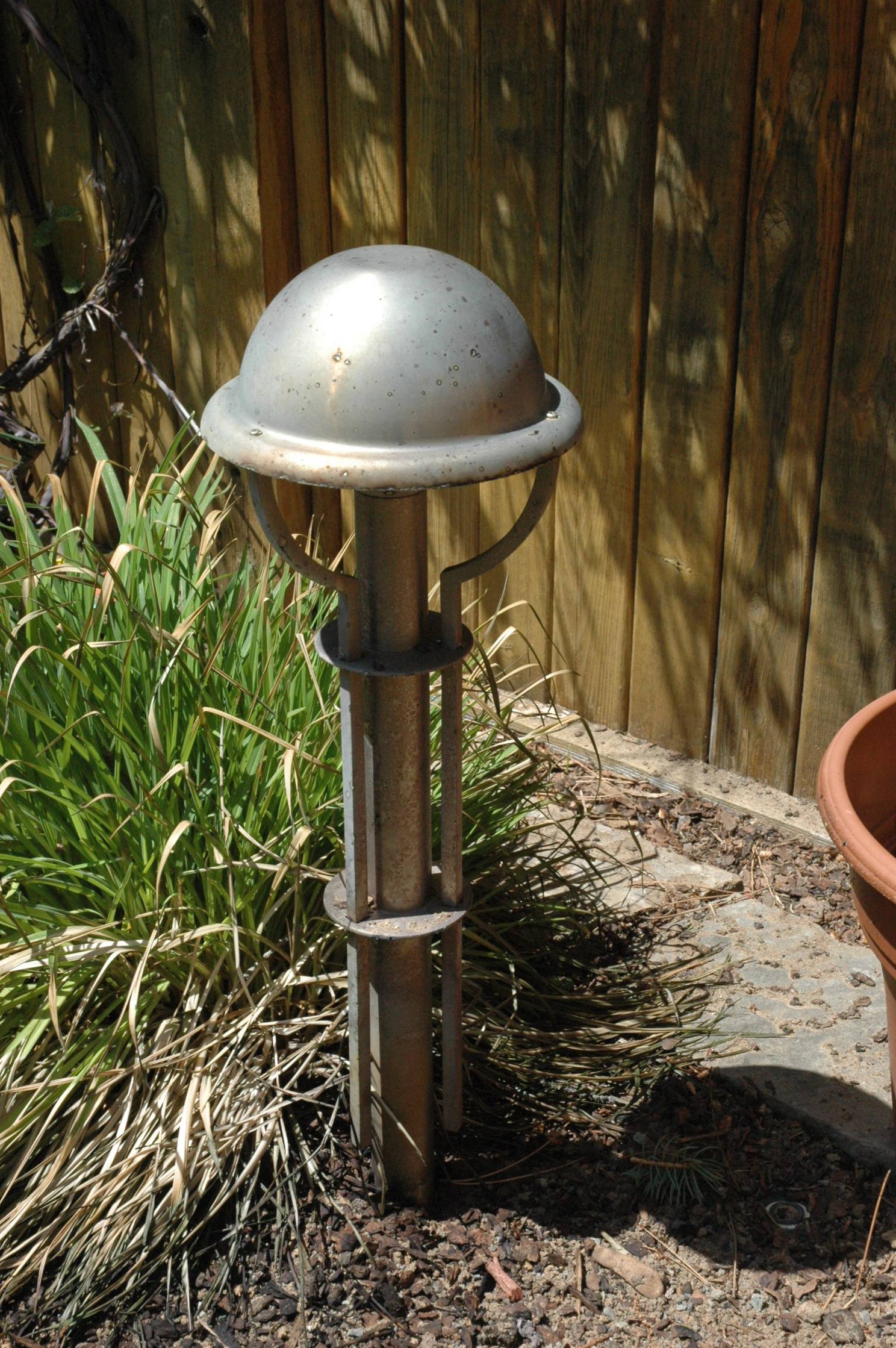
     We recently completed a lighting installation at a home built in the 1920s near the Governors Mansion in Denver. The property is accessed from the public sidewalk through a large wrought iron gate. To reach the upper terrace and front entrance to the home, you can access the steps immediately to the left or right side of the gate. With an existing and historical home with stone and concrete work quickly approaching one-hundred years old, the last thing you would want to even consider would be recessed step lighting. The good news is that installing these  copper BB08 sconce lights is much easier and they provide much better lighting as well. A close up of the completed installation is shown below.

Close Up of Completed Sconce Light Installation

     That being said, there have been a few occasions where recessed step lighting was our only option for providing any lighting to steps. In those situations, the steps from side to side were over ten feet wide, with no handrails or any other possible location to mount any sconce lights. In that situation, we made sure that we installed at least three step lights on each riser so that the steps could be safely illuminated. 

     The last photo shows the lighting effect of these copper BB08 sconce lights (made in the USA at our factory in Nashville) on a deck with many steps among the pines.

Deck Lighting and Step Lighting Among the Pines

Park Lighting Project Completed for Piney Creek

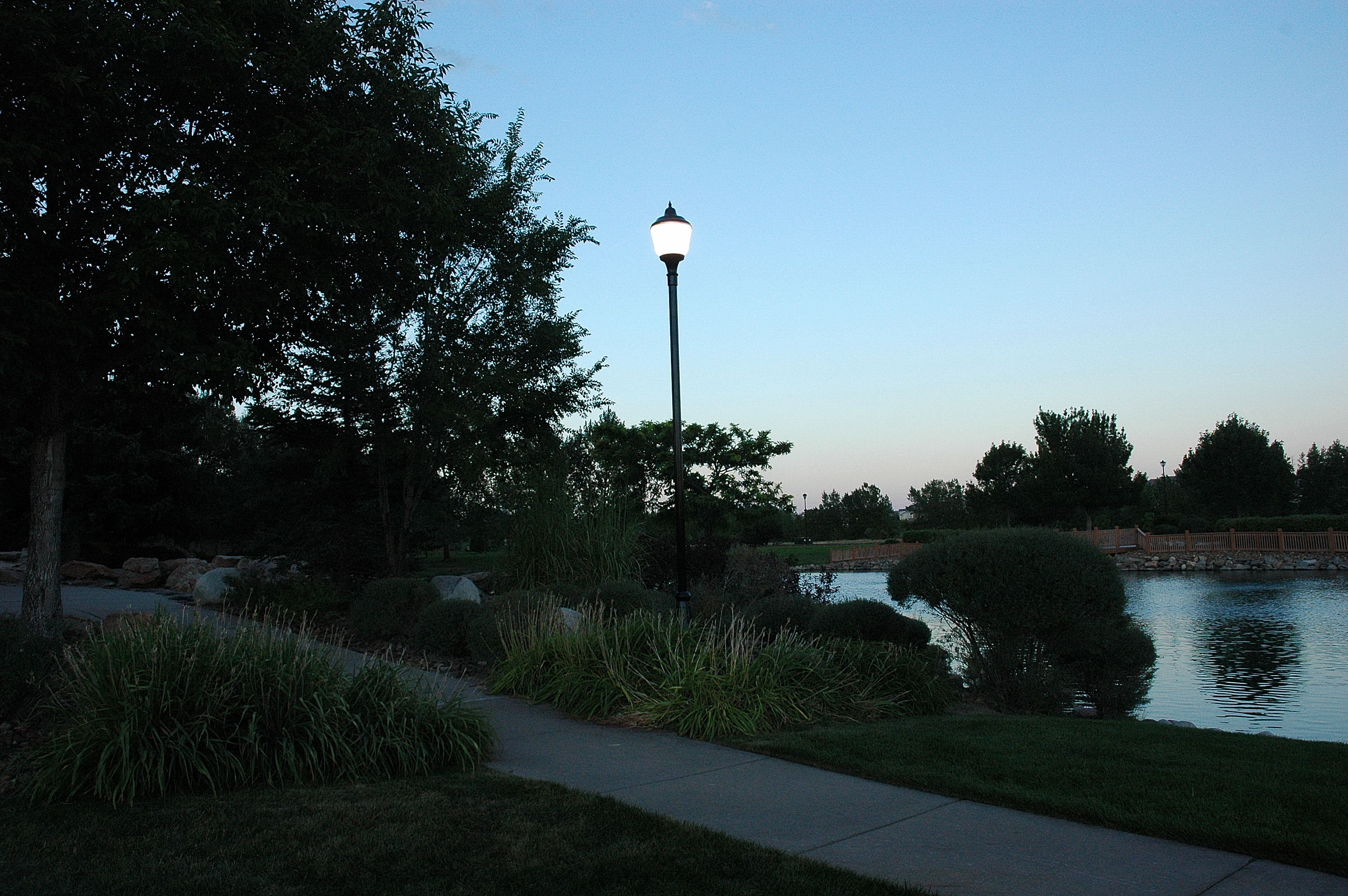
LC40 Lamp Post at Entrance to Piney Creek Picnic Area

Our company, Outdoor Lighting Perspectives of Colorado, just completed its latest lighting project at a community park – the Piney Creek Park near the intersection of East Orchard Road and South Joplin Way in the City of Centennial.

The picnic area next to the beautiful lake and water feature in the Piney Creek Park had been without functioning lighting for several years. The six four-foot tall bollard lighting fixtures  that had been installed there previously were vandalized and damaged beyond repair. The home owners’ association (HOA) realized that they needed a different lighting solution that would not only deter vandalism but also enchance the beauty and usability of the park throughout the year.

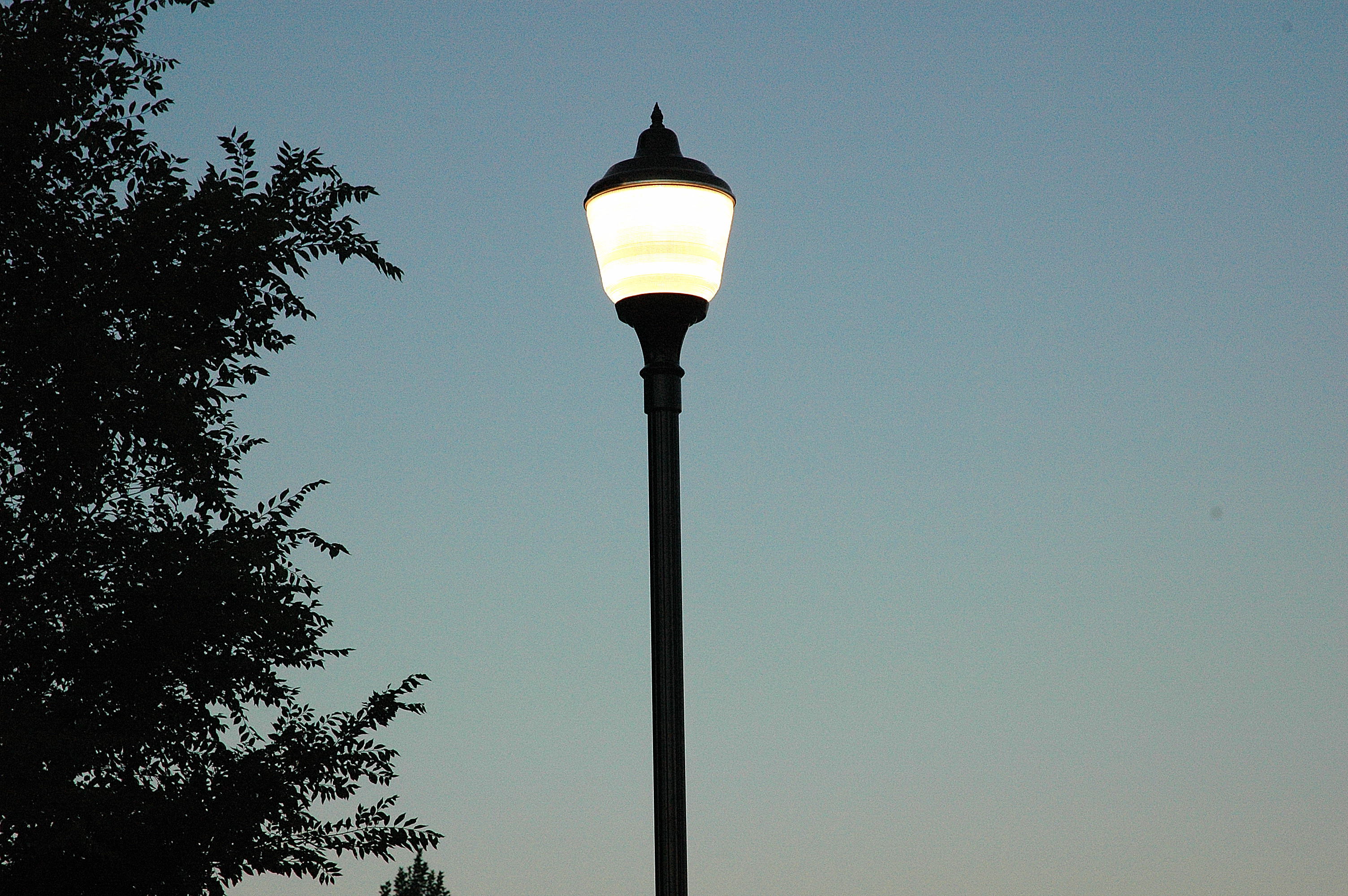
What we specified and installed are the 14-foot tall, LC-40 pole lamp posts (150W Ceramic Metal Halide (CMH)) manufactured by our national company in Nashville, Tennessee. The lamp posts are made of cast and extruded aluminum – and for this installation they were powder-coated black for an elegant and traditional look.

What really sets these lamp posts apart from any other installation you’ll see in Colorado today is the use of the Ceramic Metal Halide (CMH) bulb technology. These CMH bulbs with a life of 18,000 hours generate 12,000 lumens while producing a Color Rendering Index (CRI) ABOVE 90! What that means is that the flowers, trees, and rocks, etc. look the same way illuminated at night as they would appear during the daytime. What a concept! And unlike regular metal halide bulbs, CMH bulbs never experience any sort of color shift; i.e., the CMH bulb will always provide a pure white light from the first day it is turned on until the day it burns out.

As a comparison, the current LED technology can generate at best only 50 lumens per watt while the current CMH technology can generate 80 lumens per watt. LED technology is rapidly improving but it still has a way to go to compete with CMH technology where you need to have a lot of light (lumens) at the ground level.

All of the lamp posts were mounted on four-foot deep, two-foot diameter concrete caissons with engineered rebar cages to withstand the higher wind loads that we encounter along the Colorado front range. I’ve attached some additional photos of the construction phase as well as some additional nighttime photos taken after the installation.

LC-40 Lamp Post Closeup at Piney Creek Park


Raising the First of Three Lamp Posts in Piney Creek Park

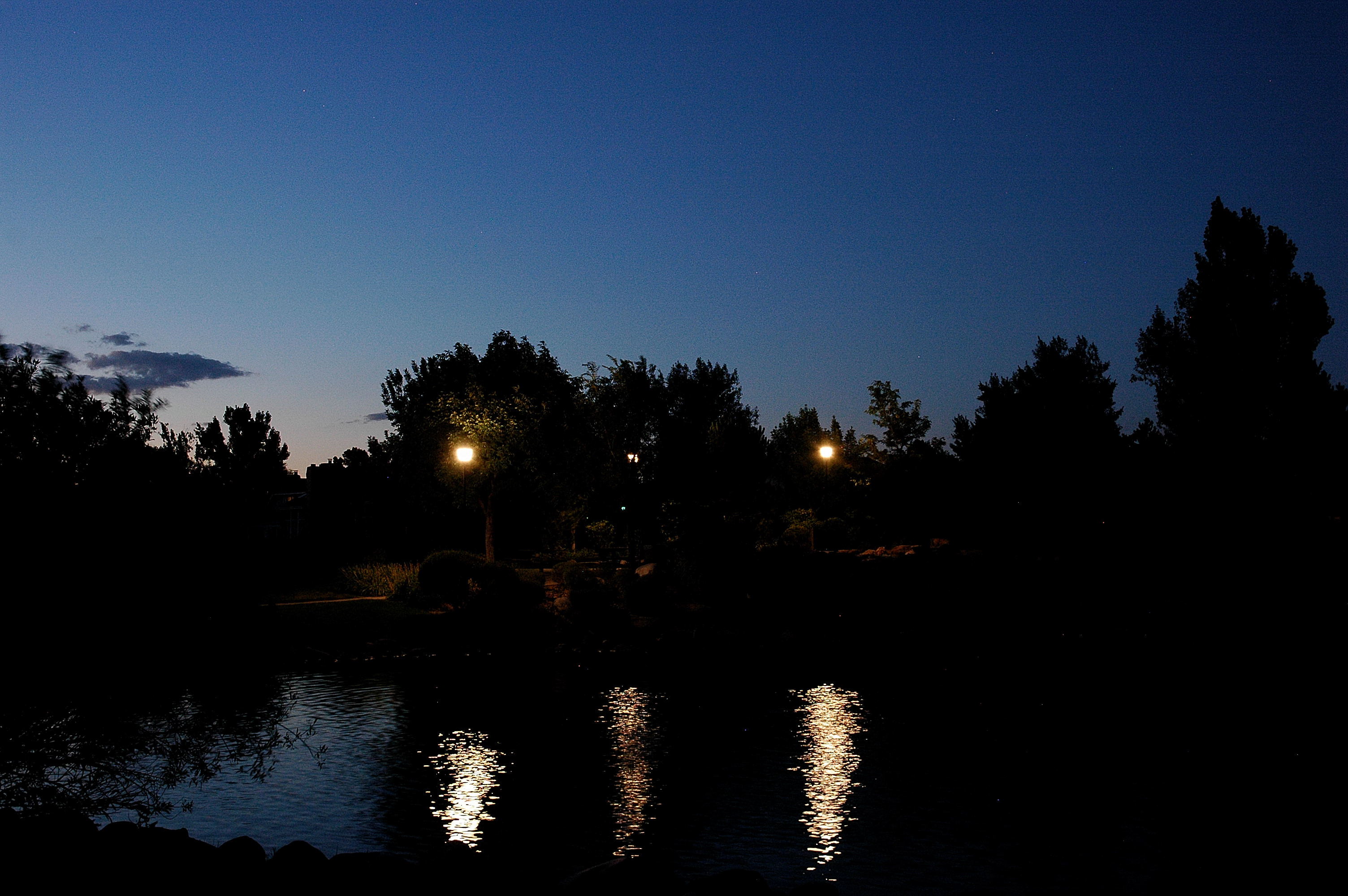
Piney Creek Park Lighting

Outdoor Lighting Perspectives LC40 Lamp Post - Piney Creek Park at Sunset

Innovative Lighting for Backyard Sport/Game Courts

Sport-Game Court Illuminated with Low Voltage Lighting

People who live in Colorado are very active and many families throughout Colorado have installed sport-game courts in their back yards for family fun. Many communities, however, have very stringent regulations as to the placement and usage of these courts. Additionally, many communities do not allow the courts to be illuminated in the evening with line voltage (120V) lights (typically 150W metal halide).

Several years ago a homeowner approached us in this predicament and we performed an evening lighting demonstration with our low voltage quartz halogen fixtures.

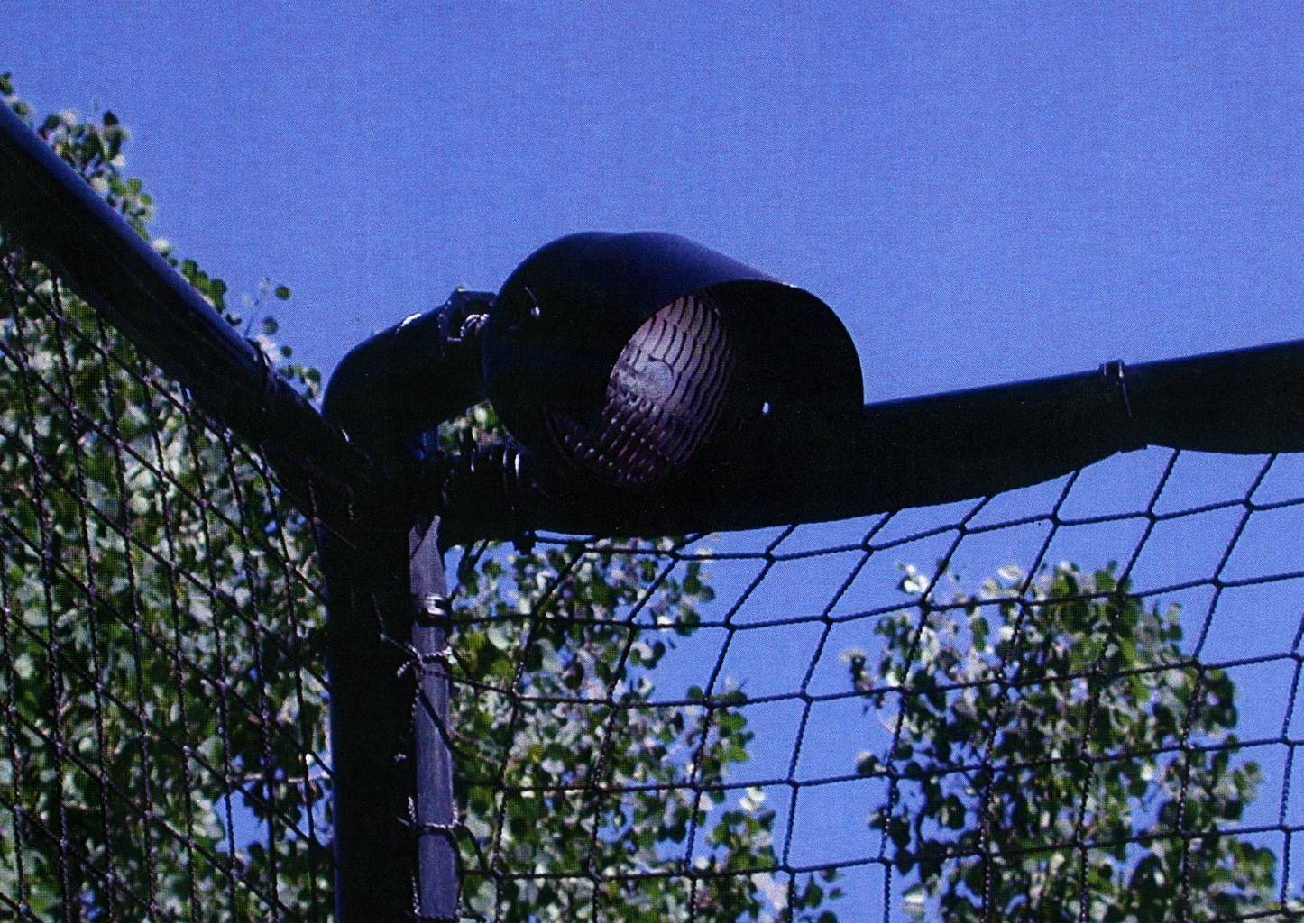
Close Up of Low Voltage PAR36 Lighting Fixture

Our copper BB-01 copper flood lights with glare shields were painted black to blend in with the court’s fencing and netting – and the lights were conveniently controlled by the use of an all-weather switch next to the court. In previous years we have also illuminated a back yard ice rink in the mountains by mounting these same fixtures in trees and other strategic locations for very-spirited hockey games.

Our most recent installation was illuminating the sport court (with the Colorado Avalanche logo) shown at the beginning of the blog. Interestingly, the previous homeowner who had this court installed was one of the best goalies in NHL history – and he will forever be known in these parts as Saint Patrick!

The current homeowners use the court extensively and now they can actually see the volleyball net as well as the basketball nets at each end of the court! The low voltage lights and the anti-glare shields direct the light only where it’s needed – totally eliminating glare or light pollution into neighboring properties. As always with lighting, less is usually best in there’s absolutely no reason to light up a back yard court to the same lumen level as Invesco Field at Mile High. With this low voltage lighting system, the people using the court can see just fine thank you – without blinding their neighbors next door!

Low Voltage Fixture at Sunset

Force of Mother Nature and Outdoor Lighting

Back Yard Fire Caused by Overhead Power Line Being Snapped by Falling Tree

We design and install our landscape and architectural lighting systems to withstand almost everything mother nature can throw at them – from six foot deep snow drifts in the winter time, driving rain in the spring and summer time, and to salty environments in the coastal locations. But sometimes Mother Nature  lets you know that she’s really a force to be reckoned with.

On Monday of this week, the Denver metro area endured sustained winds of 45 mph with gusts to 70 mph- a few mph under hurricane force winds. I had been out in this wind with one of my crews and several times we almost got swept off our feet. Sure enough the phone rang several times the next day with calls from customers saying that some of their fixtures had been damaged by wind-blown debris.

The most major damage, however, was reported by one of our customers in the Hilltop neighborhood. One of his neighbor’s trees was blown over by the wind and severed the overhead XCEL power line causing the 80-foot tree to instantly become a fireball. One of the Kichler modernistic brushed nickel path lights can be seen in the photo below after the fire.

Thankfully, neither the homeowner’s family nor any of his neighbors were injured by the falling tree that was on fire or by the high voltage line that had just been severed. In fact, if you ever see a cut loose overhead wire on the ground or dangling from the air – NEVER, EVER approach it. Call 911 immediately so that the utilties can be called to cut the power as soon as possible. It may literally mean the difference between life and death to another unsuspecting passerby.

The other thing that happened was that the high voltage overhead power line sent a surge through the low voltage lighting system that in turn blew out the low voltage transformer and the GFI wall outlet. The good news is that our stainless steel transformers are designed and manufactured to code to be able to contain a catastrophic event such as this one. And the GFI outlet tripped and then failed preventing the outside surge from entering the rest of the house’s wiring system.

We just started our 12th year of installing lighting systems in Colorado, and this is the first time that we ever had an overhead line voltage power line get severed and then cause all of this other damage. After checking with our factory in Nashville, the folks there who have been doing this for over 20 years have never experienced a scenario such as this one. They have experienced damage to lighting systems due to lightning strikes but not from overhead power lines being severed.

Our Nashville office is currently dealing with the aftermath of the major flooding with respect to the repair and re-installation of entire lighting systems. And of course our New Orleans office is still dealing with the devastating effects from Hurricane Katrina. All we can do is to make our lighting systems as foolproof and as safe as possible, but sometimes Mother Nature reminds us who is really the boss.

What Does it Cost to Operate a Landscape Lighting System?

Over the years a lot of homeowners have asked us how much their monthly electricity bill would increase after their landscape lighting system was installed. The short answer and the good news is not very much!

Most recently some townhome owners in Denver needed to share a low voltage quartz halogen landscape lighting system to illuminate their front entrances. The as-built configuration of the townhomes dictated that only one of the townhomes would have the low voltage transformer installed – and subsequently would have to provide all of the power for the entire lighting system. The respective homeowners agreed to split the annual electricity bill/usage for the system and asked me to compute how much that would be.

For this system, there were a total of two uplights (well lights at 35W each) and four path lights for the walkways (at 20W each) – for a total energy usage of 150W. For safety and security, the homeowners wanted the lights to be on from dusk to dawn throughout the year.

By accessing the U.S. Naval Observatory website and doing some computations, I was able to determine that there are a total of 4,306.29 hours of darkness for the entire year in Denver, Colorado. By multiplying 150W times 4,306.29 hours you get 645,943.5 watt-hours or 645.9 kWH. The average cost per kilowatt-hour in Denver is projected to be 11.3 cents through the year. By multiplying $.113/kW-H times 645.9kWH, you end up with a total operating cost of $72.99 per year, or $6.08 per month or $.20 per night. Most police departments will tell you that this is a small price to pay to enhance your home’s safety and security every night of the year.

Ken-Caryl House Lighting

The house on the left (also using a low voltage quartz halogen lighting system) has a total of 8 uplights (35W each) and 3 path lights (20W) each – for a total of 340W. Dusk to dawn operation costs $165.44 per year or $13.78 per month or $.45 per night.

If this same low voltage quartz halogen system is replaced by a low voltage LED lighting system in the future, the total power requirement would only be 80.7W and would result in annual energy costs of $39.26 per year or $3.27 per month or $.11 per night – a 76-percent energy savings over the quartz halogen system.

So in other words LEDs are the future but even with a low voltage quartz halogen lighting system, you’re still saving money with operating your outdoor lighting in comparison to line voltage lighting.

LED Entrance Lighting at Diamond Ridge Estates

LED Lighting at Diamond Ridge Estates

Our largest LED lighting project to date was completed about a month and a half ago for the Diamond Ridge Estates HOA. The entrance is located east of Castle Rock along North Crowfoot Valley Road. A total of 39 8.7W  low voltage LED fixtures were installed to illuminate the entrance monument as well as trees along Diamond Ridge Parkway on both sides of the street and island. In addition, a 3.7W LED underwater fixture was also installed to illuminate the water feature located at the end of the entrance island.

The HOA made the decision to be GREEN and select the LED lighting option – not only for reduced energy costs but longer bulb life as well. By installing low voltage LED fixtures instead of low voltage quartz halogen fixtures, the HOA will reduce their energy usage for lighting this entrance by roughly 75 to 80 percent.

So the next time you’re driving along North Crowfoot Valley Road after dark, be sure to watch for the beautiful and energy-efficient lighting at Diamond Ridge Estates.

My Landscaper Did the Wiring

Twice during the last week I heard the five most dreaded words that a lighting contractor can hear from a homeowner – my landscaper did the wiring. They invariably follow that statement by saying that he did a really great job with the landscaping, but that he apparently wasn’t an electrician.

At one homeowner’s house, the electrician tapped into an existing circuit inside the house to power two 1120W low voltage transformers on a 15-amp breaker. Not only was the 120V circuit overloaded, but the landscaper had overloaded each of the transformers as well. The homeowner mentioned that when the lights came on at night, the interior switches and outlets inside the house would become very hot to the touch. That’s certainly not what you want to hear.

At another customer’s house where we’re about to install a new lighting system in the back yard, we have yet another landscaper electrical issue to resolve before the new lighting system gets installed. In this instance, the landscaper tied into an interior circuit to add an exterior outlet (to power some existing landscape lights), as well as to power two massive pumps for the water feature. This is also a no-no with the National Electrical Code.

Over the years, we’ve also seen serious mistakes by landscapers on the low voltage side. Loose connections result can result in higher amperage loads that can cause arcing and fires. And, we’ve often seen the charred remains of wiring where instead of cutting the wiring to the proper length, the landscapers will just coil it up in the ground or in the mulch. That of course results in ever increasing amp loads in the coil causing a meltdown.

The basis of every good low voltage lighting system first relies on the quality design and installation of the line voltage circuit that powers it. That is why we always rely on the expertise and experience of qualifed master electricians to ensure that any line voltage work is done to code – for not only the safety of our customers and their homes but for the reliability of our lighting systems as well.

No Street Lights? We Can Help

OLP Exhibit at HBA Home & Garden Show

We just finished a three-day HBA Home and Garden Show in Colorado Springs last weekend. The low voltage LED landscape lighting fixtures were a big hit at the show. Many visitors to our exhibit commented that the fixtures were beautifully crafted and were so bright and white that they could not possibly be LEDs!

There seemed to be a lot more interest at this year’s show due to the financial difficulties being experienced by the city of Colorado Springs, not unlike many state and municipal governments nationwide. You might wonder what budgetary cutbacks have to do with landscape and architectural lighting, but the fact of the matter is that the city has literally turned off one-third to one-half of the streetlights throughout the area.

That has effectively created vast expanses of “dark and scary” areas throughout the metro area. Some of our existing customers have lighting to deter vandalism and others have lighting so that they can see the neighborhood bear or mountain lion before letting their dog out after dark.

The good news is that our energy efficient lighting systems can provide lighting for safety and security to those homeowners who no longer have the use of their neighborhood streetlight.

Safe and Secure Entry

One of the lighting jobs we completed last week included additional work with our Lighting Control Automation™ (LCA) system. This particular lighting scenario is called Safe/Secure Entry.

This lighting control can be set up in a number of ways to give homeowners additional security when they arrive home after dark. For example, interior lights can be triggered to turn on as soon as the garage door opens after dark – but not during the daytime. Key fobs can also provide manual controls to a homeowner when approaching their home after dark.

In the following video by Winston Edwards (Outdoor Lighting Perspectives corporate factory in Nashville), the use of a key fob remote that turns on the driveway and interior lights after pulling into a standalone garage is demonstrated.

I hope that you enjoyed the LCA demonstration – I’ll be posting additonal videos in the near future.