What Is the Proper Way to Illuminate a U.S. Flag?

 As Memorial Day 2012 approaches, it is once again a time to remember and honor those men and women who gave their lives while serving their country. We all owe a debt of gratitude to the fallen who helped preserve the liberty and freedom we still enjoy today.

Many homeowners like to honor all military veterans and current enlistees by displaying a flag on their property from dusk to dawn, and many choose to display it during the evening by installing lighting.

The U.S. Flag Code states that –

It is the universal custom to display the flag only from sunrise to sunset on buildings and on stationary flagstaffs in the open. However, when a patriotic effect is desired, the flag may be displayed 24 hours a day if properly illuminated during hours of darkness.

The Congressional Research Service in interpreting the U.S. Flag Code said that –

It would seem that the display of the flag in a respectful manner with appropriate lighting does not violate the spirit of the Flag Code since the dignity accorded to the flag is preserved by lighting that prevents its being enveloped in darkness.

Unfortunately, far too many homeowners will hang a U.S. flag on a bracket by the front porch, and when the front porch light is turned off – the flag will remain in darkness until sunrise. Fortunately, most homeowners who have actual flagstaffs on their property, realize that the flag must be lit properly.

Lighting Scheme for Residential Flag Poles

Most residential flag poles are up to 20 feet tall, and for this application low voltage quartz halogen or LED lighting will work just fine. As you can see in the drawing to the right, for flag poles in the 14- to 20-foot range and for a typical flag size (3- by 5-feet), we recommend the use of two well lights installed 180 degrees apart to uplight the flag pole and flag. Regardless of which way the wind is blowing, the flag will always be properly illuminated.  For shorter flag poles with the well light mounted less than a foot from the flag pole, sometimes only one well light will be sufficient. This is especially the case for installations in or near the foothills where the prevailing wind is typically from one direction most of the time. 

At Outdoor Lighting Perspectives, we’ve also learned through experience that the wide flood bulbs do a much better job of ensuring that the flag is illuminated properly. While the narrow spot bulbs will make the flag really stand out when it’s exactly in the right spot, the wide floods seem to work better the other 95-percent of the time.

So display your flag proudly, have a safe and enjoyable Memorial Day weekend, and last but not least – save some time to remember what the holiday is truly about.


Do People Actually Light Up Their Chimneys?

Chimney Lighting in Cherry Hills Village

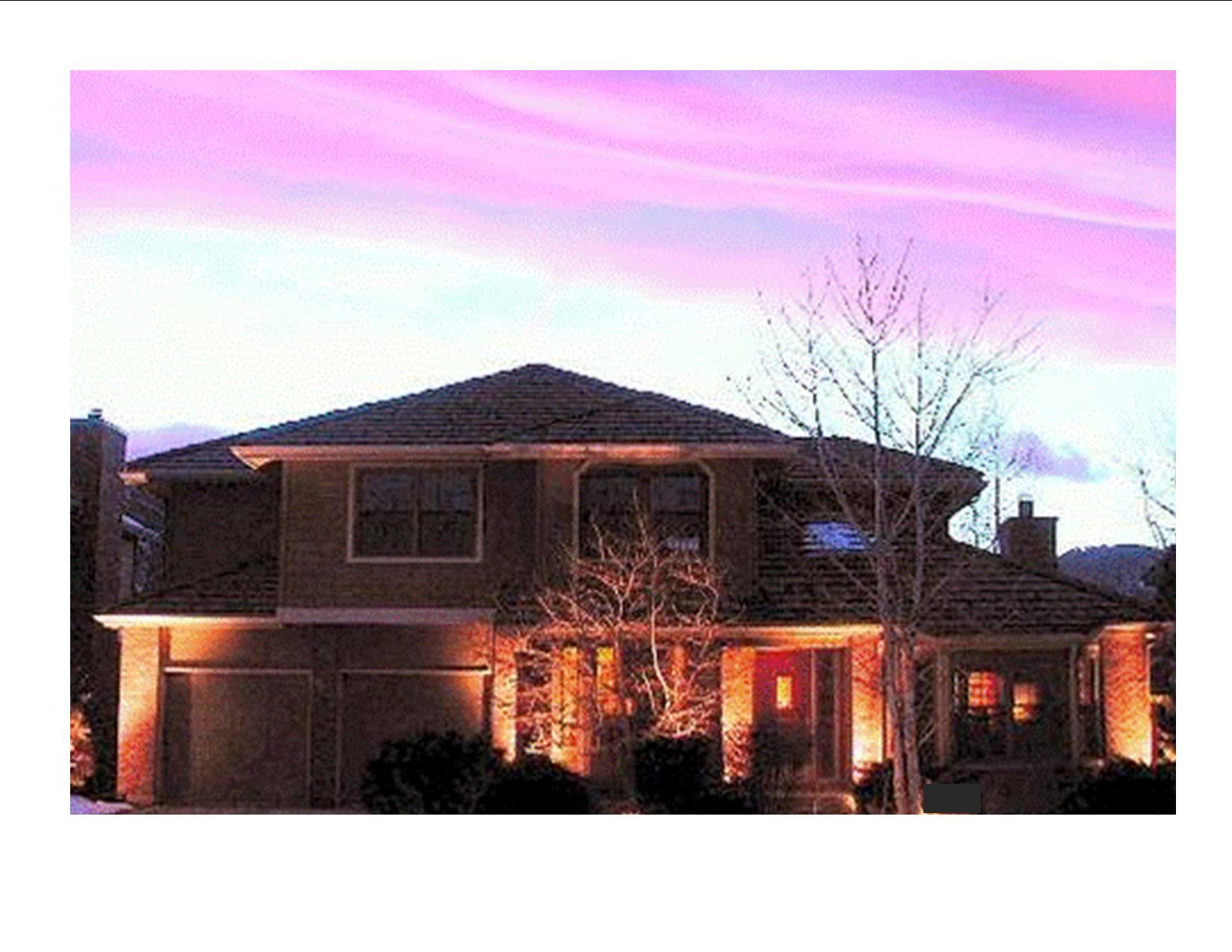
Well, believe it or not – they do and for good reason. Most landscape and architectural lighting professionals tend to develop their list of favorite things to light up, and for us it has been residential chimneys. Many custom home builders in the Denver market (Suderman Homes, Bond General Contractors, etc.) have also taken chimney design and construction to a whole new level. And since the chimney is the highest and most visible architectural feature of the house, it definitely creates a focal point of the house and property – during the daytime and after dark with lighting.   

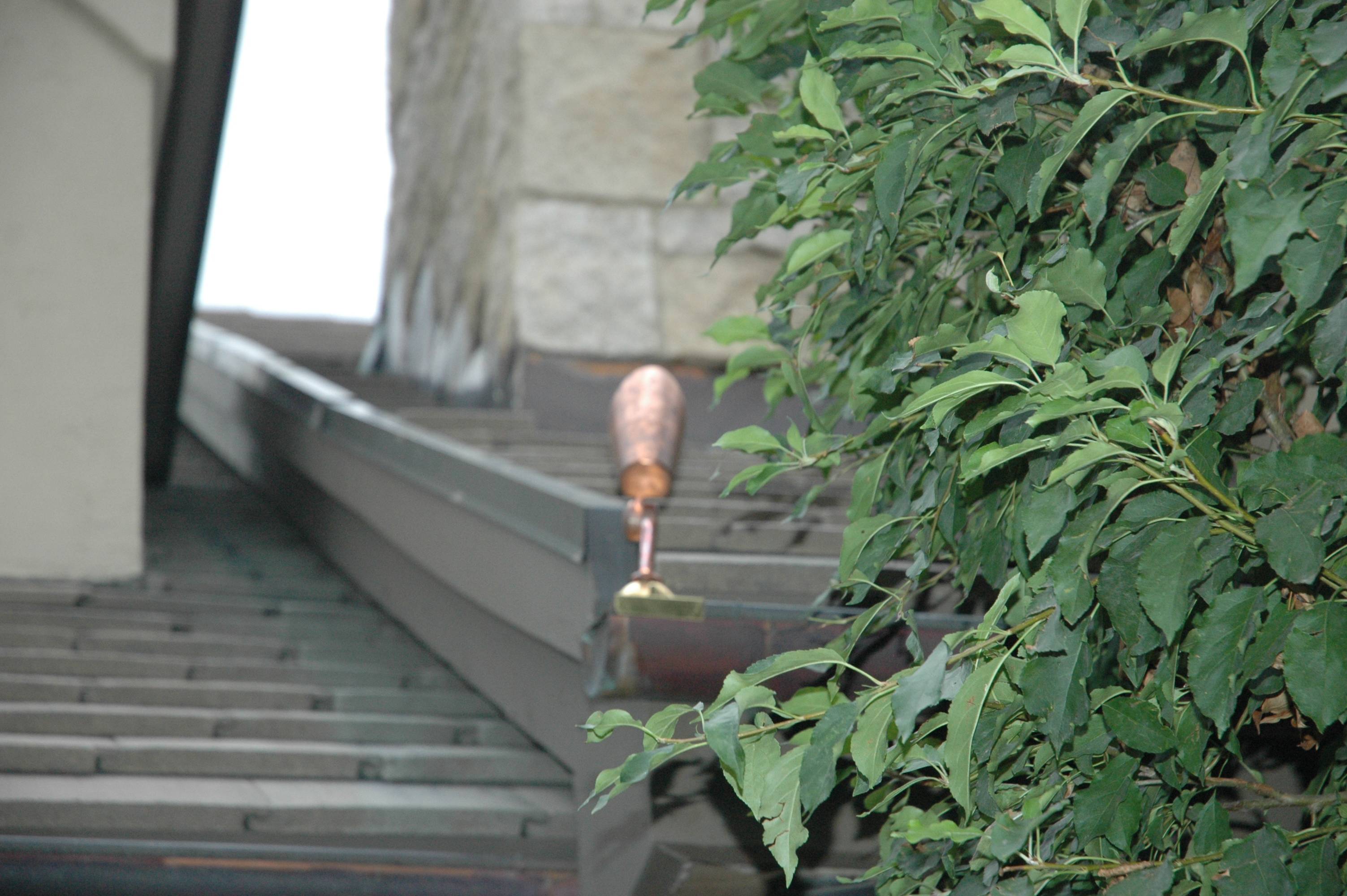
Close-Up of Lighting Fixture

On some houses, the chimney is not visible on the exterior of the house until it emerges from the roofline. With regard to lighting the chimney, that creates a challenging but not insurmountable problem with mounting the lighting fixture to achieve the proper lighting effect. In the photo, you can see a close-up of our factory’s cast brass spot light (20W MR16) that is mounted in the copper gutter along the eave of the home. After the fixture develops a patina, it will blend in perfectly with the rest of the gutter.

The good news is that most chimneys are visible on a home’s facade all the way to the ground level, and these of course are much more easy to light up. For this configuration, well lights can be installed in the ground to provide up-lighting on the chimney. 

Oftentimes, surprises can occur during evening lighting design demonstrations when you are setting up the lights for the chimney. On several occasions we have awoken nesting birds and have irritated bats. But the most memorable occasion was when we set up the lights for the chimney and noticed an impish gargoyle sculpture playfully smiling back at us. We still have homeowners ask us whether we were the ones who lit up the gargoyle down on so and so street. So just remember, with evening lighting design you are painting with light – and there’s absolutely no reason that you cannot make it whimsical and playful. 

To Zone, Or Not to Zone… Important Landscape Lighting Design Question

Preliminary Landscape-Outdoor Lighting Design with Zones

One of the first questions a landscape lighting designer or contractor must ask a client is how they intend to use their outdoor space – and what the primary motivation is for them to be adding this new lighting. One of the mistakes that inexperienced lighting designers make is to assume how the client will be using their outdoor living space and lighting. After all, the client is the one who lives there 365 days per year and not the designer.

Landscape and outdoor lighting provides aesthetics, safety, security, and usability for a homeowner’s property. Oftentimes, homeowners will want the lighting for all four of the above categories or as few as one; e.g., security. If security lighting is the primary purpose, then chances are the homeowner will want to have the lights operate from dusk to dawn – and from a control standpoint you would only have to have one zone.

 If the primary purpose of the lighting is for aesthetics only and the homeowners go to bed around 11:00 PM every night, then there’s no point in increasing their electricity bill to operate the lights until 3:00 AM if they are not awake to enjoy them. The same thing can be said for usability of the outdoor living space. If the pond has been drained for the winter and there are three-foot deep snow drifts on the back patio, most homeowners will not be outside barbecuing in the dead of winter – and probably will not be using their lights quite as much. As far as safety, most homeowners do typically like to leave a few of their lights on all night long whether they be carriage lights by their front door or a few landscape lights to light the way along the sidewalk. 


All of the zones have been programmed to turn on and off automatically, but the homeowner can turn off any of these zones manually using this 8-button switch. So even after the installation of the low-wattage LEDs, no energy will be wasted at this homeowner’s house.

 Most homeowners typically want to control their back yard lights separately from the lights in the front yard – and they typically have their front yard lights operate for a few hours longer. We have also installed quite a few systems where the homeowners operate the path lighting all night long but have the uplighting for the house and trees turn off at midnight or earlier. We once did a landscape lighting installation for a former Denver Bronco offensive lineman. We had lit up his kids’  jungle gym but he wanted to be able to turn those lights off when he had get-togethers at his house with his team mates. He didn’t want anything to get broken – neither the play equipment or his fellow team mates. For smaller properties that require fewer landscape lighting fixtures, there is typically not much of a need for separate lighting and control zones – and separate zones can unnecessarily drive up the installation cost for a small system. For larger systems, however, separate control zones can help a homeowner save money on their monthly electric bill while also helping the environment. 

Turn Your Outdoor Living Area into a Year-Round Fiesta with Permanent Festival Lighting

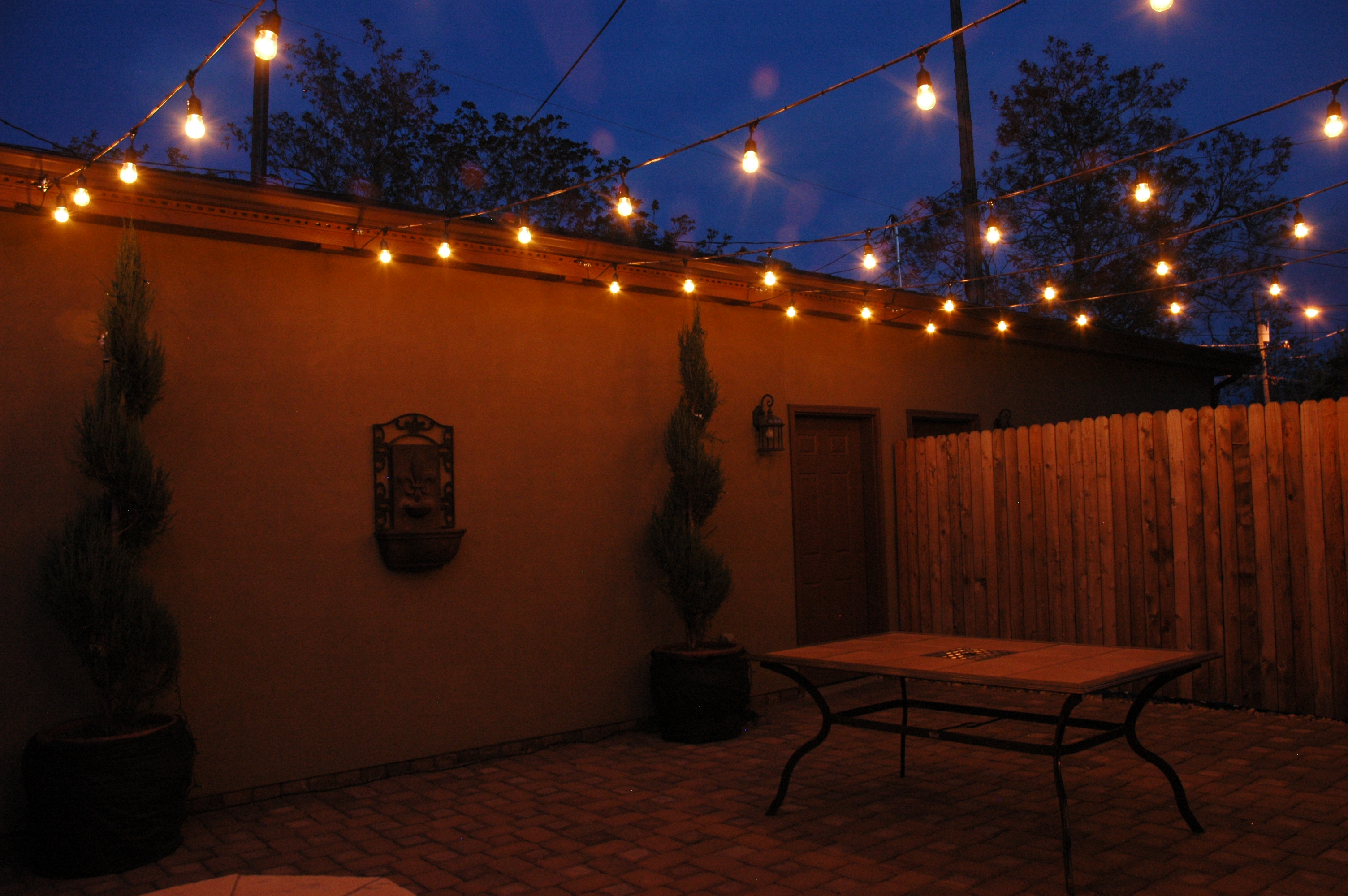
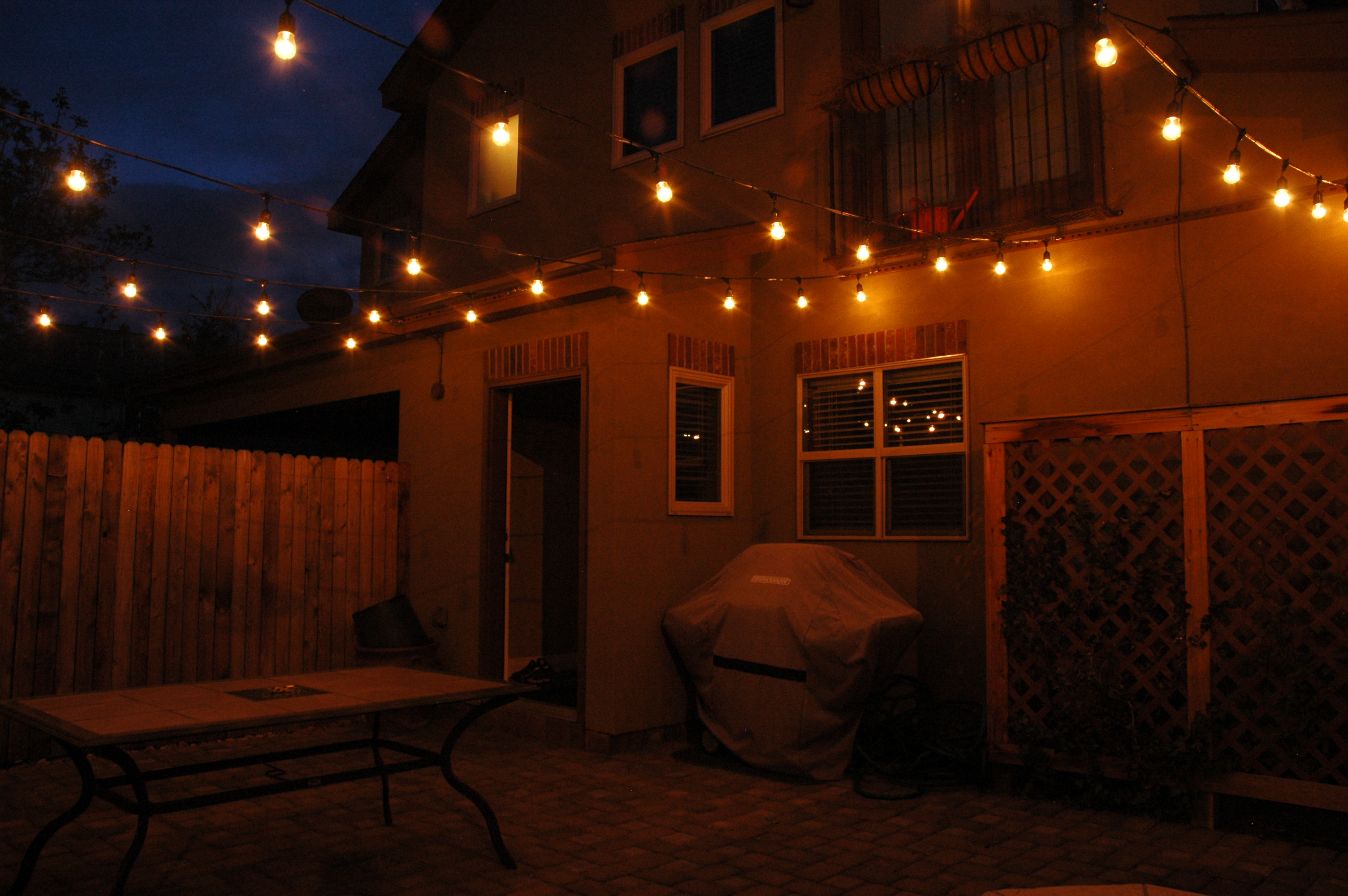
Nighttime View of Festival Lighting in Denver Courtyard

Outdoor Lighting Perspectives just completed a truly fun and unique lighting installation – festival lighting for a courtyard at a downtown Denver townhome. The five strands of line voltage festival lights used a total of 44 bulbs (11W each) to span the courtyard between the townhome and its garage at the rear of the property. 


With the installation of a 1000W dimmer switch, the lights are now controlled manually and can be dimmed to the desired setting to establish the mood for a party or to just relax at the end of a long day.  To support the weight of the electrical wiring and bulbs, stainless steel aircraft cable was first installed for each of the five spans.

 Most area residents have seen festival lighting used in Larimer Square and the Denver Pavilions, but may not have considered it for their own properties and outdoor living spaces. Through the use of commercial-grade lighting products and professional installation, now homeowners can truly enjoy this very cheerful lighting at their own homes as well. 

Another first at this installation was seeing the live birth of kittens when an alley cat took up temporary residence in one of the homeowner’s large pots on the courtyard. So I guess even alley cats cannot resist the ambience and warm glow of festival lights!

See the New Landscape Lighting LEDs at the 2012 Colorado Garden & Home Show

There are three days remaining to see the 2012 Colorado Garden & Home Show, and hopefully you’ll be able to stop by the Outdoor Lighting Perspectives exhibit (#1442) to see the latest landscape lighting products. In the meantime, please enjoy the short video tour below where we highlight our latest LED products:


New PAR36 LED Bulb Launched by Denver Office of Outdoor Lighting Perspectives

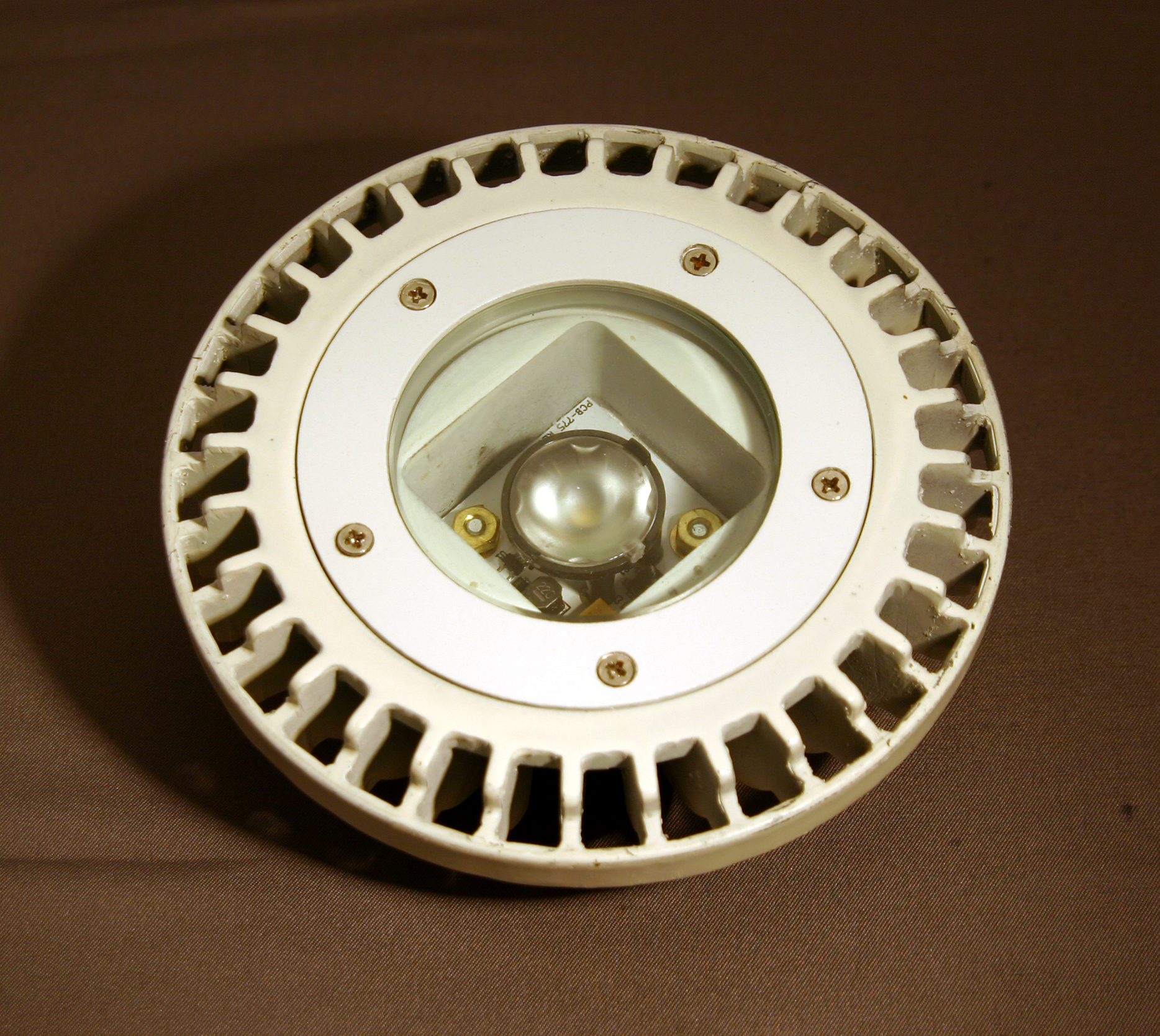
PAR36 LED Bulb

At 10:00 AM at the opening of the 2012 Colorado Garden & Home Show on Saturday, February 11th, the Denver office of Outdoor Lighting Perspectives launched this revolutionary new landscape lighting bulb to the Colorado market. More than two years in development and testing, OLP’s new PAR36 LED bulb (6W) will truly transform the landscape lighting business as we know it. The bulb can be used for new installations or to retrofit existing landscape lighting well light fixtures having the standard PAR36 bulb dimensions.

 
Based on the Cree (made in the USA) LED, the OLP PAR36 LED bulb has the best light output, color rendition, and color stability of any other product on the market today. On display in the OLP Booth (#1442) are comparison photos of the same house – one illuminated by the new LEDs and the other illuminated by quartz halogen. Most people cannot see any difference in the two photos, but they will see a huge difference in energy usage – as much as 83-percent.
 
This bulb is so good that OLP is also offering a Lifetime Maintenance Warranty Program for these new PAR LED installations or retrofits. In addition, B&B Manufacturing in Nashville (OLP’s official supplier) is also offering $5.00 per bulb rebate now through April 30, 2012. OLP staff will be on hand for all nine days of the show, so stop by our exhibit and do the comparison test for yourself.
 

Landscape Lighting Specials at the 2012 Colorado Garden & Home Show

7-Light Special

Outdoor Lighting Perspectives (Booth #1442) will be offering two extremely attractive landscape lighting specials at the Colorado Garden and Home Show that starts Saturday, February 11th.

 
We will be offering a 7- light show special (7 halogen well lights, transformer, and complete installation) as well as a 10-light show special (7 well lights, 3 copper path lights, 600W transformer, and complete installation) – at prices not seen since 1999.
 
To learn more details and to take advantage of these special offers, please plan to visit us at the show. And, if you would like to discuss a specific lighting project for your home or garden, stop by with a photo and we would be glad to discuss it in more detail with you.
 
See you at the show,


$2 Off Admission at the 2012 Colorado Garden & Home Show

Courtesy of Outdoor Lighting Perspectives, click on the following coupon, print it out, and take it to the ticket window at the 2012 Colorado Garden and Home Show. With this coupon, you will save $2 per ticket (two tickets maximum) on admission to the show. We’re located in Booth #1442, so stop by and say hello.

Come See Us at the 2012 Colorado Garden & Home Show

It’s hard to believe, but the 2012 Colorado Garden and Home Show opens on Saturday, February 11th – just three weeks from today! The show runs every day between February 11th through Sunday, February the 19th.

Outdoor Lighting Perspectives (OLP) invites you to visit our exhibit in Booth #1442 (same location as last year) to see the latest in landscape and outdoor lighting products and services, as well as lighting controls/home automation. At this show, we will also be launching a new 5W PAR36 LED bulb retrofit that will revolutionize the landscape lighting industry. Stay tuned in the coming weeks for additional information.

The show’s hours are Saturdays (from 10am to 8pm); Sundays (from 10am to 6pm); and Monday through Friday (from noon to 8pm). We look forward to seeing you at the show!

Say Goodbye to 2011… – and Energy-Inefficient Incandescent Bulbs

Incandescent Light Bulbs Are Being Phased Out

Happy New Year from Outdoor Lighting Perspectives of Colorado! As we bid the year 2011 goodbye, we can also do the same for the energy-inefficient incandescent light bulbs.

 
The Energy Independence and Security Act of 2007 goes into effect on January 1, 2012, and the stated purpose of the act is “to move the United States toward greater energy independence and security, to increase the production of clean renewable fuels, to protect consumers, to increase the efficiency of products, buildings, and vehicles, to promote research on and deploy greenhouse gas capture and storage options, and to improve the energy performance of the Federal Government, and for other purposes.”
 
A popular misconception is that all incandescent light bulbs will be banned. The act will be phased in beginning in 2012 through 2014, and it will require a 25-percent increase in light bulb efficiency. In addition, various specialty bulbs such as appliance bulbs, colored lights, plant lights, and 3-way bulbs are exempt from these requirements. So too are incandescent bulbs currently less than 40 watts or more than 150 watts. Many manufacturers and stores still have 100W bulbs in stock – so it may take quite a while before these bulbs are no longer available.
 
The good news is that there are many new energy-efficient bulbs available including the “high-efficiency” incandescent bulbs (also called energy-efficient halogen bulbs), the compact fluorescent bulbs (CFLs), and of course the Light-Emitting Diodes (LEDs). LEDs are definitely the future in lighting, and their price is gradually decreasing as their quality continues to improve as well. 
 
During the next month we plan to launch a second company that will meet the “eco” needs of homeowners and small business owners alike – including the demand for green products in the home and the workplace. So stay tuned and until then – Happy New Year!