 Hi – it’s Cathy here. I just wanted to let you know that Mead’s article – Outdoor Lighting Makes a Statement for a Community was published in the December 2009 issue of Common Interests – a publication by the Rocky Mountain Chapter of the Community Associations Institute. Mead’s article in its entirety follows.

Outdoor Lighting Makes a Statement for a Community
Mead L. Noss, P.E.
Owner, Outdoor Lighting Perspectives of Colorado
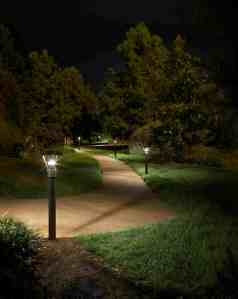
Communities take great pride in the aesthetics of their public spaces and landscaped areas during the daytime, and in the evening a community’s outdoor lighting should also set the appropriate tone. Does the community seem warm and inviting (safe and secure)? Or does the lighting detract from the overall experience of the neighborhood? Are the residents enjoying the public spaces after dark with well-illuminated path and bikeways?
More often than not, outdoor lighting in communities can be improved greatly with modern bulb technology, fixtures, and more effective lighting design. How many times have you driven by a community entrance with beautifully landscaped flower beds in the daytime only to be aghast at the same location in the evening as the once-beautiful landscaping is now bathed in the harsh yellow light from high-pressure sodium floods? In the current economic times with increasing energy costs and reduced operating budgets, communities now have the option of enhancing their outdoor lighting without sacrificing safety, security, aesthetics, usability, or energy efficiency.
Safety and Security
With any outdoor lighting system, safety and security are paramount. A good community lighting plan begins at all of the entrances to the community. You certainly want homeowners and their guests to find the community easily after dark but more importantly you want emergency fire, police and medical crews to find their way there even more quickly.
Well-placed and directed lighting will enhance the view of security cameras at an entrance gate or community center. Additionally, the security and accessibility of community mailboxes will be enhanced with overhead lighting.
Clubhouses, parks and other public areas must be properly illuminated to prevent falls and injuries after dark, as well as to deter vandalism and other crimes. Street lighting especially at intersections throughout the community enables motorists to find street signs after dark and to allow pedestrians to safely enjoy their evening walks.
The security of individual homeowners’ houses is also improved by architectural and landscape lighting that illuminates both the home and the perimeter of the property. Any police department in the state or country will tell you that burglars will almost always target the homes without lighting rather than taking risks with homes that are well-illuminated.
One of the myths about security and outdoor lighting is that if a little lighting is good, adding much more lighting is better – right? Well, that’s not actually the case. If the lighting fixtures produce lots of glare, adding additional fixtures of the same type or increasing the wattage of the bulbs will actually produce more glare thereby reducing visibility and security. A truism of good lighting design is that the quality of light is always better than the quantity of light.
Aesthetics and Usability
The aesthetics and usability of the overall lighting found in a community is of the utmost importance. The impression of the community after dark should be warm and inviting without harsh lights or glare. How often have you driven into a community only to be blinded by unshielded carriage lights at the entrance or by unshielded carriage lights along the street on driveway columns?
There are two types of glare – nuisance glare and disabling glare – and carriage lights along the street really do approach the level of disabling glare, especially for older drivers. As we age, our eyes become more susceptible to the effects of glare and it takes us longer to recover our full vision.
Misdirected flood lights from one neighbor’s house into the adjacent neighbor’s yard (called light trespass) is unpleasant and can be categorized as nuisance glare – and it certainly affects the usability and enjoyment of the affected neighbor’s yard or his/her night’s sleep if the lighting is visible from their bedroom.
Any time that a bulb source is visible to anyone living in or driving through a community, it means that the lighting and resulting energy costs are wasted because the lighting is not directed to only where it’s needed.
Energy Efficiency and Cost
One of the first rules of lighting design is to not specify more light than you need; i.e., do not use line voltage metal halide lighting fixtures where low-voltage quartz halogen or LED (light-emitting diode) fixtures might do. It all depends on the ambient lighting conditions, what needs to be illuminated, and how the space is to be used in the evening. Evening lighting demonstrations with different lighting and cost options can provide communities with meaningful and visual comparisons from which to base their future capital improvement decisions.
Recent technology has improved to the extent that lighting designers and contractors can now provide energy efficient lighting that is effective from both a lumen output and Color Rendering Index (CRI) standpoint. What exactly is CRI? CRI is the comparison of how well a particular light source emits a color approximating a noon time sun (See the following table).
COLOR RENDERING INDEX TABLE
| LIGHT SOURCE |
CRI |
| Noon Day Sun |
100 |
| Great Color (color matching above 97) |
95+ |
| Good Color |
80 – 94 |
| Poor Color (where colors do not show) |
79 |
| Fluorescent and Induction Fluorescent |
50 – 98 |
| LED |
70 – 80 (getting better) |
| High Pressure Sodium |
50 |
| Quartz Halogen |
80 – 92 |
| Metal Halide |
80+ |
| Ceramic Metal Halide |
90 – 96 |
Ceramic Metal Halide bulbs (39W or 70W) with a 15,000-hour life powered by low-voltage or line-voltage systems provide the true color (90-96 CRI) that is desired for lighting entrances, parks, and clubhouses in the evening.
Quality low-voltage LED (light emitting diode) fixtures with 50,000-hour rated life bulbs have recently become available and with an acceptable and improving CRI. The tradeoff investment-wise is a higher initial cost with lower residual operating costs.
When comparing bulb sources and efficiency, another helpful term is the lumen. A lumen is the measurement of reflectant light off of a surface. This is how all light sources are rated as you can see in the following table:
LUMEN COMPARISON BY LIGHT SOURCE
| LIGHT SOURCE |
LUMENS/WATT |
| Incandescent |
8 |
| Quartz Halogen |
15 – 19 |
| Mercury |
30 – 40 |
| LED |
30 – 80 |
| Fluorescent |
40 – 80 |
| Metal Halide |
80 – 110 |
| Induction Fluorescent |
80 |
| Ceramic Metal Halide |
80 – 110 |
| High Pressure Sodium |
120 |
As you can see from the table, incandescent bulbs are very inefficient and high pressure sodium bulbs are very efficient, as long as you like everything looking yellow in the evening. With respect to energy efficiency and light quality, line voltage or low voltage ceramic metal halide and low voltage quartz halogen lighting systems are the best solution, with low-voltage LED lighting systems becoming more and more acceptable for certain applications. In fact, LED lighting installations powered by off-the-grid solar photovoltaic systems are the optimum solution for community areas requiring lighting but having no readily available source of power.
Maintenance
Warranties and maintenance costs become very important over the long term with respect to lighting systems – and communities and their respective homeowners should try to obtain the best warranties available. In addition, the best maintenance for any lighting system is usually provided by the original company that installed it since they are most familiar with the product and installation. However, not all companies that install lighting systems also provide maintenance so that is an important consideration when evaluating a contractor.
As with any other asset in the community, lighting systems need to be maintained on a regular basis to provide optimum performance and to serve the needs of the community. In closing, the appearance of any outdoor lighting system (daytime or evening) really does set an appropriate tone for the community.
Sources:
- Go Green, Save Green presentation, Outdoor Lighting Perspectives Commercial Lighting Division, 2008.
- Illuminating Engineering Society
Filed under: Bulb Technology, Ceramic Metal Halide, Commercial Lighting, Design, Green Energy, Home-Community Security/Safety, LEDs, Maintenance and Service | Tagged: color rendering index for outdoor lighting, colorado outdoor lighting, colorado springs outdoor lighting, commercial outdoor lighting, Community Associations Institute, community entrance lighting, Denver metro area, denver outdoor lighting, energy efficiency and cost to operate outdoor lighting, fort collins outdoor lighting, Home Security Lighting, Home-Community Security/Safety, LED bulbs, lighting design, lighting entrance monuments, lighting entrance signs, lighting system maintenance, low voltage LED lighting, lumen comparison by light source, off-grid solar photovoltaic LED entrance lighting, safety and security requirements for community outdoor lighting, sustainability | Leave a comment »


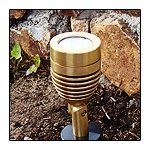
 For the second year in a row, Outdoor Lighting Perspectives of Colorado is proud to have one of its newest product lines selected by 9News for the 2010 Hot Products Zone at the upcoming Colorado Garden and Home Show. The product line selected is our new and innovative LED line of landscape and architectural lighting products.






 Outdoor Lighting of Colorado's Blog