Holiday Lighting with LEDs Looks Great and Saves Energy Too!

I know, I know – the holiday season and Christmas have long since passed – but I’m continuing the highlights of 2009. As you can see in the following photo, Christmas/holiday lighting with LEDs looks great and we’ll be using it for all new Christmas/holiday lighting installations we do in the future.

Christmas Lighting with LEDs

LEDs use only 10-percent of the energy as compared to standard incandescent mini light bulbs. Other important features are that they are very durable with 10,000-plus hours of continuous bulb life and very safe with very cool operational temperatures.

In addition, the epoxy lenses are virtually indestructible and parallel wiring means that if one LED bulb burns out, the other bulbs will stay lit.

Mead’s Article – Outdoor Lighting Makes a Statement for a Community – Published

Hi – it’s Cathy here. I just wanted to let you know that Mead’s article – Outdoor Lighting Makes a Statement for a Community was published in the December 2009 issue of Common Interests – a publication by the Rocky Mountain Chapter of the Community Associations Institute. Mead’s article in its entirety follows.


Outdoor Lighting Makes a Statement for a Community

Mead L. Noss, P.E.

Owner, Outdoor Lighting Perspectives of Colorado


Communities take great pride in the aesthetics of their public spaces and landscaped areas during the daytime, and in the evening a community’s outdoor lighting should also set the appropriate tone. Does the community seem warm and inviting (safe and secure)? Or does the lighting detract from the overall experience of the neighborhood? Are the residents enjoying the public spaces after dark with well-illuminated path and bikeways?

More often than not, outdoor lighting in communities can be improved greatly with modern bulb technology, fixtures, and more effective lighting design. How many times have you driven by a community entrance with beautifully landscaped flower beds in the daytime only to be aghast at the same location in the evening as the once-beautiful landscaping is now bathed in the harsh yellow light from high-pressure sodium floods? In the current economic times with increasing energy costs and reduced operating budgets, communities now have the option of enhancing their outdoor lighting without sacrificing safety, security, aesthetics, usability, or energy efficiency.

Safety and Security

With any outdoor lighting system, safety and security are paramount. A good community lighting plan begins at all of the entrances to the community. You certainly want homeowners and their guests to find the community easily after dark but more importantly you want emergency fire, police and medical crews to find their way there even more quickly.

Well-placed and directed lighting will enhance the view of security cameras at an entrance gate or community center. Additionally, the security and accessibility of community mailboxes will be enhanced with overhead lighting.

Clubhouses, parks and other public areas must be properly illuminated to prevent falls and injuries after dark, as well as to deter vandalism and other crimes. Street lighting especially at intersections throughout the community enables motorists to find street signs after dark and to allow pedestrians to safely enjoy their evening walks.

The security of individual homeowners’ houses is also improved by architectural and landscape lighting that illuminates both the home and the perimeter of the property. Any police department in the state or country will tell you that burglars will almost always target the homes without lighting rather than taking risks with homes that are well-illuminated.

One of the myths about security and outdoor lighting is that if a little lighting is good, adding much more lighting is better – right? Well, that’s not actually the case. If the lighting fixtures produce lots of glare, adding additional fixtures of the same type or increasing the wattage of the bulbs will actually produce more glare thereby reducing visibility and security. A truism of good lighting design is that the quality of light is always better than the quantity of light.

Aesthetics and Usability

The aesthetics and usability of the overall lighting found in a community is of the utmost importance. The impression of the community after dark should be warm and inviting without harsh lights or glare. How often have you driven into a community only to be blinded by unshielded carriage lights at the entrance or by unshielded carriage lights along the street on driveway columns?

There are two types of glare – nuisance glare and disabling glare – and carriage lights along the street really do approach the level of disabling glare, especially for older drivers. As we age, our eyes become more susceptible to the effects of glare and it takes us longer to recover our full vision.  

Misdirected flood lights from one neighbor’s house into the adjacent neighbor’s yard (called light trespass) is unpleasant and can be categorized as nuisance glare – and it certainly affects the usability and enjoyment of the affected neighbor’s yard or his/her night’s sleep if the lighting is visible from their bedroom.

Any time that a bulb source is visible to anyone living in or driving through a community, it means that the lighting and resulting energy costs are wasted because the lighting is not directed to only where it’s needed.

Energy Efficiency and Cost

One of the first rules of lighting design is to not specify more light than you need; i.e., do not use line voltage metal halide lighting fixtures where low-voltage quartz halogen or LED (light-emitting diode) fixtures might do. It all depends on the ambient lighting conditions, what needs to be illuminated, and how the space is to be used in the evening. Evening lighting demonstrations with different lighting and cost options can provide communities with meaningful and visual comparisons from which to base their future capital improvement decisions.

Recent technology has improved to the extent that lighting designers and contractors can now provide energy efficient lighting that is effective from both a lumen output and Color Rendering Index (CRI) standpoint. What exactly is CRI? CRI is the comparison of how well a particular light source emits a color approximating a noon time sun (See the following table).

COLOR RENDERING INDEX TABLE

LIGHT SOURCE CRI
Noon Day Sun 100
Great Color (color matching above 97)   95+
Good Color   80 – 94
Poor Color (where colors do not show)   79
Fluorescent and Induction Fluorescent   50 – 98
LED   70 – 80 (getting better)
High Pressure Sodium   50
Quartz Halogen   80 – 92
Metal Halide   80+
Ceramic Metal Halide   90 – 96


Ceramic Metal Halide bulbs (39W or 70W) with a 15,000-hour life powered by low-voltage or line-voltage systems provide the true color (90-96 CRI) that is desired for lighting entrances, parks, and clubhouses in the evening.

Quality low-voltage LED (light emitting diode) fixtures with 50,000-hour rated life bulbs have recently become available and with an acceptable and improving CRI. The tradeoff investment-wise is a higher initial cost with lower residual operating costs.

When comparing bulb sources and efficiency, another helpful term is the lumen. A lumen is the measurement of reflectant light off of a surface. This is how all light sources are rated as you can see in the following table:

LUMEN COMPARISON BY LIGHT SOURCE

LIGHT SOURCE LUMENS/WATT
Incandescent   8
Quartz Halogen  15 – 19
Mercury  30 – 40
LED  30 – 80
Fluorescent  40 – 80
Metal Halide  80 – 110
Induction Fluorescent  80
Ceramic Metal Halide  80 – 110
High Pressure Sodium 120


As you can see from the table, incandescent bulbs are very inefficient and high pressure sodium bulbs are very efficient, as long as you like everything looking yellow in the evening. With respect to energy efficiency and light quality, line voltage or low voltage ceramic metal halide and low voltage quartz halogen lighting systems are the best solution, with low-voltage LED lighting systems becoming more and more acceptable for certain applications. In fact, LED lighting installations powered by off-the-grid solar photovoltaic systems are the optimum solution for community areas requiring lighting but having no readily available source of power.

Maintenance

Warranties and maintenance costs become very important over the long term with respect to lighting systems – and communities and their respective homeowners should try to obtain the best warranties available. In addition, the best maintenance for any lighting system is usually provided by the original company that installed it since they are most familiar with the product and installation. However, not all companies that install lighting systems also provide maintenance so that is an important consideration when evaluating a contractor.

As with any other asset in the community, lighting systems need to be maintained on a regular basis to provide optimum performance and to serve the needs of the community. In closing, the appearance of any outdoor lighting system (daytime or evening) really does set an appropriate tone for the community.

Sources:

  1. Go Green, Save Green presentation, Outdoor Lighting Perspectives Commercial Lighting Division, 2008.
  2. Illuminating Engineering Society

Solar Photovoltaic/LED Dark-Sky Compliant Entrance Lighting

Continuing our theme of highlights for 2009, the most interesting project was our solar photovoltaic lighting installation for the Village of Genesee. We had received a request from the Villages’s property management firm to provide lighting at two entrances – one with power and one without power. The site without power therefore would require the installation of an off-grid solar photovoltaic lighting system.

Site without Power

Both sites required that the fixtures be dark-sky compliant; i.e., the fixtures must point downward so as to not discharge any light into the night sky. In addition, both installations had to withstand the extra wear and tear of heavy snowstorms, the excessive mountain winds, and last but not least, the large herd of elk.

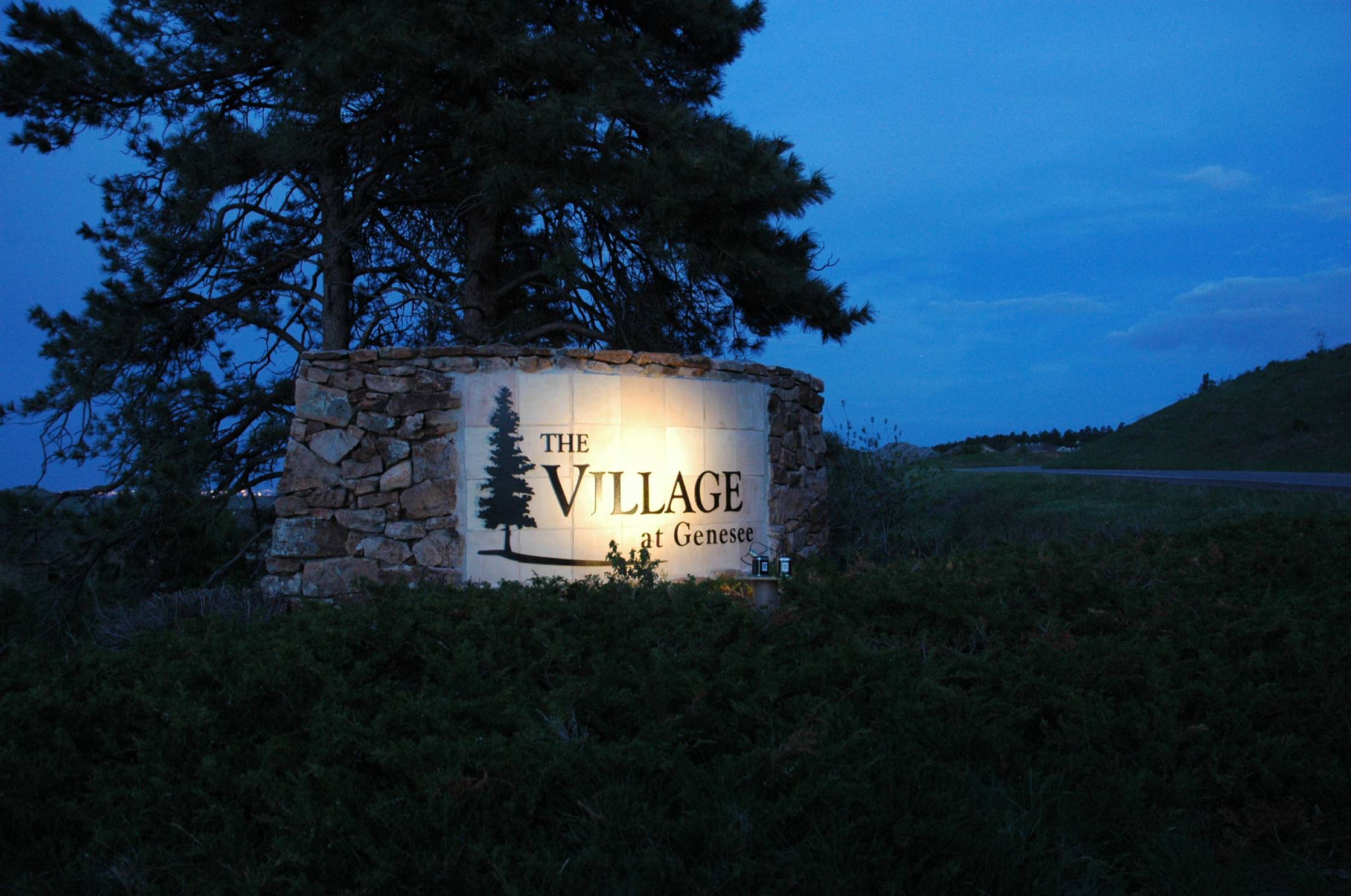
What made this installation feasible was the introduction of the next generation LED (light emitting diode) fixture that draws only 3.7 watts. Our manufacturing partner is now providing us with very high-quality LED lighting fixtures with excellent color and lighting effect. By changing the lens optics, we could vary the lighting effect to create just the right lighting for the monument signage. A photo taken during the actual evening demonstration is shown below.

Evening LED Demo

On the solar photovoltaic (PV) side, the technology in terms of cost and quality has also improved significantly over the last few years. Coupled with the advances of the LED lighting technology, a high quality, long lasting solar PV/LED installation was now a reality.

A 20W solar PV panel was installed along with a solar gel battery that would provide at least five days of stored power for the system – enough to outlast long periods of clouds and snow during the winter months.

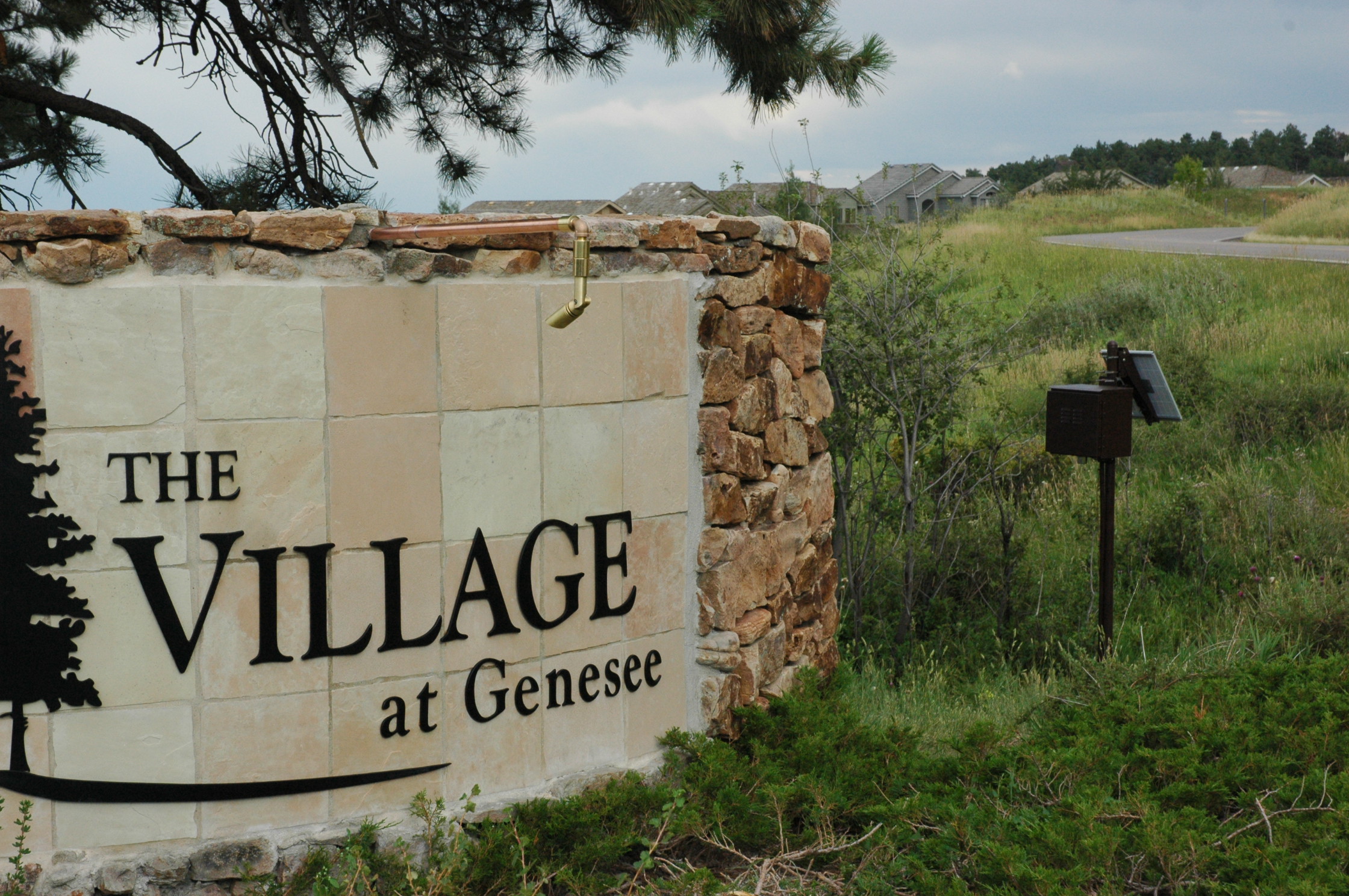
The battery, the controller (the brains of the system), and the lighting surge suppression system were installed in the aluminum equipment bay which was itself installed at the top of a structural aluminum pole. A photo of the completed installation is shown below.

Completed Installation with Solar PV Mast in Background

Interestingly, the solar PV panel has been blocked by snow only once this season. Prior to last Halloween, the foothills received 37-inches of snow and the HOA president had to brush off the panel with a broom with an extension handle.

In addition, the LED lighting installation at the second site that already had power was completed – and that installation is shown below. For this installation, two box floods each having 35-watt high pressure sodium bulbs were replaced by the two 3.7-watt LED lighting fixtures. The monthly electric bill for the HOA at this entrance dropped from $80.00 to $11.00!

LED Lighting Installation with Power

CHANNELBRITE PERMANENT LED – 2009 HOT PRODUCT!


9NEWS HOT PRODUCT AWARD CHANNELBRITE

As we continue to look back at the highlights of 2009, one of the most memorable was OLP of Colorado’s selection as a 9NEWS HOT PRODUCTS ZONE AWARDEE at the Colorado Garden and Home Show for its permanent LED lighting product – ChannelBrite™. Only nine companies (Hot Products) were selected from over 650 companies exhibiting at the show. 

The Hot Products Awardees receive special exposure along with a separate high visibility exhibit in the lobby of the Colorado Convention Center as well as a special live interview segment on 9NEWS prior to the opening of the show. 

Hot Products Zone 2009


Closeup of Channelbrite Exhibit


ChannelBrite is a permanent LED solution for both residential holiday lighting as well as year-round commercial applications where business owners want to have their businesses stand out from the competition. The LEDs are rated for 100,000 hours of service. In fact, if you used them 10 hours a day, that would translate into 25 years of service.
 
A program controller allows you to set the speed, pattern and colors of the light display. The ChannelBrite installation is virtually unnoticeable when not in use and it requires just 10-percent of the energy consumed by normal incandescent lighting.
 
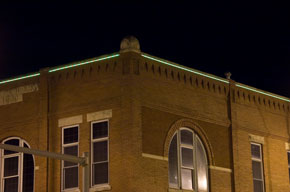
For commercial applications, a more densely packed LED strip can replace the more inefficient fluorescent lights that are currently used to outline buildings. By using Channelbrite, business owners can call attention to their location in a unique, attractive and upscale way without any annoying light spillover into adjacent businesses or residences.
 
The ChannelBrite product is backed by a full 3-year warranty. The ChannelBrite display that was in our main exhibit is shown below:
 
 
OLP of Colorado Exhibit with ChannelBrite

The technology and energy efficiency of this new and amazing permanent LED product are truly astounding. And because ChannelBrite is installed on the structure itself and not below ground (as is the case with landscape lighting), it can be scheduled for installation at any time of year. 

Pictures of actual installations/applications follow. 


ChannelBrite Virtually Invisible in Daytime

Residential ChannelBrite - Candy-Cane Pattern

Municipal Building with ChannelBrite

HAPPY NEW YEAR FROM OLP COLORADO!

Our first resolution of the new year is to do a much better job keeping our blog updated on a regular basis. After all, a blog without regular updates just becomes a website.

Before we move ahead to 2010, we first want to take a look at some highlights from 2009 with regard to the use of new technology as well as some unique installations. Those highlights will be posted in the next several blogs.

COME SEE US AT THE COLORADO FALL HOME SHOW

     fall_cgs                                                                      Come visit us at the upcoming Colorado Fall Home Show – Booth #717 at the Colorado Convention Center in downtown Denver – September 19th and 20th. Saturday hours are from 10:00 AM through 8:00 PM and Sunday hours are from 10:00 AM to 5:00 PM.

This Fall Show – Denver’s only fall home show – will feature almost 300 companies with a focus on home renovation, remodeling, and sustainable living. The show also features two demonstration theaters offering educational seminars provided by experts in sustainability, energy efficiency, interior design, remodeling and cooking.

Outdoor Lighting Perspectives of Colorado will be displaying and launching its newest low-voltage LED landscape/architectural lighting fixtures and products. These are the first LED products that meet OLP’s hgh standards for quality lighting effect as well as durability.

In addition, permanent and more traditional LED holiday lighting products will be on display, as well as a new truly unique LED ribbon lighting product that is the only UL-approved LED ribbon available today that is suitable for a wet location.

Of course, our standard low voltage quartz halogen fixtures, ceramic metal halide commercial fixtures, and Lighting Control Automation™ will also be on display for your review and/or questions. We hope to see you there!

Mead and Cathy Noss

GO GREEN SAVE GREEN SIGN

Another Reason to Use Lighting Control AutomationTM – Please Note the Intermatic Timer Recall

In a previous post, we highlighted state-of-the-art whole-house lighting control systems available today including the one we use, Lighting Control Automation™. We also mentioned some of the older technology still in use including the Intermatic electronic in-wall timer.

We just learned today that Intermatic has RECALLED 240,000 of their in-wall electronic timers because the product might pose a shock hazard to consumers trying to replace a battery. The model numbers include ST01, ST01C, ST01AC, ST01AC70, ST01C70, ST01CL, EI600C, EI600LAC, EI600LAC8, EI600WC and EI600WC8. These switches typically replaced an existing toggle or decora switch, and were sold at electrical supply houses and other retail outlets nationwide between March 2007 and June of this year.

If you have one of these switches, you can obtain details about this recall by calling 877-417-4316; online at Intermatic.com; or by accessing the website of the U.S. Consumer Product Safety Commission.

That is truly one of the great benefits of our Lighting Control Automation system, in that each intelligent switch does not need or even require a battery back up. Once the switch is programmed, the program is preserved forever and batteries are not required to back up the memory. In addition, there is no need to keep reprogramming the on and off times throughout the year since Lighting Control Automation does that for you automatically.

Lighting Controls Save Energy/Money and Enhance Security

For many years, lighting control was simply thought of as a manual switch that enabled a homeowner to turn on or off the front porch or carriage lights, or outside landscape lighting system. The problem with that control system is that someone would either forget to turn the lights on when it got dark or invariably forget to turn them off during the daytime. That inevitably wastes energy and money. Many homes today still have three or four sets of switches along the entire length of the house that someone has to manually control twice each day.

Photocells were sometimes added to control exterior line voltage lights as well as low voltage lighting systems over the years – and the lights run at full power from dusk to dawn or longer, depending on the location of the photocell. The other problem is that if you have several lighting zones, it is virtually impossible to synchronize the lights; i.e, some lights may be turning on or off as much as an hour earlier/later than other lights. Photocells work great for public or commercial properties where dusk to dawn lighting is deemed necessary for public safety/security. However, for most residential applications, a photocell is wasteful because the homeowner is paying for lighting all night long – even when they might only need it to say 11:00 PM.

Then someone got the bright idea of combining the photocell with a mechanical timer (on a low-voltage lighting transformer) or an electronic timer on a switch inside the house that controls carriage lights, for example. In the case of the low voltage lighting system, that works great until there’s a power outage and the timer no longer has the correct current time. And if you have multiple lighting zones, the lights are invariably coming on and going off at different times. The other disadvantage is that you also do not have the ability to manually turn the lights on and off from inside the house.

In the case of the electronic timer used in an in-wall switch (Intermatic is used a lot), it may work fine for one set of exterior lights but there is no way to synchronize all of the lighting circuits so that they operate at exactly the same time. Most of these Intermatic switches have been installed by do-it-yourself homeowners – and many times we’ve found that they’ve actually been unsafely overloaded.

More sophisticated whole-house automation systems have been in use in recent years including Lutron (hardwired and RadioRA), Control 4, X10 and others. The hardwired Lutron systems are typically used in large new homes over 10,000 square feet and we have many lighting systems that interface with this control system. We also have experience with Control 4 and Lutron’s RadioRA systems – both of which use wireless technology. Our experience is that the more control nodes that the homeowner adds throughout the house, the more robust and reliable the control system becomes. So if you need to send a signal over long distances and there are not many nodes in between, this wireless technology can be problematic.

We started off using the X10 control system ten years ago – but dropped it over three years ago because of unresolved technical issues. As it turns out, the X10 technology was not able to overcome the signal interference problems caused by the new electronic devices increasingly common in today’s home.

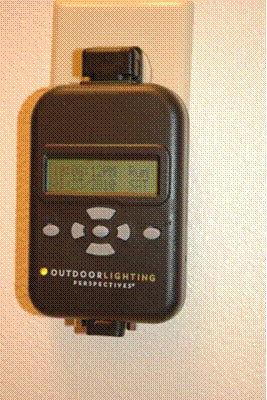
So what we’re now using for all of our residential installations is Lighting Control Automation™ (LCA) which is based on Universal Powerline Bus technology. We can control all of the low voltage lighting transformers and any or all of the interior/exterior line voltage lights from a single controller that is plugged into an interior outlet.

Once the controller has been programmed, you can plug it in and forget it. The device automatically adjusts on/off times according to the daily astronomical sunset/sunrise times for the home’s specific latitude/longitude, and it automatically adjusts for daylight savings/standard time and leap year as needed.

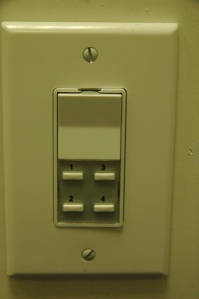
What once were standard “dumb” mechanical switches can be converted to Lighting Control Automation “intelligent” switches with a series of different faceplates  – that would enable you to be able to control from one to eight different other circuits throughout the house.

The beauty of the LCA system is that it can do roughly 85-percent of what a Lutron control system can do – at about one-third of the price. And the LCA system does not have to be hard-wired because it uses the existing house wiring and is an excellent choice for remodels as well as retrofits.

So what kind of applications can be handled by Lighting Control Automation? Almost anything and everything:

–  automate your front carriage lights to operate at 85-percent power to save energy and to turn off automatically; never waste power again because you forgot to turn the lights off before going to bed. This dimming level will also ensure that the carriage lights become integrated with the overall lighting effect, instead of otherwise ruining an effective design because they cause too much glare.

–  automate the lights in any room of your house and randomize the on/off times when you are away to give the house a lived-in look to deter vandalism.

–  automate a SECURE-ENTRY scenario whereby interior lights turn on when you turn into your driveway or use your garage door remote.

– automate your basement and rec-room lights so that they never get left on overnight again

–  provide a warning light to notify the homeowner that the garage door was left open before turning in for the night

–  in hot weather, automate a ceiling fan or automatically lower solar blinds to keep the house cool.

–  provide an ALL-LIGHTS ON scenario in case a noise is heard in the middle of the night.

–  if you have children who have difficulty waking during the dark mornings during the wintertime, LCA can mimic a sunrise by having a table lamp slowly get brighter over time.

The number of possible applications for Lighting Control Automation is endless, and it provides a lighting designer the ability to fully coordinate and integrate the overall lighting scene for maximum effect.

LCA Timer

 DSC_0866

Complimentary Nighttime Lighting Design in Colorado

ask_for_preview


Most people do not know it’s possible to have a free lighting design preview for their home, business or community entrance/park/clubhouse, etc. While it is possible to lay out a preliminary design on paper, there is absolutely no substitute for conducting an evening lighting design demonstration to ensure that the desired lighting effect is achieved.

A lot of people mistakenly believe that the first step in  lighting design is to select the fixtures. Until you know what you want to illuminate and what bulb and wattage you need for the desired lighting effect, the last thing you want to do is select the wrong fixture for the intended application. Unfortunately, this happens all of the time. We get calls almost every week from homeowners who are unhappy with their lighting system – and they are quick to add that they had no idea what the lighting would look like until AFTER the installation. We always tell them not to feel too badly because their contractor had no idea either.

With our national company, we always like to say that we’re not in the business of selling fixtures, we’re in the business of selling lighting effect. Unlike most of our competitors, we do not just point and recommend where the fixtures should go – we set them up so that you can judge for yourself whether we have achieved the lighting effect that meets your needs.

Even seasoned building architects and landscape architects are surprised by the different possibilities of lighting effects – especially when they can see them prior to the final installation. To give you a case in point, I once received a call from a nationally known commercial landscape architect who needed path lighting for his home’s front sidewalk.

He told me difinitively that he needed five path lights. When I asked him what neighborhood he lived in, I knew that the house setbacks were not excessively far from the street and suggested that he could probably get by with only three path lights. No, he replied, stating that this is what I do for a living. When we did the evening lighting demonstration, the commercial landscape architect was incredulous that he only needed a total of three path lights. Interestingly, landscape architecture programs throughout the U.S. typically require only ONE three credit course in landscape lighting – and it’s rare that students actually get to see an evening lighting design demonstration during this course.

Depending on the ambient lighting conditions and lighting needs of a customer, we may actually set up either low voltage (quartz halogen or LED) fixtures or line voltage fixtures (Ceramic Metal Halide). If we’re trying to illuminate a large commercial building that is located next to a busy street with sodium street lights for example, we know that a low voltage lighting system will not provide the intended lighting effect next to these bright sodium street lights.

For any evening lighting design demonstration, we always sit down with the home or business owner to determine what their primary lighting needs are. For example, are they primarily interested in safety and security or are they more interested in highlighting the unique architectural features of their house/business and/or expanding their usable living space in the evening? Sometimes the answer is all of the above. Until you have an answer to this question, you cannot possibly know how to even begin a lighting design.

By seeing a lighting design laid out with a temporary lighting system, you will know exactly what you will be getting if you decide to proceed with an installation – no guessing and no surprises. Any changes to this preliminary design are easily made as a home/business owner adjusts the system to their particular tastes.

Once the desired lighting effect is achieved, flags can be put in place to accurately mark the position of each and every fixture. By that point in the demonstration, you will have seen that in a lot of cases moving a fixture a couple of feet one way or the other can make a huge difference in the lighting effect.

Another key point is that not all fixtures and installations are created equally. The customer needs to be confident that a lighting installation will look as good ten years from now as it looks today.

A lot of our friends and business associates marvel at our late-night design demonstrations and ask – isn’t that a lot of work? Our answer is always no because this is what we do to ensure that our customers are 100% satisfied with their lighting systems. And it’s always easier to do something the right way the first time.

Our hope is that home and business owners will find these complimentary nighttime lighting designs in Colorado educational, enjoyable and useful. A quality lighting system can add value to a home or business, and we believe that you the one best suited to make this decision for yourself.

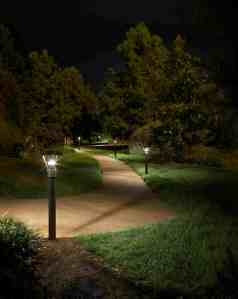
LC 7 Bollard Night Park

Mead Completes Green Homes Certificate Program

In May, Mead Noss (owner of Outdoor Lighting Perspectives of Colorado), completed the 13-week long Green Homes Certificate Program at the Colorado State University (CSU) Denver campus.

 CSU

The program is conducted by CSU’s Institute for the Built Environment and focusses on residential building strategies and tools, including the major rating systems – LEED-Homes®, Built Green, and ENERGY STAR. CSU is the Rocky Mountain region’s leading university in green design and construction management education. The certificate program coursework focussed on the following topics in green residential building, new construction and remodeling:

  • Residential green building in Colorado
  • Site and home design – first steps toward a green home
  • Energy efficient envelope – the backbone of a green home
  • High performance HVAC systems for new, remodeled and existing homes
  • Indoor environmental quality
  • Field trip: home performance testing demonstrations; green homes visits
  • Sustainable and healthy building and finish materials/products
  • Natural home building techniques
  • Design charrette
  • Construction waste recycling, deconstruction, remodeling
  • Green rating systems: LEED®-Homes; Built Green, Energy Star

Of primary interest to Mead and Outdoor Lighting Perspectives of Colorado, are the new energy-efficient lighting technologies (LED (light-emitting diode), CFL – compact fluorescents) as well as off-grid power options including solar photovoltaics and wind turbine energy.

Mead said that Colorado is at the epicenter of alternative energy research and implementation in the country. The information and contacts that I’ve made through this progam will help to position OLP of Colorado to take advantage of this new technology – and to provide our current and future customers these green lighting options.